


These almond flour muffins have a light and fluffy texture with a tender crumb and pops of fruit in every bite. You can choose between blueberry or banana from one easy base recipe, and once you master it there are endless variations to try. They are naturally gluten-free, grain-free, dairy-free (with the right oil), and paleo friendly.

The Best Homemade Almond Flour Muffins Recipe
We have struggled to find a healthy muffin recipe that actually tastes good. But I am happy to say this is the one. This morning, I placed a blueberry almond flour muffin in each of my children's lunch boxes, and shortly after, my son (the fussy eater) began negotiating with my daughter about why she didn't need hers.
Needless to say, they both made it out of the house with their muffins in tow. That is why I always suggest making a double batch. And yes, I was back in the kitchen making another batch. These are going to be on a regular rotation.
After testing this recipe several times to get the ratio just right, I can tell you the key is balancing the almond flour with enough egg and just the right amount of liquid sweetener. Too much moisture and you get dense muffins. Too little and they crumble. This recipe hits the sweet spot, and it works as a template you can take in dozens of directions.
This recipe is based on our ever-popular Paleo Chocolate Chip Muffins. If you love chocolate chips, that one is your go-to. If you do not have almond flour but have a gluten-free flour blend on hand, these Gluten-Free Blueberry Muffins are excellent too.
Why You Will Love This Almond Flour Muffin Recipe
- No flour blend needed. All you need is a single bag of blanched almond flour. No mixing three flours together and hoping for the best.
- Soft, healthy, and kid approved. These muffins are moist with a great mouthfeel. They are high in protein and healthy fats from the almond flour, making them a filling gluten-free breakfast or after-school snack.
- Easy to make. This is a one-bowl recipe. Your kids can make these, or you can whip them up while cooking dinner. Minimal hands-on time, ready in under 30 minutes.
- Naturally gluten-free and grain-free. Also dairy-free when made with avocado or coconut oil. Fits paleo and low carb lifestyles without modification.
Almond Flour vs. Almond Meal: Why It Matters
This is the most common question I see from people new to almond flour baking, and it makes a real difference in your results. Almond flour is made from blanched almonds (skins removed) ground to a fine, powdery texture. Almond meal is made from whole almonds with the skins on and has a coarser, grittier grind.
For these muffins, always use finely ground blanched almond flour. Almond meal will make the muffins dense, gritty, and more likely to fall apart. The finer the grind, the softer and more cake-like your muffins will be. If you are unsure which one you have, check the label and look for the word "blanched." Almond flour is naturally gluten-free, high in protein, and rich in healthy fats, which is why these muffins keep you full much longer than a traditional wheat flour muffin.
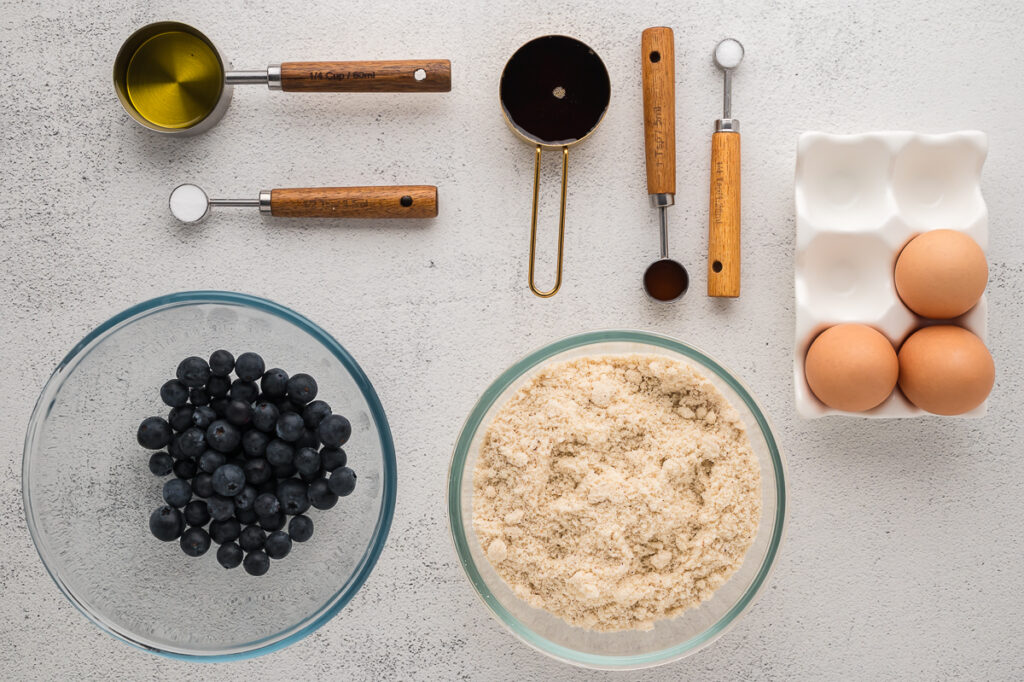
Ingredients in Almond Flour Muffins
We have a base recipe here and you can then add bananas or fresh blueberries (or other berries like raspberries and strawberries).
- Almond flour. Use finely ground blanched almond flour for the best texture. I like Blue Diamond Almond Flour, which is certified gluten-free. Almond flour is naturally grain-free, has healthy fats, and is high in protein, so these muffins fill you up.
- Whole eggs. Eggs provide structure and help the muffins rise since almond flour does not contain gluten. They are the primary binding agent in this recipe. If you need an egg-free option, flax eggs can work as a substitute (1 tablespoon ground flax mixed with 3 tablespoons water per egg, rested for 5 minutes). The texture will be slightly denser, but the muffins will hold together.
- Oil. A neutral oil such as avocado oil, light olive oil, or melted coconut oil keeps the muffins moist and tender. Using oil instead of butter also keeps these muffins dairy free.
- Honey or maple syrup. These natural sweeteners add moisture and light sweetness while helping create a soft crumb. Either one works, so use whichever you prefer.
- Blueberries or bananas. Fresh or frozen blueberries work well. Toss them lightly in almond flour before adding to the batter to prevent them from sinking. Or use ripe bananas with brown spots for the best flavor and natural sweetness. Scroll down for more variations.
- Baking soda. Helps the muffins rise and creates a lighter texture.
- Salt. Enhances the flavor and balances the sweetness of the muffins.
- Vanilla extract. Adds a nice warm flavor that rounds out the almond flour.
Equipment Needed
- Large mixing bowl and whisk for combining the wet and dry ingredients until the batter is smooth.
- Measuring cups and spoons for accuracy. I prefer using a digital kitchen scale for the almond flour since it can be tricky to measure by volume. If you do not have a scale, use the spoon-and-level method: spoon the flour into your measuring cup and level it off with a knife instead of scooping directly from the bag.
- Rubber spatula for folding the blueberries into the batter without crushing them.
- Standard 12-cup muffin pan lined with paper liners. You can also use two 6-cup muffin tins, or a mini muffin pan for bite-sized versions (adjust bake time to 10 to 14 minutes for a mini muffin tin).
- Wire cooling rack so the muffins cool evenly and the bottoms do not become soggy.
How to Make Almond Flour Muffins
These muffins come with two options: blueberry or banana. We will tell you when to make your choice. Scroll further down for even more almond flour muffin variations.


Stir in the almond flour, baking soda, and salt until a smooth batter forms. Let the batter sit for 5 to 8 minutes so the almond flour hydrates and absorbs some of the moisture. This resting step makes a noticeable difference in the final texture. Now choose if you want to make blueberry or banana muffins.
How to Make Almond Flour Blueberry Muffins
Toss the blueberries with 1 teaspoon of almond flour to prevent them from sinking. Gently fold the blueberries into the batter. You can also layer the batter and blueberries: add batter to the cup, then a few blueberries, then more batter and more blueberries on top. It all depends on how many pops of flavor you want in each bite.
How to Make Almond Flour Banana Muffins
Mash the ripe bananas in a small bowl until mostly smooth with only a few small lumps remaining. Add the mashed bananas to the batter and stir until combined.

Use bananas with plenty of brown spots, just like you would for banana bread. They will be sweeter and more flavorful.

Bake the Muffins
Divide the batter evenly between muffin cups, filling each about three-quarters full.

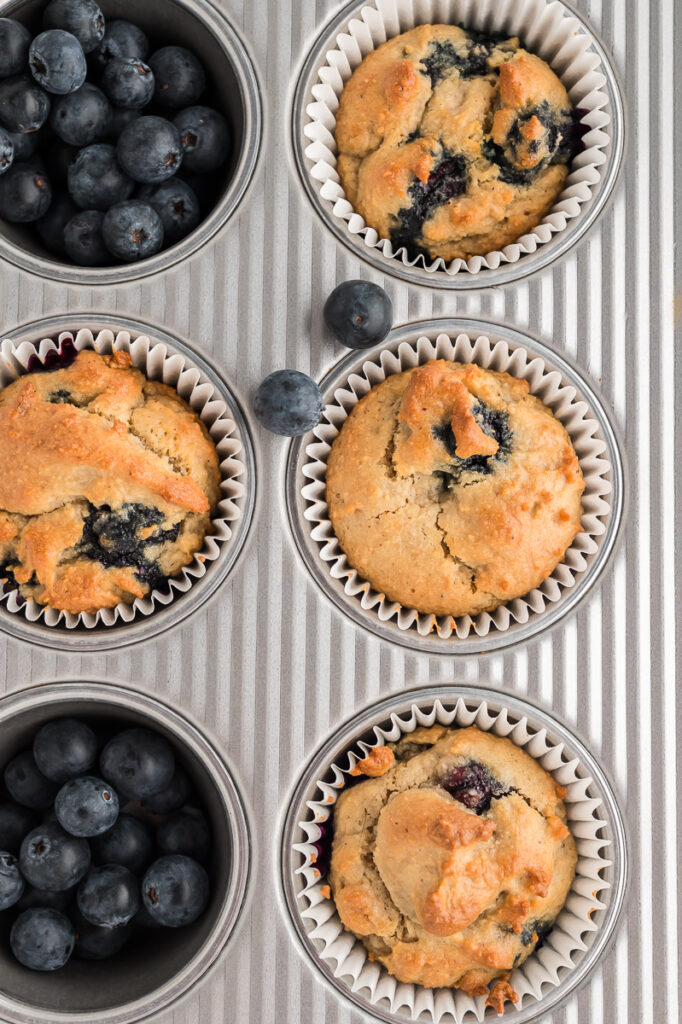
Tips for Success
These muffins are forgiving, but a few small details help you get the best results every time.
- Let the batter rest. Almond flour needs a few minutes to absorb moisture, so do not skip the 5 to 8 minute rest. In my experience, this single step is what separates fluffy almond flour muffins from dense ones.
- Use a kitchen scale for the almond flour. Almond flour is easy to over-measure when scooping with a cup. A scale gives you the most consistent results. If you do not have one, use the spoon-and-level method.
- Toss the blueberries in almond flour. If you are making the blueberry version, this light coating of flour helps the berries stay suspended in the batter instead of sinking to the bottom.
- Use ripe bananas. For the banana version, use bananas with lots of brown spots. They bring more natural sweetness and a richer banana flavor.
- Do not overmix the batter. Stir until everything is just combined. A whisk is all you need. Overmixing can make almond flour baked goods tough.
- Smooth the tops (or do not). My muffins have rustic tops. You can use the back of a spoon to smooth the batter, or add 1 tablespoon of flax meal for bakery-style domed tops. These are for home eating, so fancy is optional.
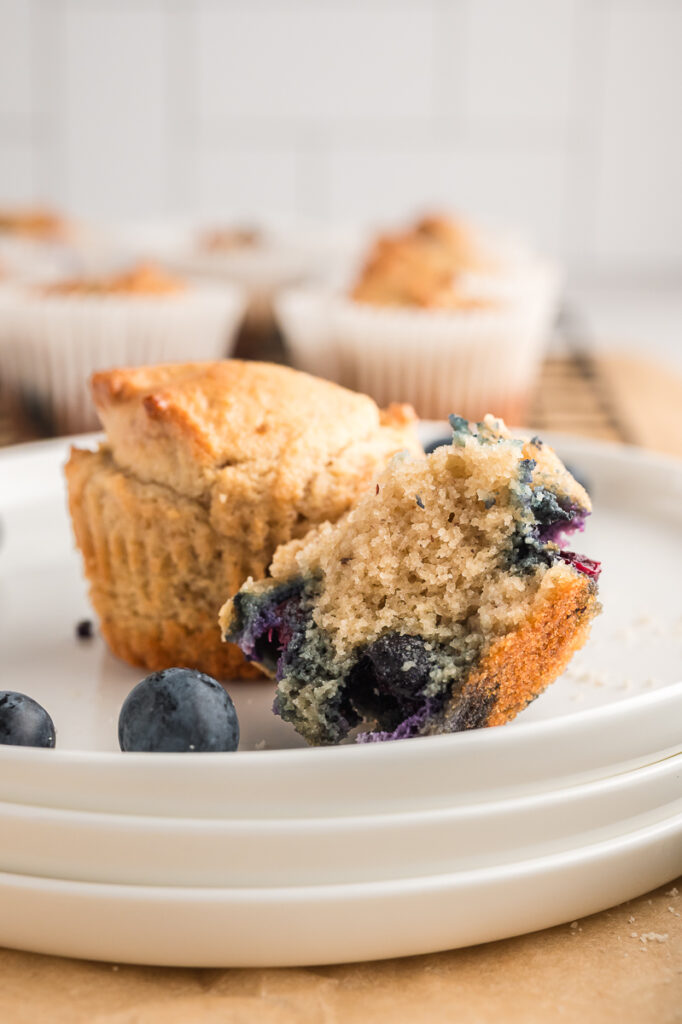
Troubleshooting
Here are some common problems and how to fix them. I have also included these so that if you decide to experiment with different variations, you can adjust accordingly.
Why Are My Almond Flour Muffins Dense?
- Too much moisture. Almond flour muffins can turn out dense if the batter has too much liquid. Almond flour behaves differently from wheat flour because it does not contain gluten, which normally provides structure and lift. If you add too much fruit or sweetener, the muffins may not rise well and can become heavy.
- Using the wrong almond flour. Almond meal instead of finely ground blanched almond flour leads to a denser, grittier texture because the grind is coarser.
- Not enough eggs. Eggs help bind the ingredients together and provide structure. To prevent dense muffins, measure ingredients carefully, use blanched almond flour, and allow the batter to rest before baking so the flour can absorb moisture.

Why Are My Almond Flour Muffins Not Rising?
Almond flour muffins may not rise properly if the leavening is weak or the batter is too heavy. Because almond flour has no gluten, the muffins rely on eggs and baking soda to create lift and structure.
- Old or expired baking soda. If the baking soda has lost its potency, it will not react properly and the muffins will stay flat. Test yours by adding a pinch to vinegar. If it fizzes, it is still good.
- Too much moisture from add-ins. Bananas, blueberries, or extra sweetener can weigh down the batter and prevent rising.
- Overmixing the batter. This can make it dense instead of light. Mix until just combined, then stop.
Why Are My Almond Flour Muffins Falling Apart?
Almond flour does not contain gluten, which normally helps baked goods hold their shape. These muffins rely on eggs to bind everything together.
- Not enough egg. If there are not enough eggs, or if you used a substitute that does not bind as strongly, the muffins may crumble or break apart.
- Removed from the pan too soon. Almond flour muffins are very soft when they first come out of the oven. Let them cool in the pan for at least 5 minutes before transferring to a wire rack. This allows the structure to set.
- Wrong flour. Finely ground blanched almond flour creates a more stable crumb than almond meal.
Why Do My Almond Flour Muffins Taste Eggy?
This can happen with almond flour baking because the recipe relies on eggs for structure. If you notice an eggy taste, try adding a little more vanilla extract or a pinch of cinnamon to mask it. You can also reduce by one egg and add 2 tablespoons of applesauce in its place, which adds moisture without the egg flavor. The blueberry and banana versions tend to mask any egginess naturally because of the strong fruit flavor.

How to Store and Freeze Almond Flour Muffins
These muffins are perfect for meal prep. Store them at room temperature in an airtight container for up to 2 days. Almond flour contains natural oils, so the muffins stay moist but can spoil faster than wheat flour muffins. For longer storage, refrigerate in an airtight container for up to 5 days.
To freeze, let the muffins cool completely, then wrap each one individually in parchment paper or plastic wrap. Place them in a freezer bag and freeze for up to 3 months. When you are ready to eat, thaw at room temperature or warm in the microwave for 20 to 30 seconds. Having a batch in the freezer means you always have a healthy grab-and-go gluten-free snack on hand.
Variations
Master the base recipe and you have so many directions you can go. Here are the variations I have tested and loved.
- Banana almond flour muffins. View the recipe card below for the full banana variation.
- Almond flour pumpkin muffins. Replace the fruit with pumpkin puree and add warm spices like cinnamon and nutmeg for a soft, lightly spiced muffin that is perfect for fall.
- Almond flour chocolate chip muffins. Fold chocolate chips into the batter for a sweeter muffin that works well as a snack or dessert. See our Almond Flour Chocolate Chip Muffins recipe for full details.
- Almond flour zucchini muffins. Add grated zucchini for extra moisture and a subtle vegetable boost. Be sure to squeeze out excess liquid before adding it to the batter.
- Almond flour apple muffins. Fold diced apples into the batter and add cinnamon for a lightly sweet muffin with classic apple flavor.
- Lemon blueberry almond flour muffins. Add 1 tablespoon of lemon zest and 1 teaspoon of lemon extract to the blueberry version. The citrus brightens the blueberry flavor and makes these taste like a bakery treat.
- Mixed berry almond flour muffins. Swap the blueberries for a mix of raspberries, strawberries (diced small), and blackberries. Use 1 cup total of berries and toss them in almond flour before folding in.
- Cinnamon sugar topped muffins. Before baking, sprinkle the tops with a mix of 1 tablespoon coconut sugar and half a teaspoon of cinnamon for a sweet, crackly top.
- Quick bread conversion. Double the batter and pour it into a greased loaf pan. Bake at 350°F for 35 to 45 minutes, or until a toothpick comes out clean. You now have an almond flour quick bread.
- Mini muffins. Use a greased or lined mini muffin tin and reduce the bake time to 10 to 14 minutes. This makes about 24 mini muffins, which are great for toddlers and for packing in lunchboxes.
- Poppy seeds. Try a this recipe for gluten free lemon poppyseed muffins for another classic flavor.
If you follow a keto diet and want to skip the maple syrup, substitute an equal amount of a sugar-free liquid sweetener like monk fruit syrup. The texture will be very similar. For a vegan version, replace the eggs with flax eggs (1 tablespoon ground flax plus 3 tablespoons water per egg, rested for 5 minutes) and use coconut oil for the fat. The muffins will be slightly denser but still hold together well.
We also made a printable quick-reference card with the variations for this recipe!
What to Serve With Almond Flour Muffins
These muffins are filling on their own thanks to the protein and healthy fats in the almond flour, but they pair well with a few extras. Try them alongside scrambled eggs and fruit for a full gluten-free breakfast. They also go nicely with a cup of coffee, a dollop of almond butter, or a side of gluten-free yogurt topped with fresh fruit.
Almond flour muffins keep at room temperature for up to 2 days in an airtight container. Refrigerate for up to 5 days, or freeze individually wrapped in a freezer bag for up to 3 months. Thaw at room temperature or warm in the microwave for 20 to 30 seconds.
Yes, they freeze very well. Let the muffins cool completely, wrap each one in parchment paper or plastic wrap, and place them in a freezer bag. Freeze for up to 3 months. This makes them perfect for meal prep.
Yes, these muffins are paleo friendly as written. Almond flour is naturally grain-free, and the recipe uses no wheat flour or refined sugar. If you use honey or maple syrup as the sweetener and a paleo-friendly oil such as coconut oil or avocado oil, the recipe fits within typical paleo guidelines. The chocolate chip variation is paleo only if you use chocolate chips made without refined sugar or dairy.
I do not recommend it for this recipe. Almond meal has a coarser grind and includes the almond skins, which can make the muffins dense, gritty, and more likely to fall apart. Finely ground blanched almond flour gives the best results.
Yes, when made with avocado oil, light olive oil, or melted coconut oil instead of butter. The base recipe as written does not contain any dairy.
Yes. Grease or line a mini muffin pan and fill each cup about two-thirds full. Reduce the bake time to 10 to 14 minutes. One batch makes about 24 mini muffins.
You can try using flax eggs as a substitute (1 tablespoon ground flax mixed with 3 tablespoons water per egg, rested for 5 minutes). The texture will be slightly denser since eggs are the primary binding agent in almond flour baking. A store-bought egg replacer like the one from Bob's Red Mill is another option.
The exact count depends on your sweetener and add-ins, but a basic almond flour muffin made with maple syrup has roughly 8 to 12 grams of net carbs per muffin. That is significantly lower than a traditional wheat flour muffin, which can have 30 grams or more. Using a sugar-free sweetener brings the count down further for a keto approach.
Frequently Asked Questions
How long can you store almond flour muffins?
Can almond flour muffins be frozen?
Are these almond flour muffins paleo?
Can I use almond meal instead of almond flour?
Are these muffins dairy-free?
Can I make these as mini muffins?
Can I make these muffins egg-free?
How many carbs are in almond flour muffins?
Almond Flour Muffins

These almond flour muffins are fluffy and light, with a tender crumb and pops of blueberries or banana. You get to select your preferred option, and we have loads of variations for you to choose from.
Ingredients
For Almond Flour Blueberry Muffins:
- 2 cups almond flour (224 g)
- 3 large eggs (150 g)
- ¼ cup oil (50 g) – avocado oil, melted coconut oil, or light olive oil
- ¼ cup honey or maple syrup (67 g)
- ¾ cup blueberries (105 g)
- ½ teaspoon baking soda (2 g)
- ¼ teaspoon salt (1.5 g)
- 1 teaspoon vanilla extract (5 g)
- Optional for extra structure: 1 tablespoon flax meal (6 g)
For Almond Flour Banana Muffins:
- 2 cups almond flour (224 g)
- 3 large eggs (150 g)
- 3 tablespoons oil (45 g) – avocado oil, melted coconut oil, or light olive oil
- 2 tablespoons honey or maple syrup (38 g)
- ¾ cup mashed ripe banana (165 g)
- ½ teaspoon baking soda (2.5 g)
- ¼ teaspoon salt (1.5 g)
- 1 teaspoon vanilla extract (5 g)
- Optional for extra structure: 1 tablespoon flax meal (6 g)
Instructions
- Preheat oven to 350°F (175°C). Line a 12-cup muffin pan with liners. In a large bowl, whisk together the eggs, oil, maple syrup, and vanilla extract until smooth.
- Stir in the almond flour, baking soda, and salt until a smooth batter forms. Let the batter sit for 5–8 minutes so the almond flour hydrates. Now choose if you want to make blueberry or banana muffins.
How To Make Almond Flour Blueberry Muffins
- Toss the blueberries with 1 teaspoon of almond flour to prevent them from sinking. Gently fold the blueberries into the batter.
How To Make Almond Flour Banana Muffins
- Mash the ripe bananas in a small bowl until mostly smooth with only a few small lumps remaining. Add the mashed bananas to the batter.
Main batter
- Now back to the main batter. Divide the batter evenly between muffin cups, filling each about ¾ full.
- Bake for 20–23 minutes, or until the tops are golden and a toothpick inserted in the center comes out clean. Let muffins cool in the pan for 5 minutes, then transfer to a rack.
Notes
- Let the batter sit. Almond flour needs to rest, so don't skip the suggested 5-8 minute rest.
- Use a kitchen scale for the almond flour. I prefer using a kitchen scale for more accuracy.
- Toss the blueberries in almond flour. If you are making the almond flour blueberry muffins, toss the blueberries in almond flour before adding them to the muffin batter. This prevents them from sinking to the bottom of the muffins. You can also layer the batter by adding batter, then the blueberries, then adding more batter and more blueberries. It all depends on how many pops of flavor you like.
- Use ripe bananas. If you are making the almond flour banana muffins, use ripe bananas as you'd use for banana bread. It gives a nicer flavor and has a natural sweetness.
- Don't overmix the batter. This batter is all about adding and mixing. A whisk is all you need.
- Smooth the tops. My muffins have rustic tops. You can use a spoon to smooth the batter on top or add 1 tablespoon of flax meal for bakery-style domed tops. These are for home eating, so we don't need fancy here.
Recommended Products
As an Amazon Associate and member of other affiliate programs, I earn from qualifying purchases. They never cost you extra.


More Gluten-Free Muffin Recipes
If you love this recipe, here are a few more of our favorite gluten-free muffin recipes to try next:
- Gluten-Free Blueberry Muffins (made with a GF flour blend)
- Gluten-Free Banana Muffins
- Gluten-Free Pumpkin Muffins
- Gluten-Free Chocolate Chip Muffins
- All of Our Gluten-Free Muffin Recipes
If you make this almond flour muffins recipe, please consider stopping by and letting me know what you think.
DID YOU MAKE THIS RECIPE?
Tag @glutenfreepalate on Instagram and hashtag it #glutenfreepalatebaker so we can see all the deliciousness!





Leave a Question or Comment