

Store-bought gluten-free flour blends work but they're expensive, the ingredient lists are often confusing, and most of them behave differently from one brand to the next. Making your own gives you consistent results at a fraction of the cost, and once you understand how the different types of gluten-free flour behave, you can mix a blend that works across your entire baking routine.
Below you will find two tested all-purpose gluten-free flour blend recipes, a self-rising option, a complete guide to 16 individual gluten-free flours with storage guidance, and a growing list of recipes that use these blends. If you are looking for information on starches, visit my Gluten-Free Starches page. I also have a detailed resource on Gluten-Free Binding Agents that covers xanthan gum, guar gum, and other binders used in gluten-free baking.
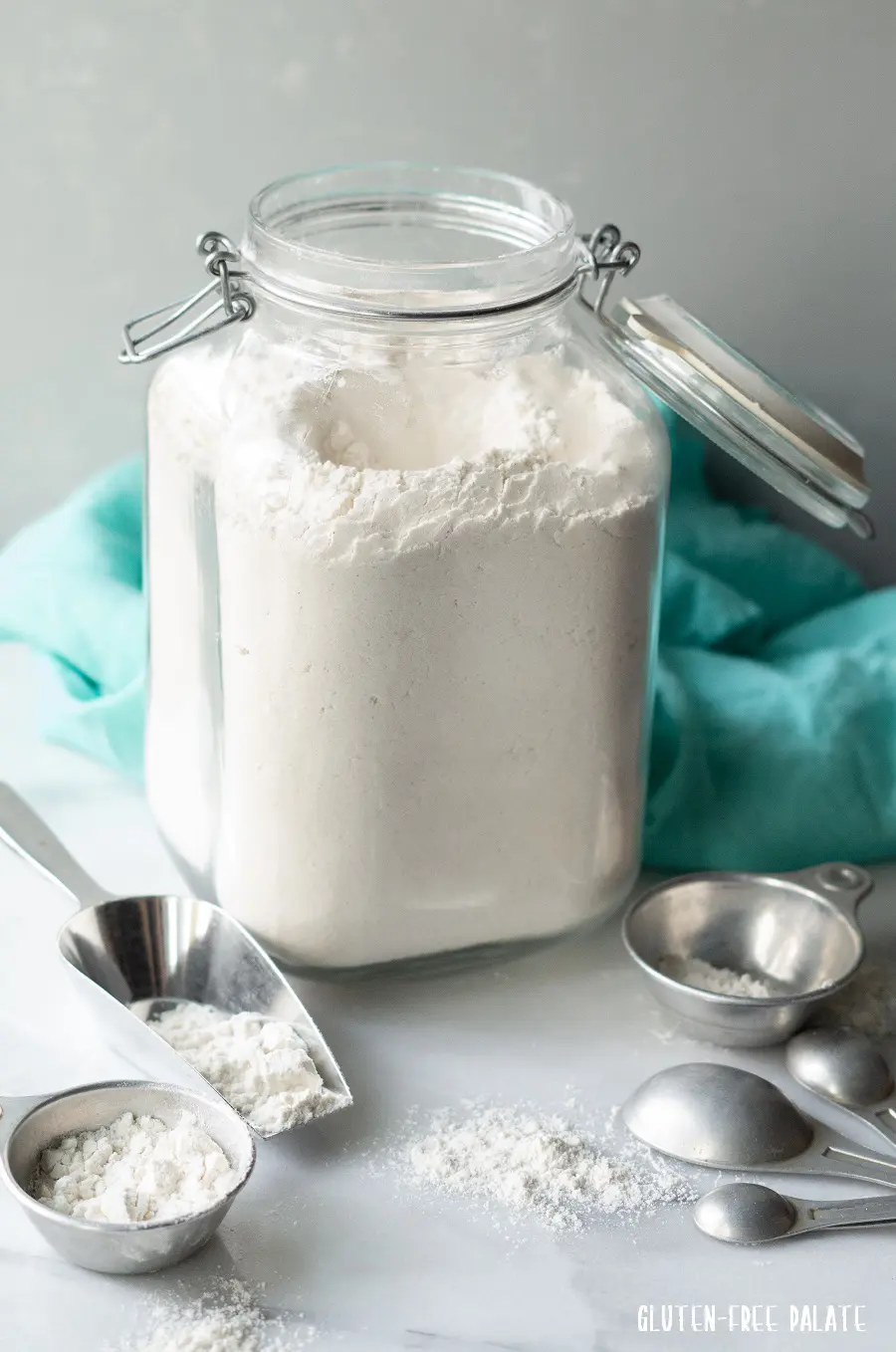
Why Make Your Own Gluten-Free Flour Blend?
Traditional wheat flour has gluten, which gives baked goods their structure, elasticity, and chew. When you remove gluten from the equation, you need a combination of flours and starches that work together to replicate those properties. No single gluten-free flour does the job on its own. That's why a blend works so much better than any one flour used alone.
The two blends on this page use simple, affordable ingredients: white rice flour, tapioca flour (also called tapioca starch), potato starch, and millet flour. The smell, flavor, and texture of baked goods made with these blends are close to what you would get from traditional wheat flour, close enough that most people cannot tell the difference in cookies, muffins, and quick breads.
Neither blend contains xanthan gum or guar gum. These binders help with moisture retention and hold baked goods together, but not every recipe needs them. In most of the recipes I make, the combination and ratio of ingredients is strong enough on its own. A few recipes, particularly yeast breads and anything with a very delicate structure, still call for xanthan gum to get the right rise and texture. The standard rule is 1 teaspoon of xanthan gum per cup of flour blend when a recipe calls for it.
Blend 1 vs. Blend 2: Which Should You Use?
Both blends work well across most baked goods, but there are situations where one performs better than the other. Here is a quick guide to help you choose.
| Use Case | Blend 1 (Rice + Tapioca + Potato) | Blend 2 (Rice + Millet + Tapioca + Potato) |
|---|---|---|
| Cookies and bars | Excellent. light, crisp edges | Excellent. slightly more substance |
| Muffins and quick breads | Great. | Great. millet adds a mild whole grain flavor |
| Pancakes and waffles | Great. light and fluffy | Great. both blends work equally well |
| Pie crust and pastry | Great. tender, flaky texture | Works well. slightly denser |
| Yeast breads | Works. add xanthan gum | Better. millet adds structure and a whole grain depth |
| Cakes | Excellent. very light crumb | Good. slightly more texture |
| Thickening sauces | Works well. | Works well |
The short answer: if you are new to gluten-free baking and want one reliable blend to start with, go with Blend 1. It is lighter and more neutral. If you bake yeast breads often or want a little more nutritional depth and whole grain character, Blend 2 is worth keeping on hand alongside it.
Gluten-Free Flour Blend Recipes
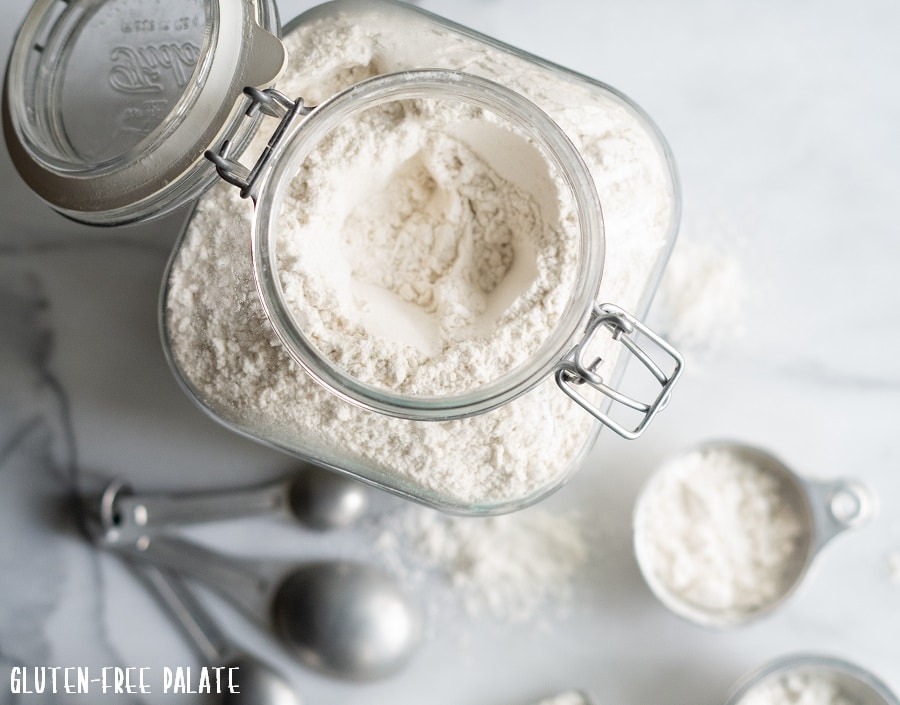
Gluten-Free Flour Blend 1: Yields 4 cups
- 2 cups (290g) white rice flour
- 1 cup (115g) tapioca flour (tapioca starch)
- 1 cup (120g) potato starch
- Optional: 2 teaspoons xanthan gum (add when baking yeast breads or delicate pastry)
Gluten-Free Flour Blend 2: Yields 5 cups
- 2 cups (290g) white rice flour
- 1 cup (120g) millet flour
- 1 cup (115g) tapioca flour (tapioca starch)
- 1 cup (120g) potato starch
- Optional: 4 teaspoons xanthan gum (add when baking yeast breads or delicate pastry)
Gluten-Free Self-Rising Flour: Yields 4 cups
Use this only for recipes that specifically call for self-rising flour. Do not substitute it in place of the standard blends.
- 2 cups (290g) white rice flour
- 1 cup (115g) tapioca flour (tapioca starch)
- 1 cup (120g) potato starch
- 2 tablespoons baking powder
- 2 teaspoons salt
Directions: Add all flours, starches, and any optional ingredients to a large zipper bag or a bowl and mix well. Transfer to an airtight glass jar or container. Shake the jar before each use in case the flours have settled. Blend 1 stores for up to 3 months at room temperature; Blend 2 stores slightly shorter due to the millet flour (see storage notes in the flour guide below). Both blends keep longer in the refrigerator or freezer.
Last tested: April 2026
Gluten-Free Flour
A gluten-free flour blend recipe that is versatile and works well with most gluten-free recipes.
Ingredients
Gluten Free Flour Blend 1:
- 2 cups (290g.) white rice flour
- 1 cup (115g.) tapioca flour
- 1 cup potato (120g.) starch
- optional: 2 teaspoons xanthan gum
Gluten Free Flour Blend 2:
- 2 cups (290g.) white rice flour
- 1 cup (120g.) millet flour
- 1 cup (115g.) tapioca flour
- 1 cup (120g.) potato starch
- optional: 4 teaspoons xanthan gum
Self Rising Gluten Free Flour
- 2 cups (290g.) white rice flour
- 1 cup (115g.) tapioca flour
- 1 cup (120g.) potato starch
- 2 Tablespoons of baking powder
- 2 teaspoons of salt
Instructions
- Mix all the gluten-free flours and starches in a large zipper storage bag or a bowl.
- Store flour blend in an airtight container.
- Shake the container before using in case any gluten-free flours have settled.
Notes
- To measure flours, use a scale or if you are using measuring cups, spoon the flour into the measuring cup and then level it, don't scoop the measuring cup into the flour.
- Whisk flours together in a large mixing bowl and store in an air-tight container in a dry place for up to three months.
- The first flour blend is a little lighter and it works great it all of my recipes for quick breads, cakes, donuts, and cookies. The second gluten free flour blend option has a bit more structure and it works well with rolls, bread, cinnamon rolls, and cookies.
- Tapioca Substitute: use arrowroot starch.
- Millet Flour Substitute: Use almond flour.
- For a lighter blend, substite ¼ cup of the rice flour with sweet rice flour.
Recommended Products
As an Amazon Associate and member of other affiliate programs, I earn from qualifying purchases. They never cost you extra.


Nutrition Information:
Yield:
4Serving Size:
1 cupAmount Per Serving: Calories: 290Total Fat: 1gSaturated Fat: 0gTrans Fat: 0gUnsaturated Fat: 1gCholesterol: 0mgSodium: 16mgCarbohydrates: 67gFiber: 2gSugar: 2gProtein: 4g
This nutrition info is based on the exact ingredients and brands that I used a the time. It may not be 100% accurate. Please check your ingredients nutrition labels.
Homemade vs. Store-Bought Gluten-Free Flour Blends
If you are used to reaching for a bag of Bob's Red Mill or King Arthur Measure for Measure, you are not alone. Store-bought blends are convenient and reliable. But there are good reasons to mix your own, especially once you are baking regularly.
| Homemade Blend | Store-Bought (e.g., Bob's Red Mill 1-to-1) | |
|---|---|---|
| Cost per cup | Significantly less | Higher, especially in small bags |
| Xanthan gum included | Optional. You add it when needed | Usually yes. Can affect some recipes |
| Ingredient control | Full. You choose every flour | Limited. Fixed formula |
| Consistent results | Yes, once you have a formula you trust | Yes. Formulas are standardized |
| Best for | Regular bakers, batch storage, cost savings | Occasional bakers, convenience, travel |
Note: Bob's Red Mill makes two gluten-free flour products that are easy to confuse. The 1-to-1 Baking Flour (blue bag) contains xanthan gum and works well as a direct substitute in most recipes. The All-Purpose Gluten-Free Flour (red bag) does not contain xanthan gum and behaves differently. It's not a direct 1-to-1 substitute and tends to produce dense, gummy results in recipes that do not account for it.
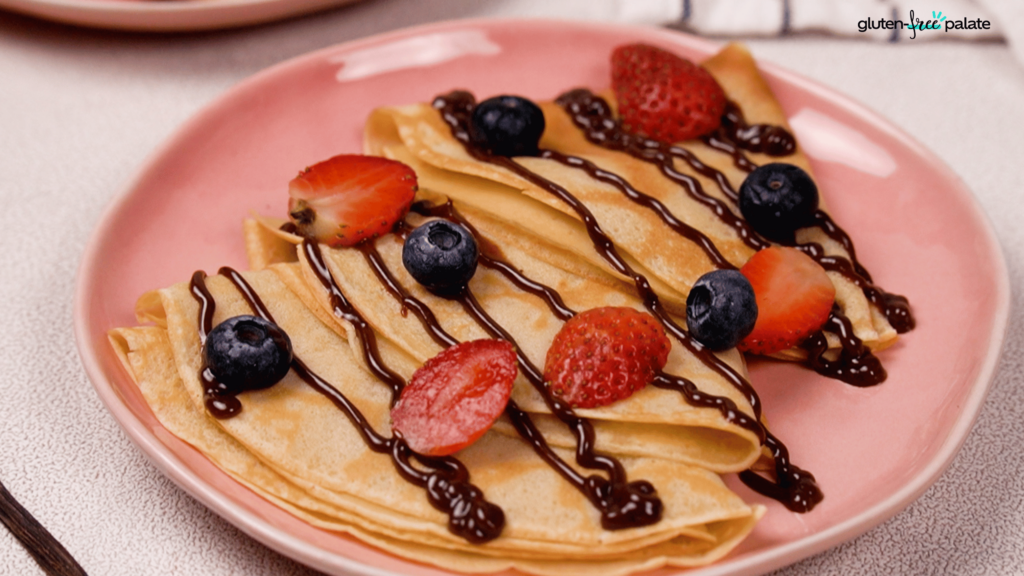
I love making crepes with my gluten free flour blends.
Popular Recipes Using This Gluten-Free Flour Blend
Both blends power dozens of recipes on this site. Here are some of the most-used:
- Gluten-Free Crepes. Simple, versatile, and work with sweet or savory fillings
- Gluten-Free Gingerbread Cookies. Use blend one or two; both produce excellent results
- Gluten-Free Chicken Tenders. Perfectly crispy with either blend
- Gluten-Free Graham Cracker Crust. A handful of ingredients and it comes together fast
- Gluten-Free Pie Crust. One of our most-loved recipes; use blend one or two
- Gluten-Free Cornbread. A mix of this flour blend and cornmeal is the base
- Gluten-Free Apple Crisp. A small amount of flour blend goes into the crisp topping
- Gluten-Free Breadcrumbs. Use with store-bought or homemade gluten-free bread
- Gluten-Free Blueberry Muffins. Blend one or two both work beautifully here
- Gluten-Free Carrot Cake. A year-round favorite; both blends work as the base
- Gluten-Free Waffles. Great for batch cooking and freezer storage
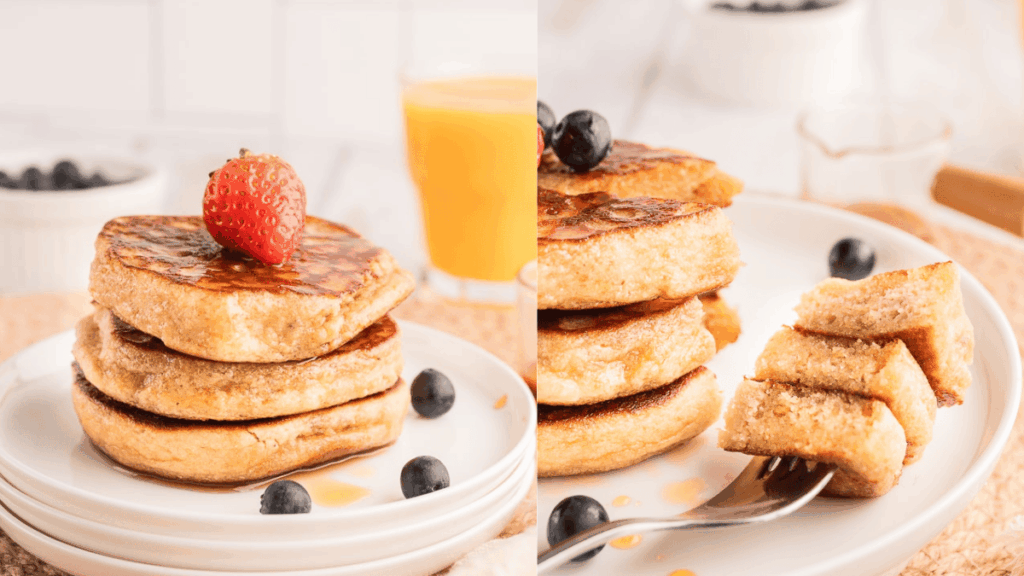
- Gluten-Free Pancakes. Light and fluffy with either blend
- Gluten-Free Pumpkin Bread. Tender and fluffy; both blends work well
- Gluten-Free Pumpkin Pie. Made with the GFP pie crust and this flour blend
- Gluten-Free Apple Pie. Uses the gluten-free pie crust made from this blend
A Guide to the Different Types of Gluten-Free Flour
Understanding what each flour brings to a blend makes you a better baker. Here is a guide to the most common gluten-free flours, including how they taste, how they perform, and how to store them properly. Note that I have a whole article on almond flour recipes, if you're using almond flour.
Amaranth Flour
Made from the seeds of the amaranth plant, amaranth flour is high in protein and brings a mild, earthy flavor to baked goods. It works well as part of a blend but can leave a slight aftertaste when used in large quantities, so most bakers use it as a supporting flour rather than a primary one.
Storage: Keep in a sealed container in the freezer for up to 6 months.
Brown Rice Flour
Brown rice flour is a whole grain flour milled from unpolished brown rice. It has a higher fiber content and more nutritional value than white rice flour, but it is heavier and can produce a slightly gritty texture in baked goods if used in too high a proportion. It works best as part of a blend where a lighter flour or starch balances it out.
Storage: Buy in small quantities and use fresh. Store in a sealed container in the refrigerator for 4 to 5 months, or in the freezer for up to a year.
Buckwheat Flour
Despite the name, buckwheat is not related to wheat and is completely gluten-free. It is botanically related to rhubarb. The seeds are ground into a dark, whole grain flour with a strong nutty flavor that can overpower baked goods when used alone. Used in small amounts as part of a blend, it adds depth and a slightly earthy quality that works especially well in pancakes, waffles, and quick breads.
Storage: Store in a sealed container in the refrigerator for 2 to 3 months or in the freezer for up to 6 months.
Cassava Flour
Cassava flour is made from the whole root of the cassava plant, dried and ground into a fine, white flour. It is one of the closest substitutes to traditional wheat flour in texture and behavior. It has a mild flavor, good elasticity when combined with eggs, and works well in tortillas, flatbreads, and pastry. Unlike tapioca starch (which comes from the same plant but is processed differently), cassava flour behaves more like a whole flour and can sometimes be swapped in at a closer ratio to wheat flour. It is worth keeping on hand if you bake grain-free recipes regularly.
Storage: Store in a sealed container in a cool, dark place for up to 1 year.
Chia Flour
Made from ground chia seeds, chia flour is highly nutritious and contains omega-3 fatty acids, fiber, calcium, and protein. It absorbs liquid readily, which makes it useful as a binding agent in addition to a flour. If chia flour is not available, grind whole chia seeds in a food processor. When adding it to a recipe, expect to increase liquid content and baking time slightly.
Storage: Store chia seeds or chia flour in a sealed container in a cool, dark place for several months.
Chickpea Flour
Also known as gram flour or garbanzo bean flour, chickpea flour is ground from dried chickpeas and has a mildly nutty flavor. It is high in protein and works especially well in savory baking, think flatbreads, fritters, and coatings for chicken or fish. It can also thicken soups, sauces, and gravies. Like most bean-based flours, it is best used as part of a blend rather than on its own.
Storage: Store in a sealed container in the refrigerator for 2 to 3 months or in the freezer for up to 6 months.
Corn Flour
Corn flour is milled from corn into a fine white powder and is primarily used as a thickener. It has a bland flavor on its own, so it relies on other ingredients for taste. One important note: some corn flour products are milled from wheat (labeled as "wheaten corn flour"). Always check the label and confirm it was not processed in a facility that also handles wheat.
Storage: Store in a sealed container in a cool, dark place for up to 1 year, or longer in the freezer.
Cornmeal
Cornmeal is coarser than corn flour and is ground from dried corn. The two are not interchangeable in recipes. Cornmeal is the base for cornbread, polenta, and corn tortillas, and adds texture and a slightly sweet corn flavor to baked goods. It is not used in the flour blends on this page but works well alongside them in specific recipes.
Storage: Store in a sealed container in a cool, dark place for up to 1 year, or longer in the freezer.
Hemp Flour
Made from ground hemp seeds, hemp flour has a mild, nutty flavor and a green-grey color that can affect the appearance of baked goods. It is nutritious and high in protein and healthy fats, but it goes rancid quickly if not stored properly.
Storage: Store in a sealed container in the refrigerator or freezer and use within a few months of opening.
Millet Flour
Millet is a whole grain from the grass family and has been used as a staple grain in Africa and Asia for thousands of years. As a flour, it has a mild, slightly sweet flavor and adds structure to baked goods without making them heavy. It is one of the main reasons Blend 2 performs better in yeast breads. The whole grain character helps replicate some of the depth that traditional wheat flour provides. Millet flour can become rancid quickly if not stored properly.
Storage: Grind millet as needed for the freshest flavor, or store millet flour in a sealed container in the refrigerator for up to 2 months and in the freezer for up to 6 months.
Oat Flour
Ground from oats, oat flour contains starches that help gluten-free recipes bind together, making it one of the more versatile gluten-free flours for baking. It absorbs liquid more than most flours, so recipes using it may need slightly more liquid. It substitutes well into many cake and cookie recipes. The critical caveat: oats are naturally gluten-free but are frequently contaminated with wheat during processing. Always use certified gluten-free oat flour from a dedicated facility. I have a full guide on how to make oat flour if you want to grind your own.
Storage: Oat flour goes rancid quickly. Buy in small amounts or store in a sealed container in the refrigerator or freezer and use within a few months.
Potato Flour
Potato flour is made from whole dried potatoes and has a noticeable potato flavor. It is heavy, and a small amount goes a long way. Do not confuse it with potato starch, which is much more neutral and widely used in gluten-free flour blends (including both blends on this page). Potato flour is best used in small quantities in bread recipes where it adds moisture and a slightly dense texture.
Storage: Buy in small quantities. Potato flour does not have a long shelf life compared to most gluten-free flours.
Quinoa Flour
Quinoa has been cultivated for over 5,000 years and provides a strong source of plant-based protein. Quinoa flour is ground from the seeds of the quinoa plant and has a mild, slightly earthy flavor. It works well in a blend but can leave a faint aftertaste if used in large amounts, so most bakers use it alongside lighter, more neutral flours.
Storage: Store in a sealed container in the refrigerator or freezer for up to 6 months.
Sorghum Flour
Sorghum flour is ground from sorghum grain and has a mild, slightly sweet flavor that is closer to traditional wheat flour than most other gluten-free options. It is a whole grain flour and an important staple in Africa and India. As a baking flour, it works well in quick breads, muffins, and pancakes. It is one of the better single-flour options for someone looking for the best gluten-free flour to anchor a blend, though it still works best combined with a starch.
Storage: Store in a sealed container in a cool, dark place for up to 2 months, or in the freezer for up to 4 months.
Tapioca Flour (Tapioca Starch)
Tapioca flour and tapioca starch are the same product. Both are made from the root of the cassava plant. Once processed and dried, the result is a light, fine, white powder that adds chewiness, elasticity, and a slightly glossy finish to baked goods. It is one of the best gluten-free flour additions for improving the texture of bread and pastry, and it is an excellent thickener for sauces and fillings. Both blends on this page include tapioca flour as a core ingredient for exactly these reasons.
Storage: Tapioca flour is shelf-stable. Store at room temperature in a sealed container.
Teff Flour
Teff is a tiny whole grain cereal from the grass family, native to northern Africa and the base for injera, a spongy sourdough flatbread. Teff flour is very nutritious and has a slightly molasses-like flavor. Adding too much teff to baked goods can produce a gritty texture and a dry crumb, so use it as a supporting flour within a blend rather than the primary one.
Storage: Store in a sealed container in the refrigerator or freezer for up to 4 months.
White Rice Flour
White rice flour is the base of both blends on this page. It is milled from polished white rice, giving it a very neutral flavor and a light texture, both of which make it the best gluten-free flour foundation for most baked goods. It does not carry the slight bitterness or aftertaste that some whole grain flours bring, and it produces a fine, consistent crumb. The one caveat: do not substitute wheat flour with white rice flour at a 1-to-1 ratio without the other blend components the texture will be wrong.
Storage: Store in a sealed container in the refrigerator or freezer for up to 2 years.
How to Store Gluten-Free Flours and Blends
Most gluten-free flours keep well in a sealed container stored in a cool, dry, dark location. Once you open the original packaging, shelf life drops. Transfer to an airtight container right away. The refrigerator is an excellent storage location for individual flours, but use a well-sealed container to prevent the flour from absorbing moisture and odors from other foods. For long-term storage, the freezer works well for most flours. Use a sealed container or a freezer bag with as much air removed as possible.
For the blends on this page, I store mine in wide-mouth glass mason jars. I write the mix date on the lid so I always know how old the blend is. Blend 1 stores well at room temperature for up to 3 months. Blend 2 should be used within a similar window but stores better in the refrigerator given the millet flour content. Both can go in the freezer for longer storage. Bring the flour to room temperature before measuring into a recipe for the most consistent results.
More Gluten-Free Baking Resources
- Gluten-Free Starches. A full breakdown of starches used in gluten-free baking, including potato starch, arrowroot, and more
- Gluten-Free Binding Agents. Everything a baker needs to know about xanthan gum, guar gum, psyllium husk, and other binders
- How to Make Oat Flour. A simple guide to grinding your own certified gluten-free oat flour at home
- Staple Gluten-Free Baking Ingredients. A pantry guide to the ingredients that make gluten-free baking easier
- The Key to Gluten-Free Baking. Why ingredient temperature matters more than most bakers realize
- Unique Gluten-Free Flours for Baking and Cooking. A deeper look at less common flour options worth experimenting with
These two flour blends are the foundation for almost every recipe on this site. Once you have a jar mixed and on the shelf, gluten-free baking gets significantly easier and less expensive. Every baker who makes the switch from store-bought blends to homemade tends to stick with it. Consistent results, lower cost, and complete control over what goes into every bake.
Frequently Asked Questions
What is the best gluten-free flour blend for baking?
For most baked goods, a blend of white rice flour, tapioca flour (tapioca starch), and potato starch produces consistent results across cookies, muffins, quick breads, pie crust, and pancakes. That is the base of Blend 1 on this page. If you bake yeast breads often or want a little more whole grain depth, Blend 2 adds millet flour to the mix and performs better in bread recipes. Both are tested across dozens of GFP recipes.
Can I substitute gluten-free flour blend 1-to-1 for wheat flour?
In many recipes, yes. These blends are designed to work as a close substitute for traditional wheat flour. The texture and flavor of baked goods will be very similar, though not identical. Results vary by recipe: cookies and quick breads swap almost seamlessly, while yeast breads may need xanthan gum and slight adjustments to liquid or rise time. Always follow a recipe developed for gluten-free flour when you are first getting started.
Do I need to add xanthan gum to my gluten-free flour blend?
Not always. These blends are intentionally made without xanthan gum because many recipes do not need it. In cookies, muffins, and quick breads, the ratio of ingredients provides enough structure on its own. For yeast breads, delicate pastry, and anything that needs significant elasticity and lift, add 1 teaspoon of xanthan gum per cup of flour blend. Check whether your recipe already includes xanthan gum in the ingredient list before adding more.
What is the difference between Blend 1 and Blend 2?
Blend 1 uses white rice flour, tapioca flour, and potato starch. It is lighter, more neutral in flavor, and works across almost every baked good. Blend 2 adds millet flour, which contributes a mild whole grain flavor and additional structure. Blend 2 performs better in yeast breads and works well in any recipe where you want a slightly more substantial texture. Both are interchangeable in most of the recipes on this site.
How do I store a homemade gluten-free flour blend?
Store in an airtight glass jar or container. Blend 1 keeps at room temperature for up to 3 months. Blend 2 is best kept in the refrigerator given the millet flour content. Both blends can be frozen for longer storage. Bring to room temperature before measuring. Write the mix date on the container so you can track freshness.
Can I use this blend for gluten-free bread?
Yes, with a note. For yeast breads, add xanthan gum to the blend (1 teaspoon per cup) to give the dough the elasticity it needs to rise properly. Blend 2 performs better in yeast breads than Blend 1 because the millet flour adds whole grain structure. Expect gluten-free yeast breads to be slightly denser than wheat-based bread. That's normal and expected, not a sign something went wrong.
Is buckwheat flour gluten-free?
Yes. Despite the name, buckwheat is not related to wheat and contains no gluten. It is botanically related to rhubarb. Buckwheat flour is safe for people with celiac disease and gluten sensitivity, though it has a strong, nutty flavor that works best in small amounts as part of a blend. Always check that the product was processed in a dedicated gluten-free facility to rule out cross-contamination.
What is the difference between tapioca flour and potato starch?
Both are starches used in gluten-free flour blends, but they behave differently. Tapioca flour (tapioca starch) comes from the cassava root and adds chewiness, elasticity, and a slightly glossy finish to baked goods. Potato starch comes from potatoes and adds lightness and moisture without flavor. Both are in the blends on this page because they do different jobs. Tapioca adds structure and chew, potato starch keeps the crumb tender and light. They are not interchangeable in equal amounts.
Tina
If you have a Chinese supermarket close by, you can purchase tapioca starch, rice flour and potato starch at a huge discount.
Michal
Hi—I just want to confirm that blend #2 is good for yeast or sourdough breads?
Jim
Yes, but make sure to include xanthan gum. It's important as a binder. And sourdough will need a starter like this one!
Michal
Thanks! I’ve created a really strong starter that’s gluten free and giving great rise to wheat flour loaves. Just needed to know if this blend would rise because many of the gluten free blends I have tried don’t. Thank you again!
Tzl Ali
can change rice flour too oat flour thanks
Jim
These blends were tested with the specific flours mentioned. You can try oat flour, but it may change the final recipe. (That's not always a bad thing! Please let us know if you do, and how yours turns out!)
anna Zhang
Thank you for the content! Just wonder when I should prefer gluten free 1 over 2 and vice versa? Thanks!
Jim
The first flour blend is a little lighter and works super well for quick breads, cakes, donuts, and cookies. The second gluten free flour blend option has a bit more structure and it works well with rolls, bread, cinnamon rolls, and cookies.
Rebecca Stewart
Which flour blend good for biscuits?
Please help
Thank you
Jim
I'd go with either blend 1 or 2. Either should be fine!
Maisle
I can't have potato at all (No Nightshades)
What starch would you recommend in it's place?
Jim
Either tapioca starch or arrowroot starch. Both should be fine with a 1-to-1 replacement for potato starch.