



Making your own gluten-free sourdough starter is both empowering and rewarding. It’s a hands-on way to connect with the art of baking while creating something truly special from just a few simple ingredients. The process is surprisingly intuitive, relying on visual cues and your senses, especially your sense of smell, to guide you.
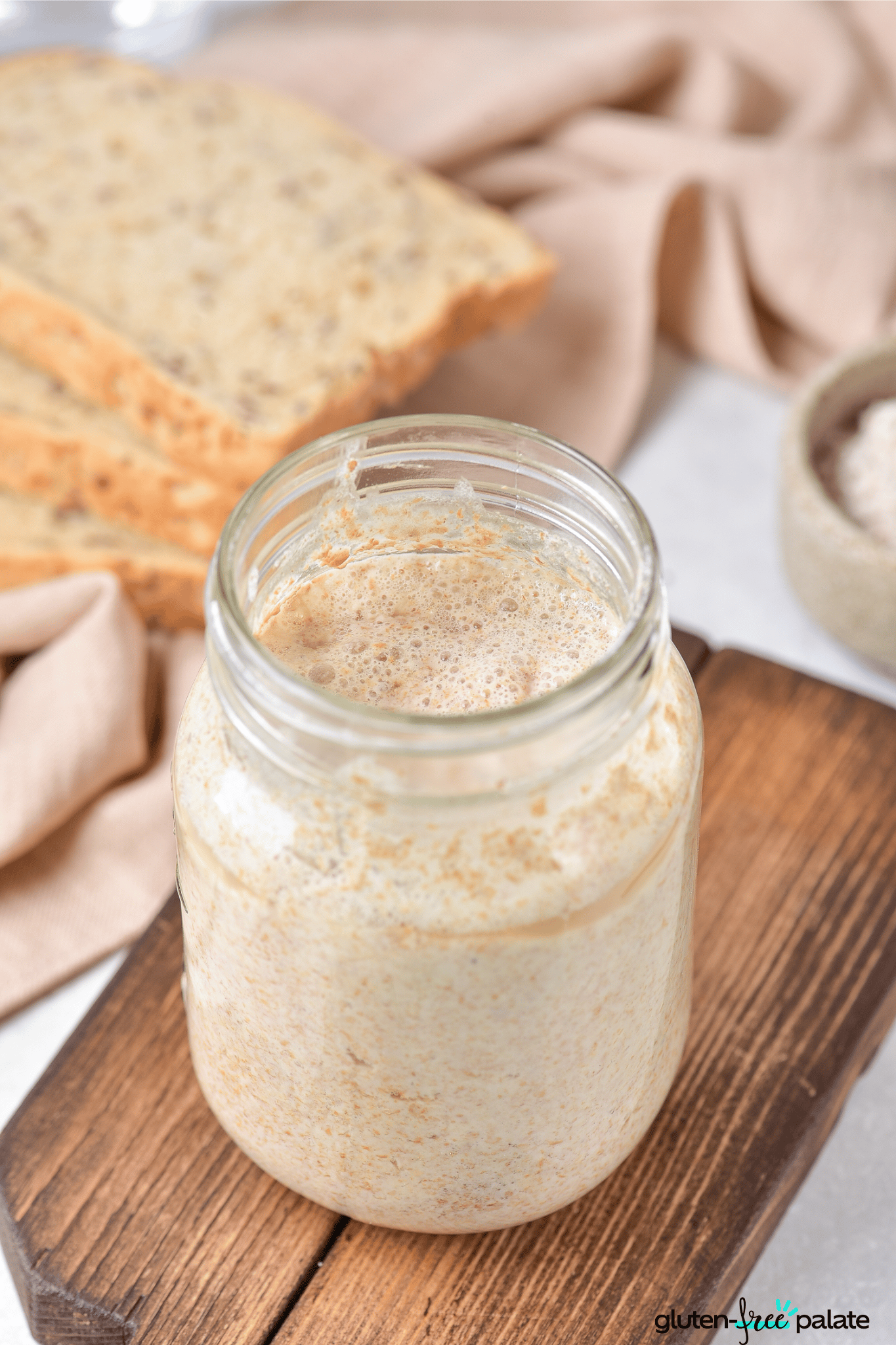
With a little patience and care, you’ll quickly get the hang of it, and before you know it, you’ll be enjoying the magic of natural fermentation. The best part? Your efforts will pay off with incredible gluten-free sourdough baked goods that have rich flavor, perfect texture, and that signature sourdough tang. And it's all without needing commercial yeast.
Sourdough starters are referred to by quite a few different names, such as Levain, Starter sponge, Mother sponge, Chef, Biga, or Poolish.
Once your gf sourdough starter is ready, use it to make your first gluten-free sourdough bread. There's also another sourdough starter recipe in that post. Both work well! You can also make some delicious gluten-free sourdough waffles.
GLUTEN-FREE SOURDOUGH STARTER RECIPE
I love making this gluten-free sourdough starter. It was an absolute lifesaver when yeast was hard to find during the pandemic, with everyone suddenly becoming a home baker. Having a naturally fermented starter meant I could still bake delicious bread without relying on store-bought yeast.
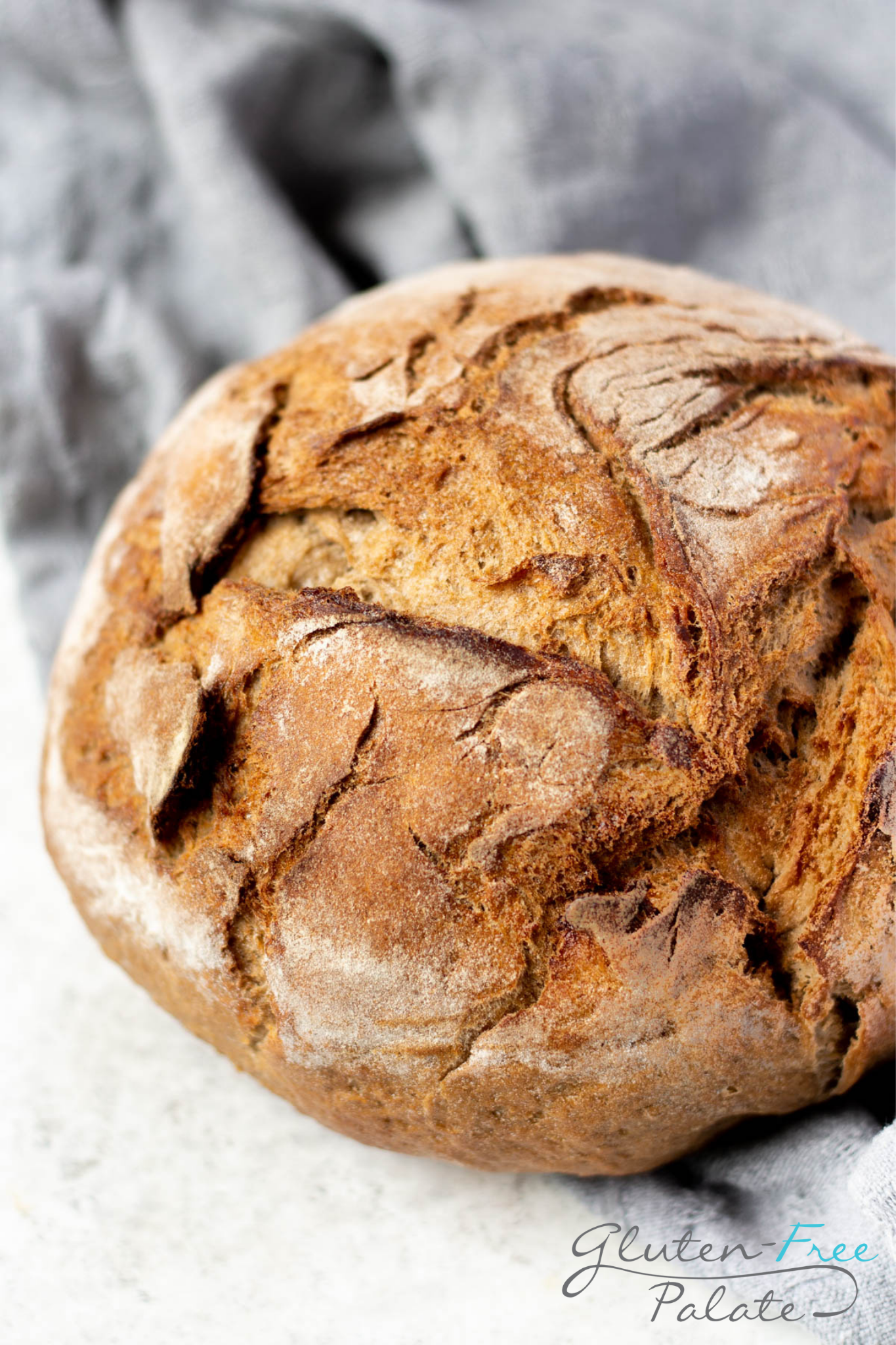
This starter is made with just a few simple ingredients, but it does require time and patience to develop. The good news? If you stick with it, you’ll be rewarded with incredible gluten-free baked goods that have a depth of flavor and texture you just can’t get from commercial yeast.
And don’t worry about waste. Keep reading for creative ways to use the discard so you can make the most of this amazing sourdough process!
WHY YOU’RE GOING TO LOVE THIS GLUTEN-FREE SOURDOUGH STARTER
Easier than you think - Making your own gf sourdough starter is easier than you think. With my tips and troubleshooting guide, you'll master this in no time.
Simple ingredients - It's two ingredients. Flour and water...and patience!
Fun to make - It is fun to make your own gluten-free sourdough starter. If you have children, it is just like a science experiment watching it grow and change. They'll be so amazed and want to join in on feeding the starter.
INGREDIENTS IN GLUTEN-FREE SOURDOUGH STARTER
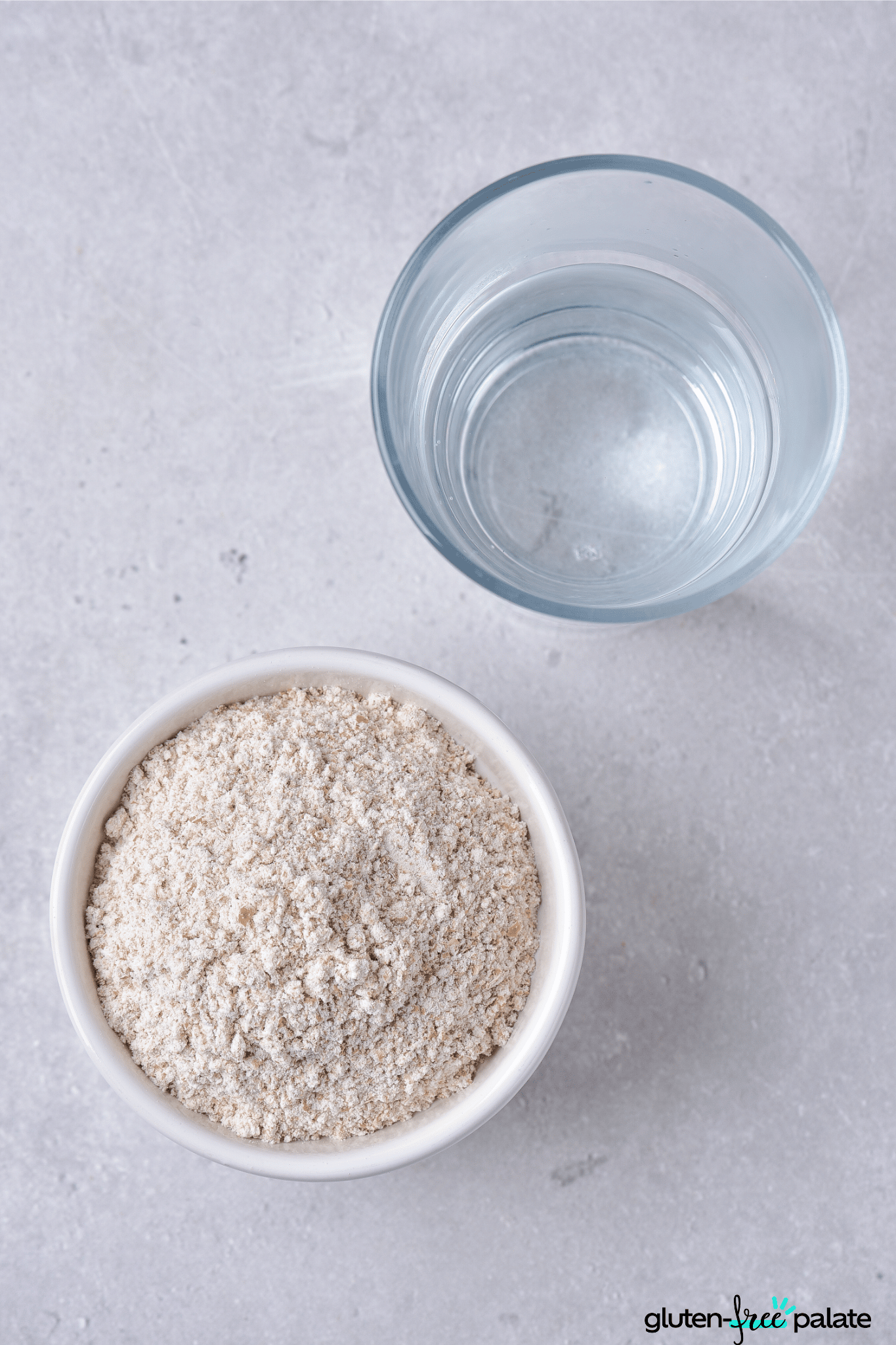
Buckwheat flour - 4 oz. of buckwheat flour. This is our gf flour of choice for the best sourdough starter.
Warm water 5 oz. of water at 85F. You can use tap water or filtered water. If you are concerned about chlorine and hard water quality, use filtered water.
EQUIPMENT NEEDED FOR THIS GLUTEN-FREE STARTER
Sourdough Starter Jars - You get such a variety of sourdough starter kit jars that you can use or just simply use a jar with a screw-top lid.
If you have any questions about making gluten-free sourdough starter, please leave a comment and we will get back to you as soon as possible.
HOW TO MAKE GLUTEN-FREE SOURDOUGH STARTER
Day 1: Starting from scratch
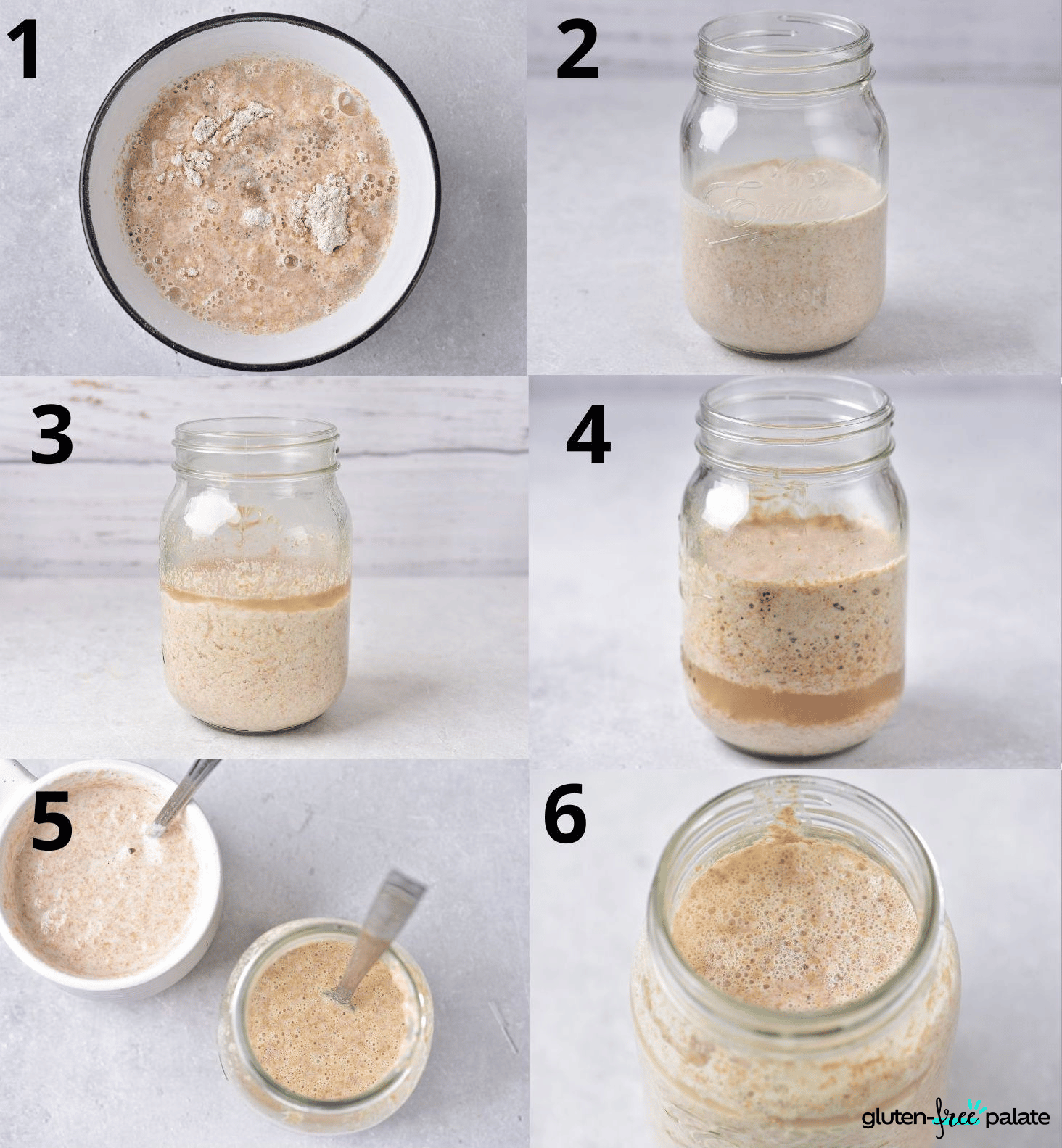
- Put buckwheat flour in a deep bowl and add a little more than half a cup of warm water. The water temperature should be about 85 F.
- Mix thoroughly so that there are no lumps.
- Then, pour the mass into a small glass container. Cover with a lid and leave at room temperature overnight.
Day 2: Mix and wait
- After a day, mix the contents of the jar and leave again for a day. If liquid appears in the jar, you can drain it or mix it with it.
Day 3: Feed the starter
- The next day, you can again notice a layer of liquid on top, but there will already be more of it - the starter needs to be fed.
- You will also notice air bubbles in the middle of the starter. This means that the yeast reaction that is needed has begun. The smell of sourdough should be slightly sour but not sharp and unpleasant.
- If you see that black mold has appeared on top, then it is better to throw this sourdough starter out and start over. If you notice your sourdough is growing too big, use a larger jar or discard a little more.
- Mix 2 oz. of buckwheat flour and 2 oz. of warm water. Add to the jar, mix, and leave for another day.
Day 4: Sour smells
- On the fourth day, the yeast reaction continues. The smell should still be slightly sour. The starter needs to be fed, but now half of it needs to be thrown away. Then you need to mix 2 oz. of flour and 2 oz. of water, pour into a jar, mix, and leave for another day.
Day 5: Ready for use
- The next day, the entire sourdough will bubble, which will mean that it is completely ready for further use for baking -- for crepes, for bread, for pancakes. At this stage, you can throw away part of the starter or give it to a friend, then feed the starter and put it in the refrigerator so that you don’t have to feed it so often.
Day 6 and Beyond: Feeding sourdough starter
- Feed it once every 10-14 days.
Before using the sourdough starter: To get the best results, make sure to feed your starter about a day before using it. This gives it time to wake up and build strength for baking. Stick to the usual feeding routine—discard half, then add 2 ounces of gluten-free flour and 2 ounces of water. Give it a good stir, and let it do its thing.
If you’re baking often, it’s best to keep your starter at room temperature and feed it daily to keep it active and ready to go. Otherwise, you can store it in the fridge and just feed it a day before you plan to use it. A well-fed starter means better rise, better texture, and the best gluten-free sourdough bread!
For the complete list of ingredients and instructions for making a gluten-free sourdough starter, please see the complete recipe below.
TIPS FOR MAKING A GLUTEN-FREE SOURDOUGH STARTER
Timing Matters: The suggested times for making a gluten-free sourdough starter are just a rough guide. Unlike traditional baking, this process requires you to rely on your senses. Look. Smell. Observe.
Your starter's progress depends on factors like temperature, humidity, and the specific gluten-free flour you're using. If it’s smelling pleasantly tangy and showing visible bubbles, you’re on the right track!
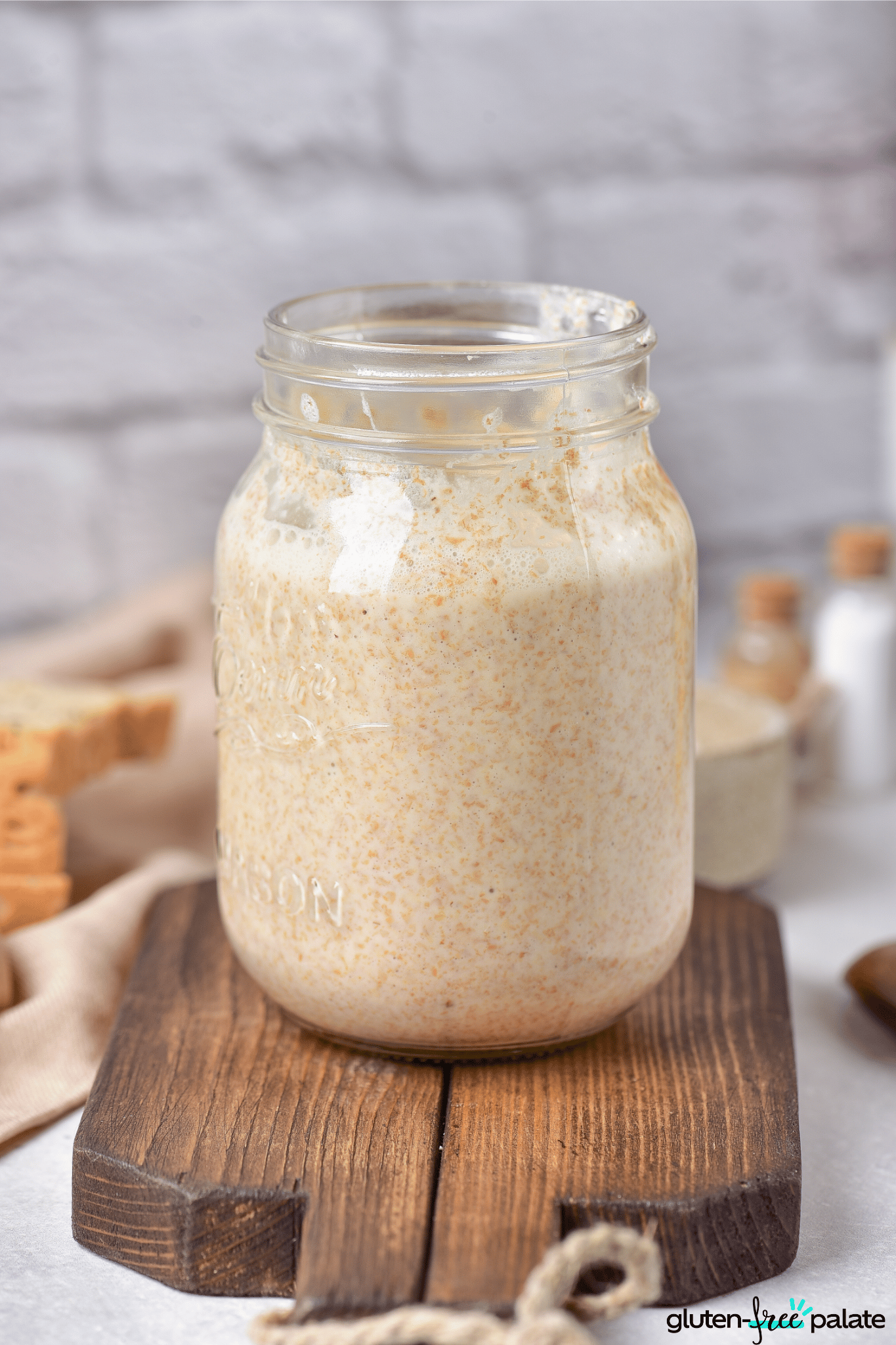
Don’t Waste Your Discard! As you build your starter, you’ll regularly remove a portion of it. That's is called the discard. But don’t throw it away! You can use sourdough discard in all kinds of recipes, from pancakes and crackers to muffins and flatbreads.
If you’re not ready to use it right away, simply store it in the refrigerator for up to two weeks or freeze it for later. That way, nothing goes to waste!
Watch Out for Mold: Not all changes in your starter are good ones. If you notice black mold or any unusual colors like pink, white, or orange, it’s best to toss it and start fresh. Mold can be a sign of contamination, and while it’s frustrating to start over, it’s better than risking an unsafe starter.
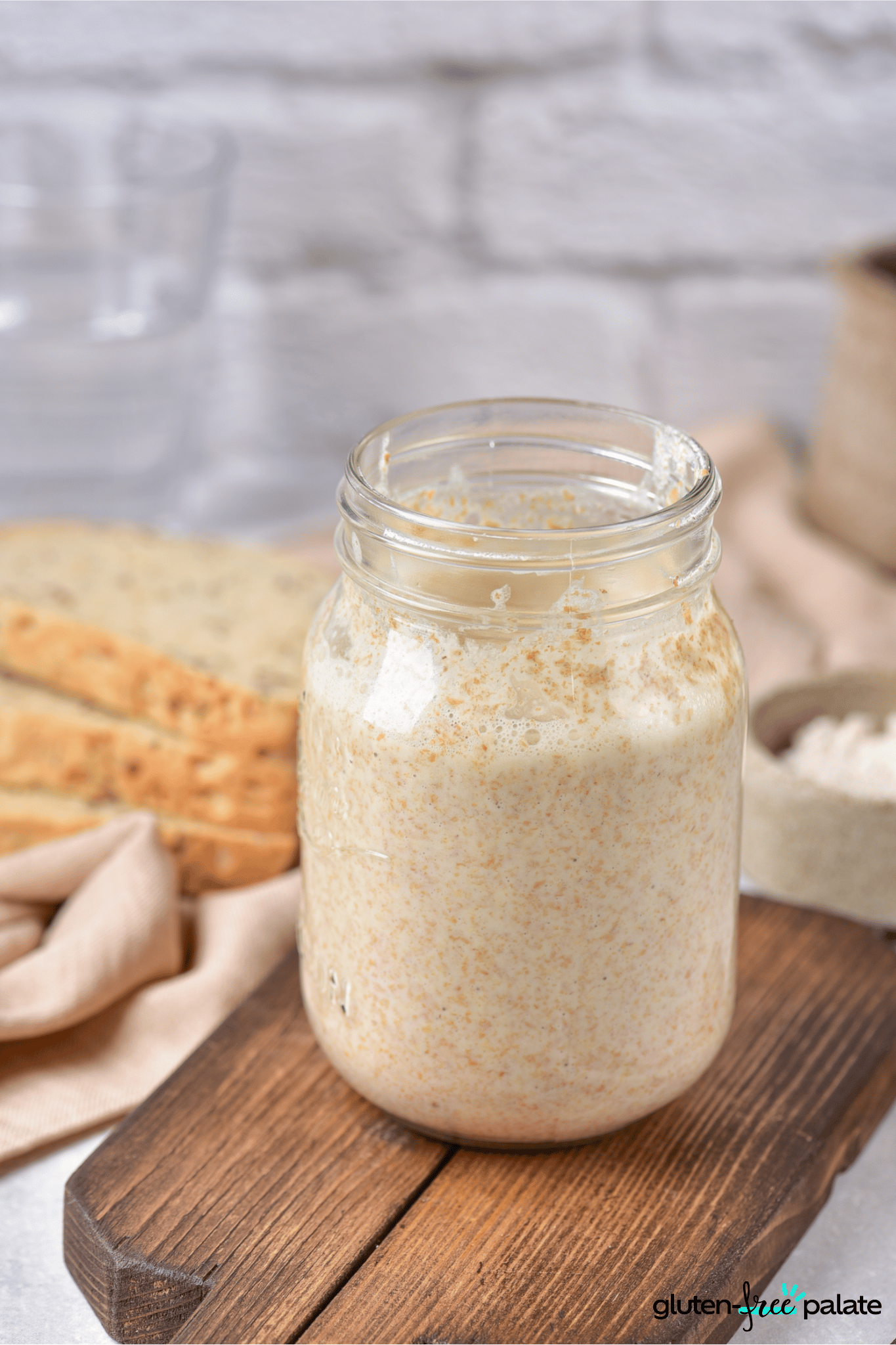
How to Know When It’s Ready: Patience is key, but how do you know when your starter is good to go? It should double in size, develop a sweet yet slightly sour aroma, and be full of bubbles (these air pockets show that wild yeast is active and happy).
If it meets all these signs, congratulations—you’ve successfully made a gluten-free sourdough starter, and you’re ready to bake some delicious gluten-free bread!
GLUTEN-FREE SOURDOUGH STARTER: TROUBLESHOOTING GUIDE
If the starter isn't active at all: That's ok! Creating a gluten-free sourdough starter is part science, part art, and sometimes it needs a little encouragement. If your starter isn’t bubbling or showing signs of life, you can add a few grams of commercial yeast to jumpstart the process.
Over time, as you continue feeding it, the wild yeast will naturally take over, replacing the commercial yeast. Some bakers also try using a heating pad to speed up fermentation, but be careful. Yeast dies at high temperatures, so keeping it warm but not too hot is key.
I forgot to feed my starter: Life happens, and sometimes feeding your starter slips your mind. The good news? You can usually pick up right where you left off. As long as there’s no off smell or visible mold, your starter should be fine. If it looks or smells questionable, it’s safest to start fresh.
How do I refresh my starter? Refreshing your starter is simple: discard half of it, then add 2 ounces of gluten-free flour and 2 ounces of water. Stir well, and your starter will be back on track. Regular feedings help maintain its strength and keep it active for baking.
What is the liquid on top of my starter? That dark liquid you might see on top is called hooch, and it’s a sign that your starter is hungry. You can either stir it back in for a stronger, more sour flavor, or pour it off if you prefer a milder taste in your baked goods. Either way, hooch is a normal part of the sourdough process and isn’t a sign of spoilage.
HOW DO YOU MAINTAIN A GLUTEN-FREE SOURDOUGH STARTER?
Feed it once every 10-14 days. About a day before using the starter, be sure to feed it so that it works well later. You need to feed it according to the same system, throw away half, add 2 oz. of flour and 2 oz. of water. If you bake frequently, store your starter at room temperature and feed it daily.
WHY IS MY GLUTEN-FREE SOURDOUGH STARTER NOT BUBBLING?
Firstly, let me mention it is not the type of bubbling like when you're boiling something on the stove. The texture on the top changes and is not as smooth. If you look at the jar from a side angle, you will see bubbles. Identify this first before you make any changes to your starter.
If it is still not bubbling, leave it for a few days longer. The period suggested is a guide, so I suggest you leave it for a few more days.
WHAT DOES GLUTEN-FREE SOURDOUGH STARTER SMELL LIKE?
It is a sweet and sour smell that is not pungent. Look out for strong and foul smells, which then tells you, you need to throw your starter away.
WHAT GLUTEN-FREE FLOURS SHOULD I USE FOR MY GF SOURDOUGH STARTER?
I like to use buckwheat flour and have had success with gluten-free flour, particularly King Arthur’s Measure for measure gluten-free flour. I have read up on people having impressive results using brown rice flour too.
WHAT IS A WILD YEAST SOURDOUGH STARTER?
A wild yeast sourdough starter is a starter made without using commercial yeast. It's a naturally fermented mixture that captures wild yeast and beneficial bacteria from the environment. Unlike commercial yeast, which is manufactured and provides quick, predictable results, wild yeast develops over time, creating a more complex flavor and a true sourdough rise.
WHAT IS THE RIGHT CONTAINER AND SPOON FOR MIXING AND STORING A SOURDOUGH STARTER?
So, let's drill it down to the basics. You'll need a glass jar or ceramic jar with a lid and a spoon. Avoid using metal objects. That goes for the jar's lid as well as the spoon you use. Stick to stainless steel. This is called using nonreactive tools. The reason for not using metal is the acid in the sourdough can react with the metal, and toxins can leach into the dough.
WHY CAN GLUTEN-FREE PEOPLE EAT SOURDOUGH?
Traditional sourdough is made from wheat, which contains gluten, but the fermentation process partially breaks down gluten proteins, making it easier to digest for some people. However, this does not make regular sourdough completely gluten-free.
For those with celiac disease or a severe gluten intolerance, even trace amounts of gluten in traditional sourdough can be harmful. The only truly safe option is gluten-free sourdough, made with gluten-free flours like rice, sorghum, or buckwheat.
If you love making homemade gluten-free bread, this gluten-free bread recipe is simple to make, dairy-free, and bakes into the best bread ever. Try my gluten-free rolls recipe for light and fluffy rolls.
Gluten-Free Sourdough Starter
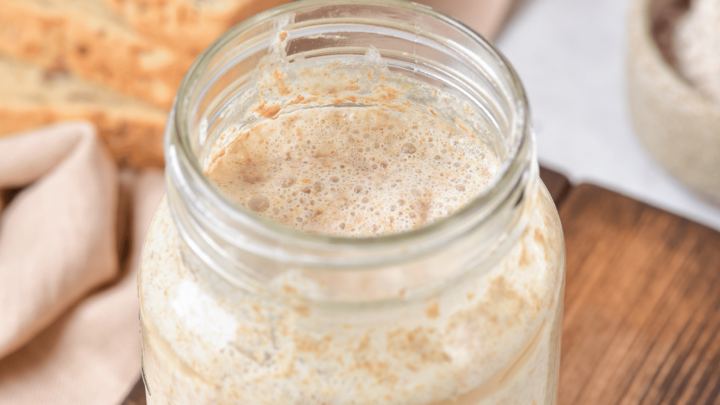
Making your own gluten-free sourdough starter is such an empowering and fun thing to make. It couldn't be easier using simple ingredients, visual cues, and your senses particularly your sense of smell.
Ingredients
- 4 oz. of buckwheat flour
- 5 oz. of warm water (85F)
Instructions
- Day 1
• Put buckwheat flour in a deep bowl and add warm water (about 85°F).
• Mix thoroughly to remove lumps.
• Pour the mixture into a small glass container.
• Cover with a lid and leave at room temperature overnight. - Day 2
• Stir the contents of the jar.
• Leave it at room temperature for another day.
• If liquid appears, either drain it or mix it back in. - Day 3
• A layer of liquid may appear on top; there will likely be more than before.
• Air bubbles should be visible inside the starter, indicating fermentation.
• The smell should be slightly sour but not unpleasant.
• If black mold appears, discard the starter and start over.
• If the starter grows too large, use a bigger jar or discard some.
• Feed the starter by mixing 2 oz. of buckwheat flour and 2 oz. of warm water, then adding it to the jar.
• Stir and leave it for another day. - Day 4
• The yeast reaction continues, and the smell remains slightly sour.
• Discard half of the starter.
• Add 2 oz. of flour and 2 oz. of water, mix well, and leave it for another day. - Day 5
• The sourdough should be bubbling, meaning it is fully active and ready for use.
• Use it for baking, crepes, bread, or pancakes.
• If not using immediately, either discard some or share with a friend.
• Feed the starter and store it in the refrigerator. - Day 6 and Beyond
• In the fridge, feeding is only needed once every 10–14 days.
Notes
- Before baking - About a day before using the starter, be sure to feed it so that it works well later. You need to feed according to the same system - throw away half, add 2 oz. of flour and 2 oz. of water.
- Store - If you bake frequently, store your starter at room temperature and feed daily.
Recommended Products
As an Amazon Associate and member of other affiliate programs, I earn from qualifying purchases. They never cost you extra.


Nutrition Information:
Yield:
1Serving Size:
1Amount Per Serving: Calories: 26Total Fat: 0gSaturated Fat: 0gTrans Fat: 0gUnsaturated Fat: 0gCholesterol: 0mgSodium: 7mgCarbohydrates: 6gFiber: 1gSugar: 0gProtein: 1g
This nutrition info is based on the exact ingredients and brands that I used a the time. It may not be 100% accurate. Please check your ingredients nutrition labels.
Did you make this gluten-free sourdough starter recipe? Please leave me a comment below, letting me know what you thought.
DID YOU MAKE THIS RECIPE?
Tag @glutenfreepalate on Instagram and hashtag it #glutenfreepalatebaker so we can see all the deliciousness!




Suz Anne Kurten
I do not understand the instructions to throw away starter. In regular sourdough you use the starter and then add to it. Please help me understand
Wendy Stoltz
Hi Suz,
You discard a portion of the starter, not the entire starter. Does that help?
Anita
Once the starter is fully active, then you can use the discard. I only save about two tablespoons in the fridge and bring it out and feed it the day before I need to use it. (I always feed it at least once a week).
Glenys
Have got the starter in process. Need further instructions for the baking procedure as well as the cooking time. Thankyou
Wendy Stoltz
Hi Glenys,
There are 2 recipes mentioned - https://www.glutenfreepalate.com/easy-gluten-free-sourdough-bread/ or https://www.glutenfreepalate.com/gluten-free-sourdough-waffles/. I hope I am understanding your request. 🙂
lisa Geer
I also have gluten starter in the room, will the wild yeast cross contaminate my gluten free starter?
Wendy Stoltz
Hi Lisa,
I am not sure, I did research but can't find anything conclusive.
Jess
Super excited to try this. I have never made sourdough before but isn't the gas suppose to be able to release from the jar? If I am using a regular canning jar what do i do with my lid? Just set it on top of the jar or screw it onto the jar? Thanks!
Wendy Stoltz
Hi Jess,
I am glad you are excited it is a fun process. You can close it each time but if you prefer you can cover it loosely with the lid, plastic wrap, or even a small cloth
Anita
I like to use a straight sided wide mouthed canning jar. I use a plastic lid (which isn’t airtight) and just screw it on loosely.
Chris
Do you need to always use the same gf flour when feeding your starter? I.e. My starter is made using Anthony's Brown Rice flour and I was wondering if it was okay to feed with buckwheat or a one for one gf flour. Also, is there any benefit to adding yeast to help with the bubbling? TIA.
Wendy Stoltz
Hi Chris,
You can use different flour; I would just suggest you keep an eye on it to see how it reacts. Make sure to keep it warm and feed it regularly. Technically adding yeast will speed up the process but I have not really needed to do it.
Howsrd
I have been using King Arthur measure for measure gluten free flour for the starter. For 10 days I have discarded half the starter and added a half cup of water and one cup of the measure to measure. The starter has air bubbles but when I take a sample to see if it floats in warm water it sinks. Please advise what I should do next? Maybe start again with buckwheat?
Wendy Stoltz
Hi Howsrd,
If your gluten-free sourdough starter is not floating when you test it, it's possible that it may need more time to ferment and become active. The floating test is a good indicator of a mature starter, but it's not the only factor to consider.
Here are some suggestions: give it more time, adjust your feeding schedule, and keep the starter at a consistent temperature.
If none of these troubleshooting steps work, it may be worth starting over with a new gluten-free sourdough starter.
lauren
Hello!
This is my second time trying to make the starter (after a fail the first time :). I am using the buckwheat flour brand you recommended. On Day 2 (less than 24 hours after combining the buckwheat & water), my entire jar of starter bubbled and doubled in size. There is no layer of liquid on top either. Is this normal? Is it already mature enough and able to bake with it? At this point do I need to discard part of it and feed it? How thick / liquidy should the starter be when you know it is ready?
Thank you for your help!
Wendy Stoltz
Hi Lauren,
Congrats on the bubbly and doubled starter! It's not fully mature yet. Continue following the directions for discarding and feeding regularly. Aim for a thick, pourable consistency. Happy baking!
Michelle
I mixed the ingredient as per the recipe but it seems very thick. Is that normal?
Wendy Stoltz
Hi Michelle,
Yes, it's normal for a gluten-free sourdough starter to seem thicker compared to a wheat-based starter, especially at the beginning. Gluten-free flours absorb water differently, which can result in a thicker texture initially. However, as your starter begins to ferment and bubble over time, it should become a bit more fluid.
Michelle
Thank you so much for answering! Today is day five and I think it needs a little more time. It’s not quite as bubbly as I’m thinking it needs to be although it looks healthy. So, I will continue to feed for a few more days.
Wendy Stoltz
No worries, Michelle. Keep at it.