



Most clam chowder is not gluten-free. The classic New England version starts with a wheat flour roux, which means a celiac diagnosis used to mean giving the recipe up entirely. This version gets you a thick, creamy, bacon-rich bowl in about 40 minutes without a speck of wheat. The trick is the bacon-fat roux done with a 1:1 gluten-free flour blend, which holds the cream and broth together exactly the way the original does.
I grew up on Campbell's New England clam chowder out of the red and white can. After my diagnosis, that version was off the table, and most "gluten-free" chowders I tried at restaurants tasted thin and watery because they skipped the roux entirely. This recipe brings back the texture I missed without the risk.
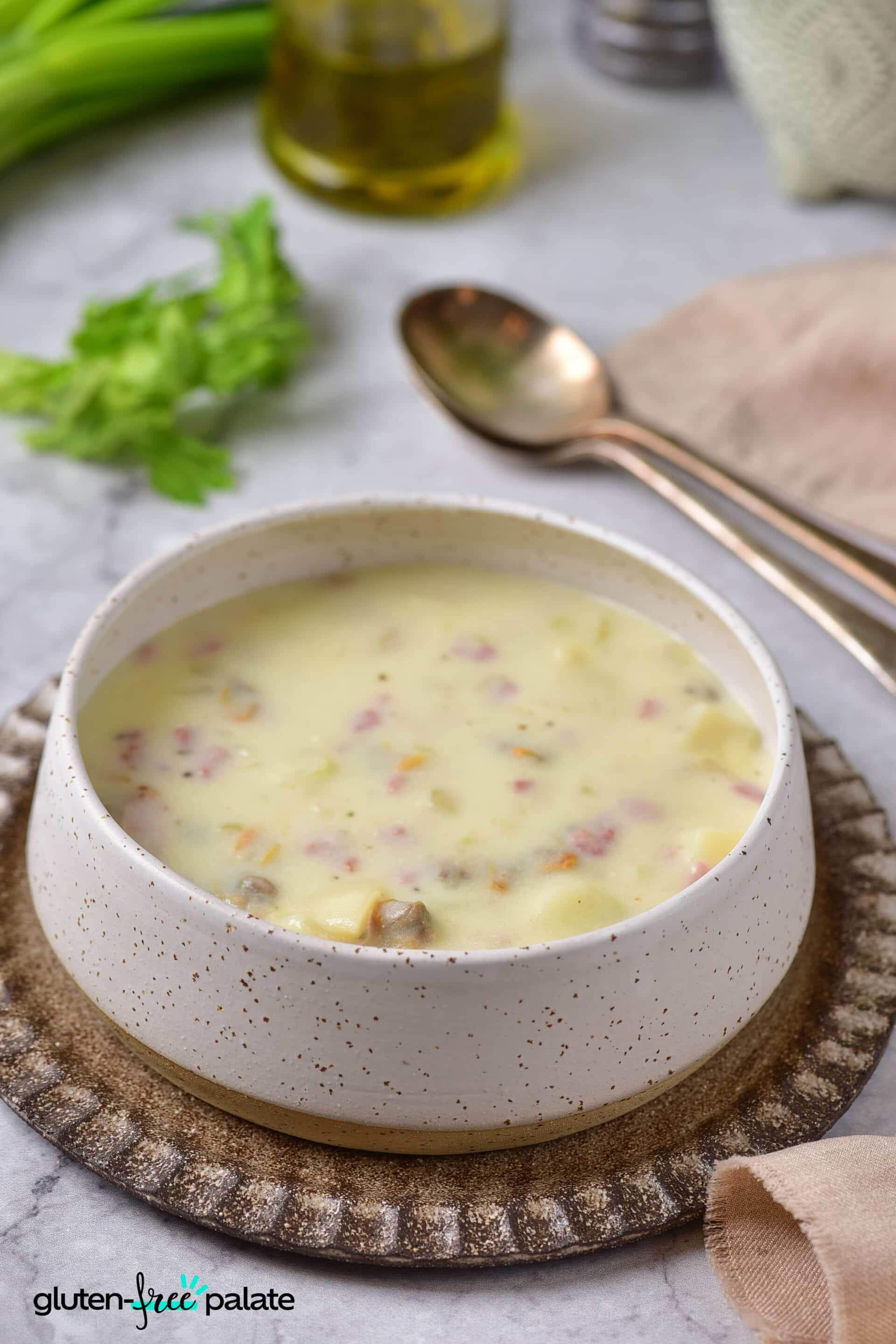
Why You'll Love This Gluten-Free Clam Chowder
Real New England texture. The roux is built in the bottom of the pan with bacon fat and a 1:1 gluten-free flour blend, so the chowder thickens the way a classic does. No grainy cornstarch finish, no thin broth pretending to be chowder.
40 minutes, start to finish. Most clam chowder recipes ask for an hour or more. This one runs in about 40 minutes from the first slice of bacon to the bowl in front of you.
Pantry-friendly. Canned clams work beautifully here, and most home cooks already have the rest of the ingredients on hand.
Family-tested. If you cook for a mixed household where one person eats gluten-free and the rest do not, no one notices the difference. That has been the test in my kitchen for years.
What Makes Most Clam Chowder Off-Limits
The wheat flour roux is the issue. Almost every traditional New England clam chowder recipe (and every can on the grocery shelf, including Campbell's) uses wheat flour to thicken the soup. Cross-contamination at restaurants is also common because the same pots and ladles get used for floured soups all day. If you have celiac disease, ordering chowder out is rarely worth the risk.
The fix at home is straightforward. Swap the wheat flour for a certified gluten-free 1:1 flour blend. I tested this recipe with three blends. Bob's Red Mill 1:1 produced the thickest, most stable roux. King Arthur Measure for Measure was a close second. Cup4Cup worked but ran slightly thinner.
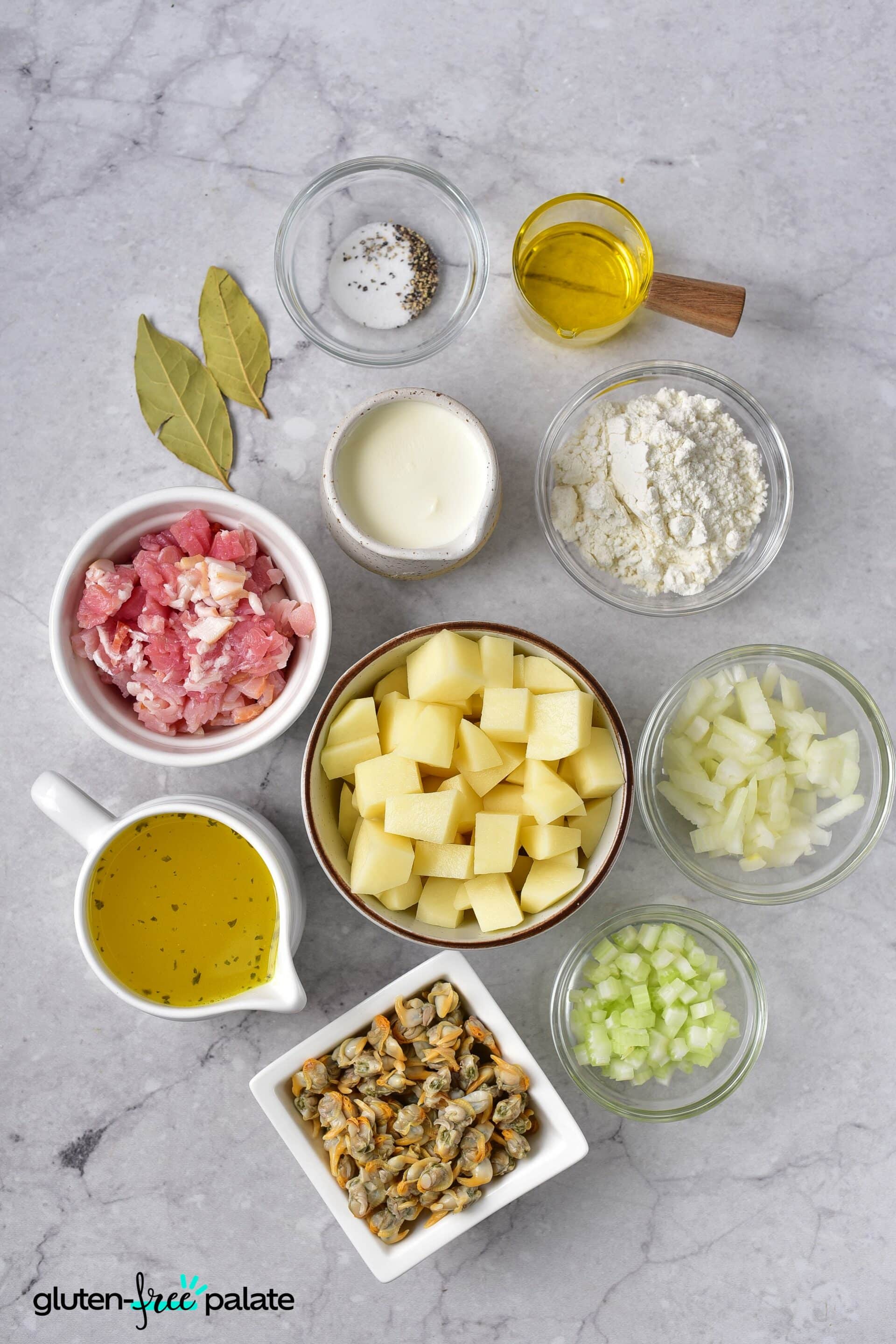
Ingredients
Bacon. Adds smoke and the rendered fat that makes the roux work. Most plain bacon is naturally gluten-free, but always check flavored varieties for malt or soy sauce additives.
Onion. A medium yellow onion gives a sweet, savory base. A shallot can sub in for a slightly sharper flavor if that is what you have.
Stalks celery. Two stalks, finely diced. Celery is a chowder non-negotiable for me.
Cloves garlic. Two cloves, minced. Optional in some traditional recipes, but it lifts the whole pot.
Potatoes. Yukon Gold or Red Bliss. Waxy potatoes hold their shape and give the chowder body.
Gluten-free flour. A certified gluten-free flour blend (1:1 style) is what you want. Not almond flour, not coconut flour. The blend needs starch to mimic the binding action of wheat.
Butter. A little extra butter on top of the bacon fat helps the roux come together smoothly. Plain butter is gluten-free, but flavored or whipped butters can have additives worth checking.
Heavy cream. Full-fat heavy cream is what gives this its New England character. Half-and-half works in a pinch but the result is thinner.
Canned clams. Two cans of chopped baby clams, plus the juice. Snow's, Bumble Bee, and Crown Prince all label gluten-free. Reserve the clams and the juice separately.
Bay leaves. Two leaves. Earthy, slightly sweet, the kind of background flavor you only notice when it is missing.
Broth. Seafood or fish broth gives the deepest flavor. If you cannot find it, use 1 cup of bottled clam juice plus 1 cup of water, or substitute chicken broth. Always check the label for hidden wheat or barley.
Salt and black pepper. Start with one teaspoon salt and a generous crack of black pepper, then taste and adjust at the end.
Olive oil. A small splash to start the bacon if your bacon is lean.
The Bacon-Fat Roux: The Step That Matters Most
This is the difference between a chowder you remember and one that disappoints. After the bacon and vegetables soften, sprinkle the gluten-free flour directly into the pot and stir continuously for a full 2 minutes. This is not optional time. Gluten-free flour blends need the active heat to lose their raw, starchy taste. Skip this step and the chowder will taste pasty.
If the flour clumps, add a splash of broth and whisk hard until the lumps break up. The roux should look like wet sand and smell faintly toasted before you add the rest of the liquid. That is the signal that the flour has cooked through.
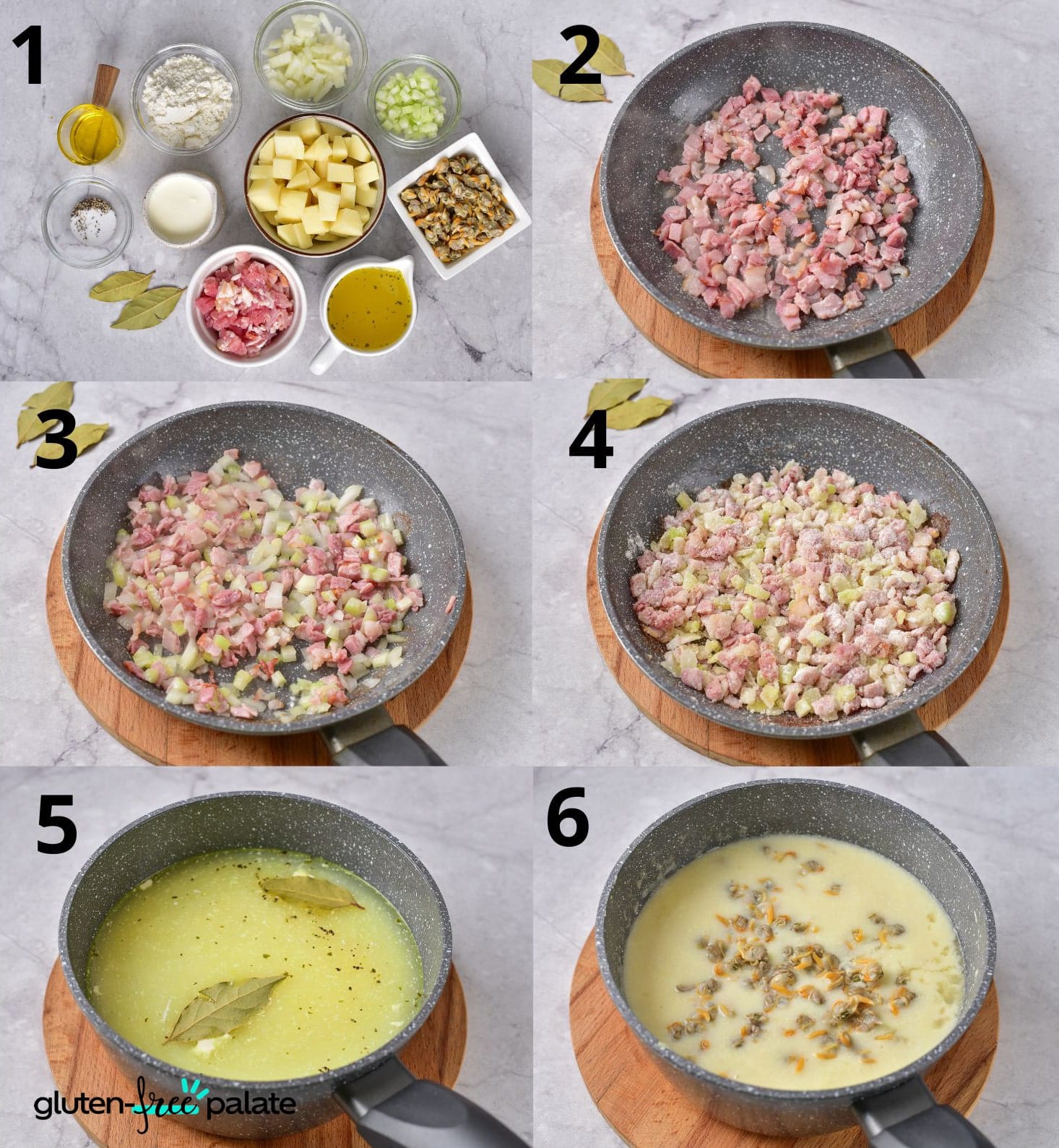
How to Make Gluten-Free Clam Chowder
- Drain the canned clams over a measuring cup. Reserve clams and reserve the juice separately. Set both aside.
- Dice the bacon. In a large dutch oven or stock pot over medium heat, render the bacon in a small splash of olive oil for 4 to 5 minutes until the fat releases and the bacon crisps slightly. Stir occasionally so it does not stick to the bottom of the pan.
- Add the diced onion and stalks celery. Cook for about 4 minutes until soft and translucent. Add the cloves garlic and cook for 30 seconds until fragrant.
- Add the butter and let it melt into the bacon fat. Sprinkle the gluten-free flour over the vegetables and stir continuously for 2 minutes. The flour should coat everything and lose its raw smell. Break up any lumps as they form.
- Slowly pour in the broth and the reserved clam juice, whisking as you go to keep the roux smooth. Add the chopped potatoes, heavy cream, bay leaves, teaspoon salt, and black pepper. Stir well.
- Bring the pot to a low boil, then reduce to a simmer. Cover with a lid set slightly ajar and let it simmer for 20 minutes, or until the potatoes are fork-tender.
- Add the reserved clams and stir. Simmer for 2 to 3 minutes, just enough to heat them through. Overcooking makes clams rubbery, so do not let this go longer.
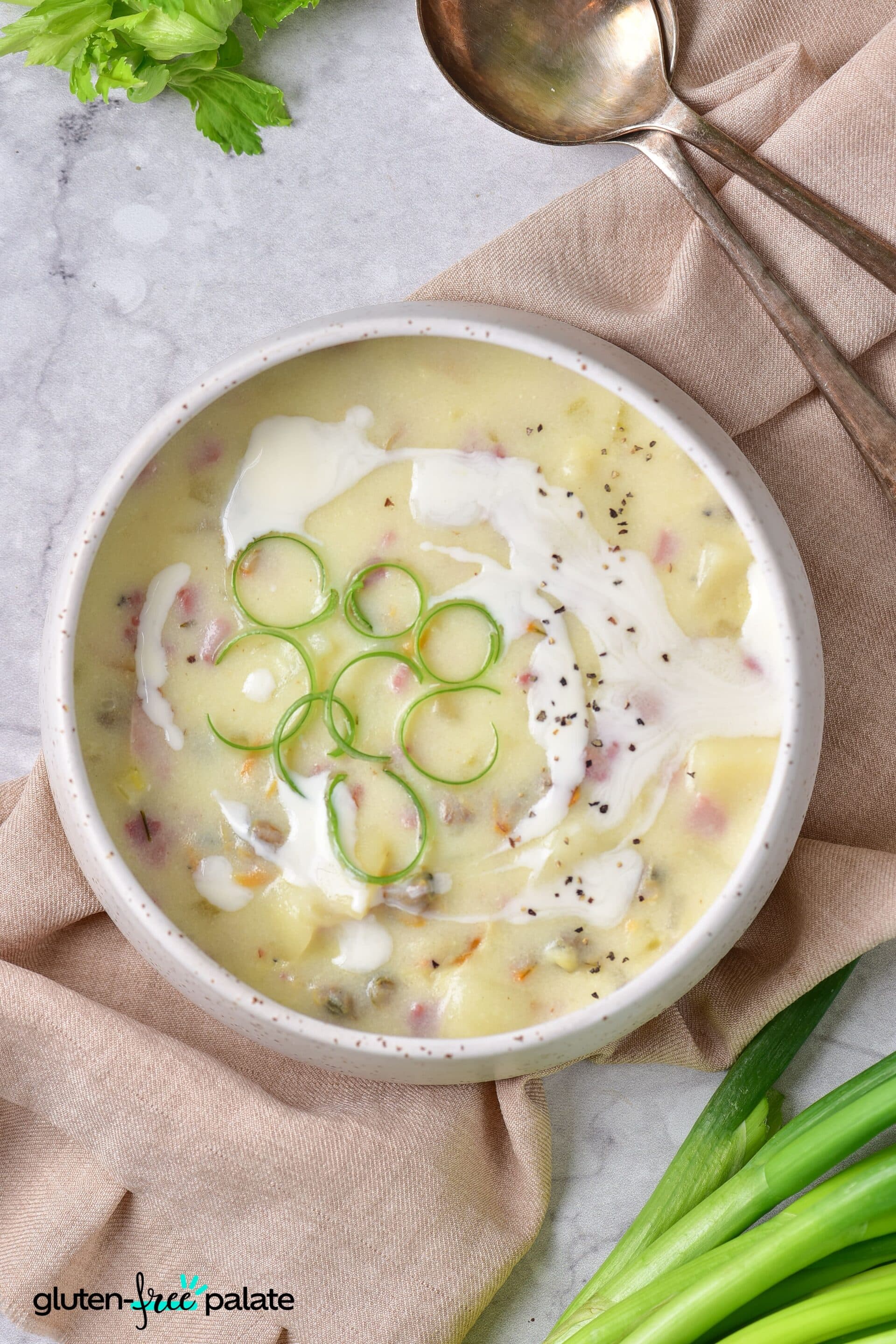
- Remove the bay leaves. Taste and adjust salt and pepper. Serve hot, garnished with a swirl of cream and chopped chives or green onions if you like.
Tips for the Best Gluten-Free Clam Chowder
Cook the flour the full 2 minutes. Undercooked gluten-free flour tastes raw. The 2-minute roux step is the single most important detail in this recipe.
Add clams at the very end. Two to three minutes is enough. Longer than that and they turn rubbery.
Use waxy potatoes. Yukon Gold, Red Bliss, or Fingerling. Russets fall apart and turn the chowder gluey.
Reserve clams and reserve the clam juice. Both go into the pot, but at different times. The juice goes in with the broth. The clams go in last.
Crisp the bacon. Render it long enough to release its fat and pick up some color. Soft, undercooked bacon makes a flat-tasting chowder.
Garnish with intent. A swirl of heavy cream, fresh chives, parsley, or thyme works. A few extra crumbles of crispy bacon on top never hurt.
Serve with a side. Crusty gluten-free bread or oyster crackers turn this into a full meal.
How to Thicken Gluten-Free Clam Chowder Without Wheat Flour
The bacon-fat roux is the cleanest method, but a few alternatives work well if you want to skip flour entirely or fix a chowder that turned out thin.
| Method | How to Use It | Notes |
|---|---|---|
| 1:1 GF flour roux | 2 tbsp flour cooked into bacon fat for 2 minutes | Best texture, closest to original |
| Cornstarch slurry | 1 tbsp cornstarch + 1 tbsp water, stirred in at the end | Quick fix, slightly glossy finish |
| Arrowroot slurry | 1 tbsp arrowroot + 1 tbsp water, stirred in at the end | Good for paleo or grain-free diets |
| Potato puree | Mash some of the cooked potatoes against the side of the pot | No starch needed, very rustic texture |
Choosing Your Clams
Most home cooks use canned clams and the result is excellent. Snow's, Bumble Bee, and Crown Prince all sell chopped baby clams that are labeled gluten-free. A 6.5 oz can is the standard size and two cans is right for this recipe.
Fresh clams (littlenecks or cherrystones) work if you have access to good seafood. You will need to steam them open, chop the meat, and strain the cooking liquid through cheesecloth to use as part of the broth. The flavor is richer but the prep adds 20 minutes.
Frozen chopped clams are a third option and behave similarly to canned. Thaw before using and reserve any liquid.
Variations
Dairy-free clam chowder. Swap the heavy cream for full-fat coconut milk and use a dairy-free butter substitute. The result is slightly sweeter but holds up well. Coconut milk is the cleanest swap I have tested.
Manhattan-style. Skip the cream entirely and add a 14 oz can of crushed tomatoes plus a splash more broth. Different soup, same comfort.
Slow cooker version. Render the bacon and build the roux on the stovetop, then transfer everything to a slow cooker. Cook on low for 4 hours, add the clams in the last 10 minutes.
Instant Pot version. Use sauté mode for the bacon, vegetables, and roux, then add the rest (except the clams) and pressure cook on high for 8 minutes. Quick release, stir in the clams, simmer 2 minutes on sauté.
With leeks. Sub one large leek for the onion. Slice the white and light green parts thin and rinse well. Adds a sweeter, more delicate flavor.
Substitutions and Replacements
Bacon. Pancetta or diced gluten-free ham work. Pancetta gives a slightly different smoke profile but the fat ratio is similar.
Clams. Shrimp, scallops, or chunks of white fish (cod, haddock) all work. Add seafood at the end so it does not overcook.
Potatoes. Sweet potatoes change the flavor profile. Cauliflower works for low-carb versions but releases water, so reduce the broth slightly.
Heavy cream. Half-and-half works for a lighter chowder. Coconut milk or unsweetened almond milk both work for dairy-free versions, with coconut being closer to the original texture.
Storage and Make-Ahead
Let the chowder cool to room temperature, then transfer to an airtight container. Store in the fridge for up to 3 days. Reheat gently over medium heat, stirring often. Cream-based soups can separate when reheated too aggressively. There's a good guide on soup storage from Penn State.
To freeze, cool completely and freeze in airtight containers for up to 3 months. Note that cream-based chowders sometimes separate when thawed. Whisk hard while reheating to bring it back together. The texture is approx 90% of fresh.
This chowder also makes ahead well. Build the entire recipe (minus the clams), cool, and refrigerate. Reheat gently and add the clams in the last 2 minutes before serving.
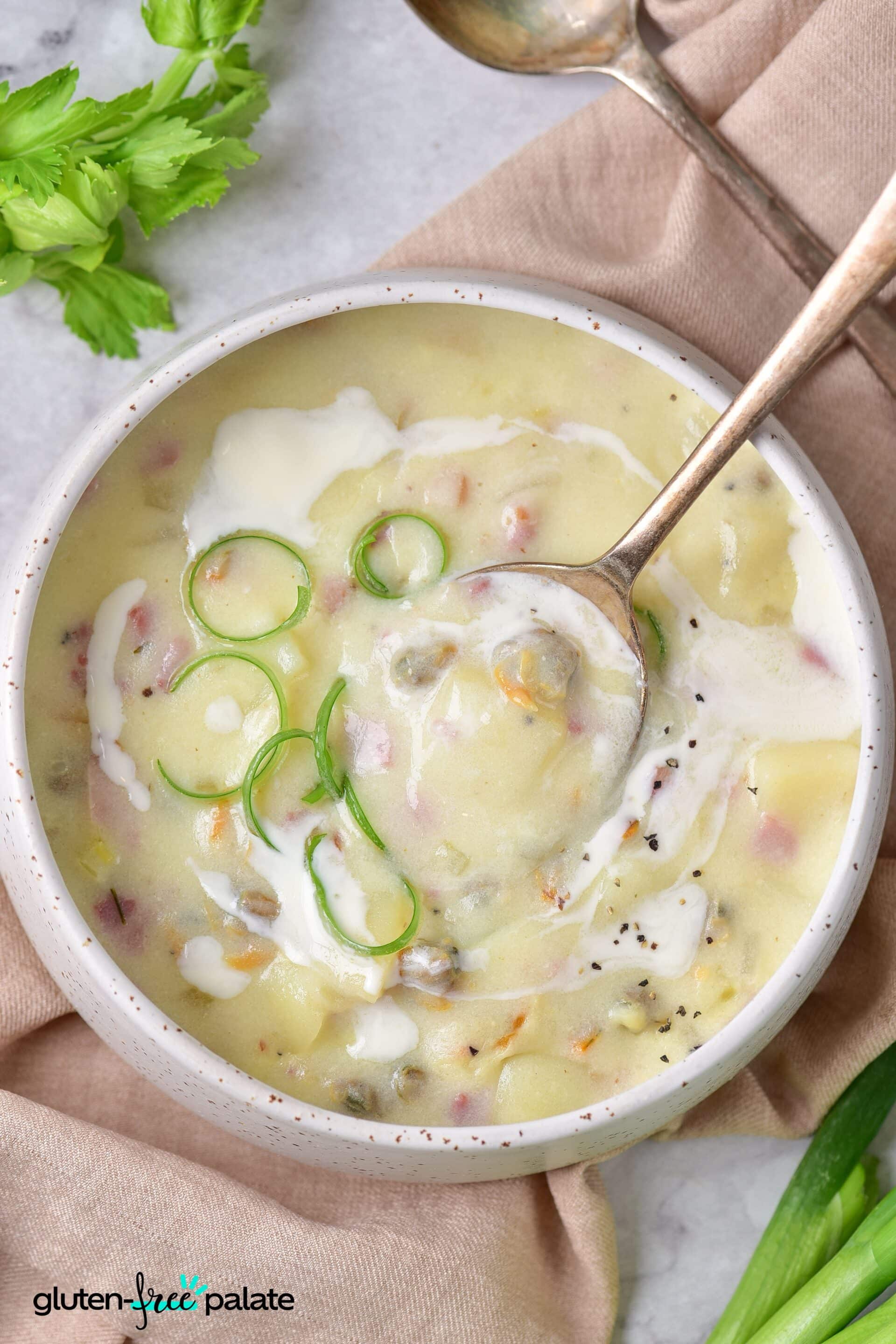
Gluten-Free Clam Chowder
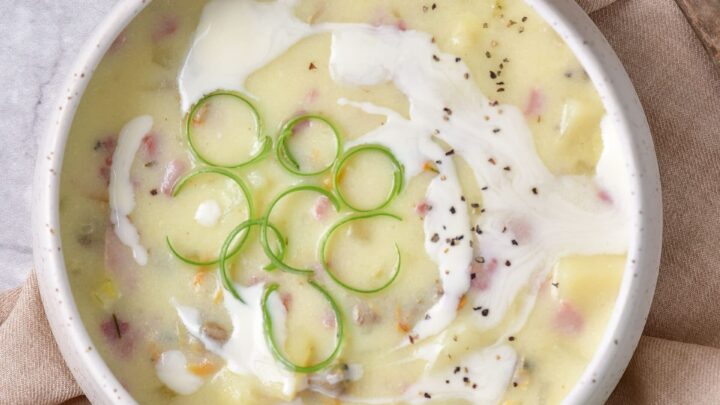
Gluten-Free Clam Chowder is a classic, hearty soup that’s perfect for any occasion. Made with broth, tender potatoes, and fresh clams, this soup is delicious.
Ingredients
- 3 slices bacon, diced
- 1 chopped onion
- 3 potatoes, diced
- 3 celery stalks, diced
- ½ cup cream 15-20%
- ½ cup clams
- 2 bay leaves
- 2 cups broth
- 2 tbsp gluten-free plain flour
- 1 tbsp olive oil
- ⅓ tsp salt
- ⅓ tsp pepper
Instructions
- In olive oil, fry the diced bacon in a pan for 4-5 minutes, stirring occasionally.
- Add chopped onion and celery to it, mix, and fry everything together for another 4 minutes.
- Add gluten-free flour to the pan, mix everything together, and wait another 2 minutes.
- Transfer the fried bacon along with onion and flour to a saucepan, pour in the broth, add the chopped potatoes, as well as cream, bay leaf, salt, and pepper. Stir and cook for 20 minutes.
- When the soup is ready, add the clams, stir and cook for a couple more minutes. Take the saucepan off the heat.
Notes
- The soup can be served with additional cream and green onions.
- Broth - We suggest using seafood or fish broth for a robust and intricate seafood taste in your soup. However, if you don't have access to seafood broth, you can try substituting it with chicken stock, vegetable stock, or clam stock. Another option is to combine 1 cup of clam juice and 1 cup of water.
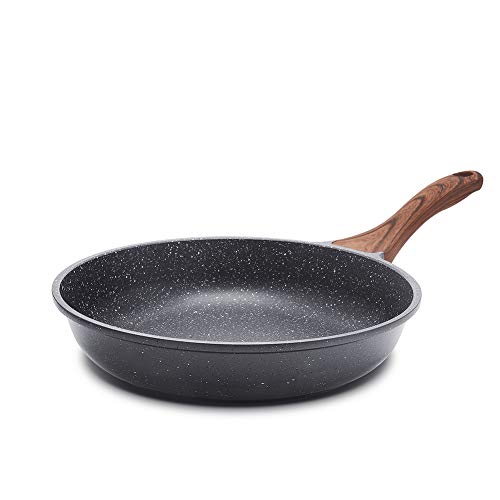
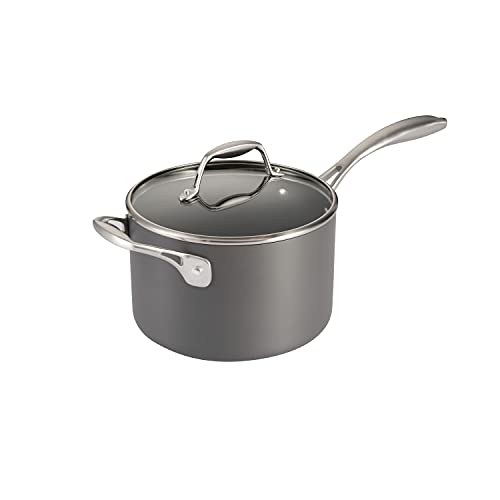
Recommended Products
As an Amazon Associate and member of other affiliate programs, I earn from qualifying purchases. They never cost you extra.

Nutrition Information:
Yield:
4Serving Size:
1Amount Per Serving: Calories: 393Total Fat: 19gSaturated Fat: 9gTrans Fat: 0gUnsaturated Fat: 9gCholesterol: 65mgSodium: 895mgCarbohydrates: 38gFiber: 4gSugar: 6gProtein: 18g
This nutrition info is based on the exact ingredients and brands used at the time. It may not be 100% accurate. Please check your ingredients nutrition labels.
If you make this gluten-free clam chowder recipe, leave me a comment and let me know what you thought. Tag me on instagram so I can see your bowl. Tell me what kind of clams you used. The variations on this dish are part of what makes it fun.
No. Most clam chowder, including canned versions and most restaurant chowders, uses wheat flour as a thickener. To make a celiac-safe chowder, you need to either build a roux with a certified gluten-free 1:1 flour blend or use a starch-based thickener like cornstarch or arrowroot.
No. Campbell's New England Clam Chowder lists wheat flour in its ingredients, which makes it unsafe for anyone with celiac disease or wheat sensitivity. Progresso and most other major brands also use wheat. Always check the label, and look specifically for products certified gluten-free, not just "wheat-free."
A certified gluten-free 1:1 baking blend gives the closest result to wheat flour. Bob's Red Mill 1:1 produced the thickest, most stable roux in my testing. King Arthur Measure for Measure was a close second. Avoid single-grain flours like almond or coconut flour, which do not bind the same way.
Yes. Swap the heavy cream for full-fat coconut milk and use a plant-based butter substitute. The flavor is slightly sweeter but the texture holds up well. Unsweetened almond milk works in a pinch but produces a thinner result.
Yes, and most home cooks do. Two 6.5 oz cans of chopped baby clams are right for this recipe. Snow's, Bumble Bee, and Crown Prince all label gluten-free. Reserve the juice and add it to the pot with the broth for extra clam flavor.
Seafood or fish broth gives the deepest flavor. If you cannot find it, use 1 cup of bottled clam juice plus 1 cup of water, or substitute gluten-free chicken broth. Always check the label, since some commercial broths use wheat or barley flavorings.
The cleanest method is a roux made with bacon fat and a 1:1 gluten-free flour blend. Other options include a cornstarch slurry (1 tbsp cornstarch mixed with 1 tbsp water, stirred in at the end), an arrowroot slurry, or mashing some of the cooked potatoes against the side of the pot for natural thickening.
Yes, for up to 3 months in airtight containers. Cream-based soups sometimes separate when thawed, so reheat slowly and whisk hard to bring the texture back together. The result is approx 90% as good as fresh, which is plenty for a weeknight bowl.
Waxy potatoes like Yukon Gold, Red Bliss, or Fingerling. They hold their shape during the simmer and give the chowder body without falling apart. Avoid russets, which break down into a gluey paste.
Frequently Asked Questions
Is most clam chowder gluten-free?
Is Campbell's New England Clam Chowder gluten-free?
What gluten-free flour works best for clam chowder?
Can I make this clam chowder dairy-free?
Can I use canned clams instead of fresh?
What kind of broth should I use for gluten-free clam chowder?
How do I thicken clam chowder without wheat flour?
Can I freeze gluten-free clam chowder?
What potatoes are best for chowder?
More Gluten-Free Soup Recipes
- Gluten-Free Cream of Mushroom Soup
- Gluten-Free Cream of Chicken Soup
- Gluten-Free Chicken Noodle Soup
- Gluten-Free French Onion Soup
- Seafood Gumbo
- Gluten-Free Tomato Soup
- Gluten-Free Chicken and Dumplings
- Perfect Gluten-Free Roux
DID YOU MAKE THIS RECIPE?
Tag @glutenfreepalate on Instagram and hashtag it #glutenfreepalatebaker so we can see all the deliciousness!

chris
You mention several times about the broth but never specify what type of broth. Can you clarify?
Wendy Stoltz
Hi Chris,
We suggest using seafood or fish broth for a robust and intricate seafood taste in your soup. However, if you don't have access to seafood broth, you can try substituting it with chicken stock, vegetable stock, or even clam stock. Another option is to use a combination of 1 cup of clam juice and 1 cup of water. The choice of broth or stock depends on your personal preferences and the specific flavors you'd like to accentuate in your soup. Feel free to experiment and tailor the recipe to your liking. Enjoy!