

Store-bought gluten-free flour blends work but they're expensive, the ingredient lists are often confusing, and most of them behave differently from one brand to the next. Making your own gives you consistent results at a fraction of the cost, and once you understand how the different types of gluten-free flour behave, you can mix a blend that works across your entire baking routine.
Below you will find two tested all-purpose gluten-free flour blend recipes, a self-rising option, a complete guide to 16 individual gluten-free flours with storage guidance, and a growing list of recipes that use these blends. If you are looking for information on starches, visit my Gluten-Free Starches page. I also have a detailed resource on Gluten-Free Binding Agents that covers xanthan gum, guar gum, and other binders used in gluten-free baking.
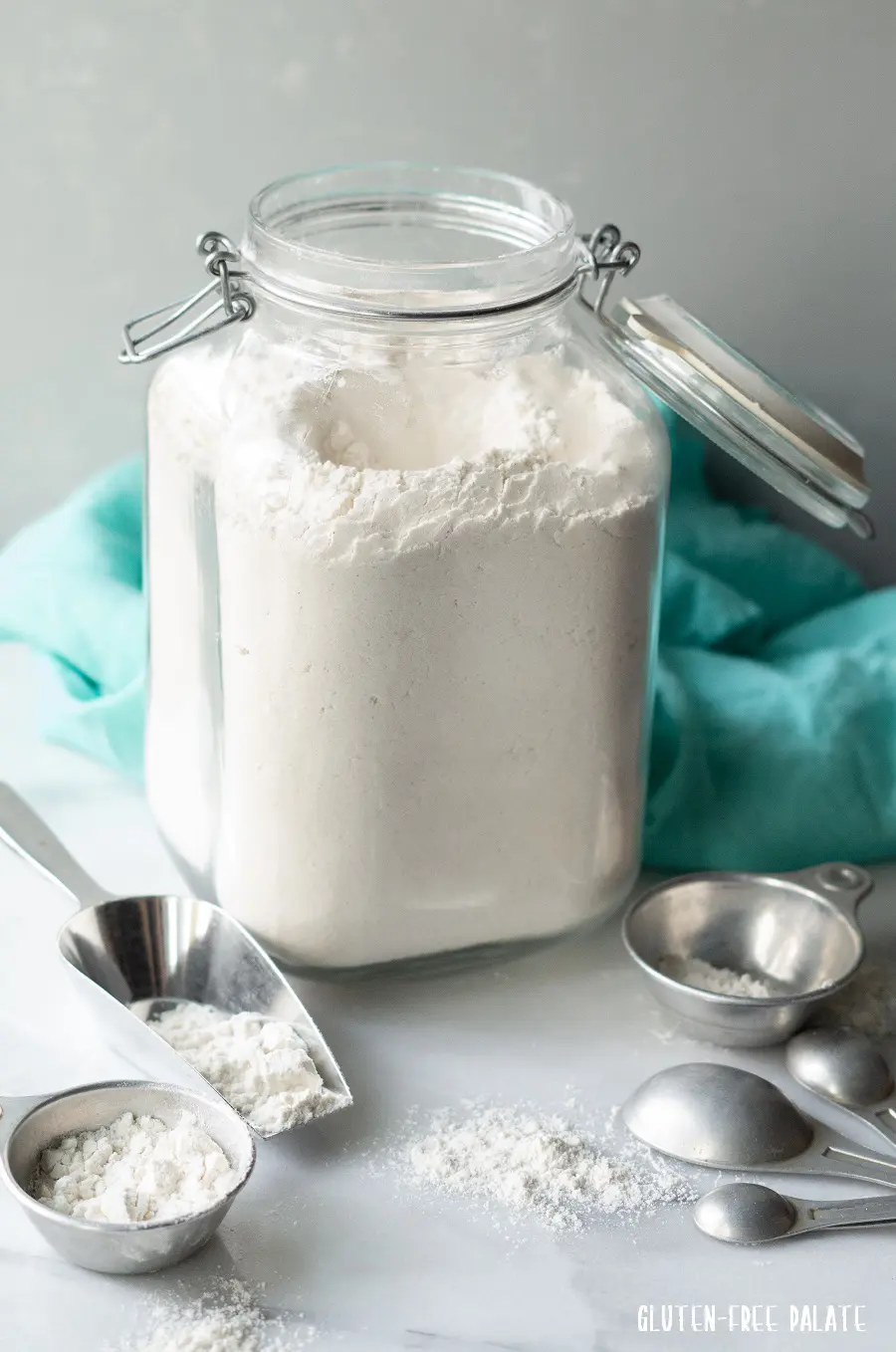
Why Make Your Own Gluten-Free Flour Blend?
Traditional wheat flour has gluten, which gives baked goods their structure, elasticity, and chew. When you remove gluten from the equation, you need a combination of flours and starches that work together to replicate those properties. No single gluten-free flour does the job on its own. That's why a blend works so much better than any one flour used alone.
The two blends on this page use simple, affordable ingredients: white rice flour, tapioca flour (also called tapioca starch), potato starch, and millet flour. The smell, flavor, and texture of baked goods made with these blends are close to what you would get from traditional wheat flour, close enough that most people cannot tell the difference in cookies, muffins, and quick breads.
Neither blend contains xanthan gum or guar gum. These binders help with moisture retention and hold baked goods together, but not every recipe needs them. In most of the recipes I make, the combination and ratio of ingredients is strong enough on its own. A few recipes, particularly yeast breads and anything with a very delicate structure, still call for xanthan gum to get the right rise and texture. The standard rule is 1 teaspoon of xanthan gum per cup of flour blend when a recipe calls for it.
Blend 1 vs. Blend 2: Which Should You Use?
Both blends work well across most baked goods, but there are situations where one performs better than the other. Here is a quick guide to help you choose.
| Use Case | Blend 1 (Rice + Tapioca + Potato) | Blend 2 (Rice + Millet + Tapioca + Potato) |
|---|---|---|
| Cookies and bars | Excellent. light, crisp edges | Excellent. slightly more substance |
| Muffins and quick breads | Great. | Great. millet adds a mild whole grain flavor |
| Pancakes and waffles | Great. light and fluffy | Great. both blends work equally well |
| Pie crust and pastry | Great. tender, flaky texture | Works well. slightly denser |
| Yeast breads | Works. add xanthan gum | Better. millet adds structure and a whole grain depth |
| Cakes | Excellent. very light crumb | Good. slightly more texture |
| Thickening sauces | Works well. | Works well |
The short answer: if you are new to gluten-free baking and want one reliable blend to start with, go with Blend 1. It is lighter and more neutral. If you bake yeast breads often or want a little more nutritional depth and whole grain character, Blend 2 is worth keeping on hand alongside it.
Gluten-Free Flour Blend Recipes
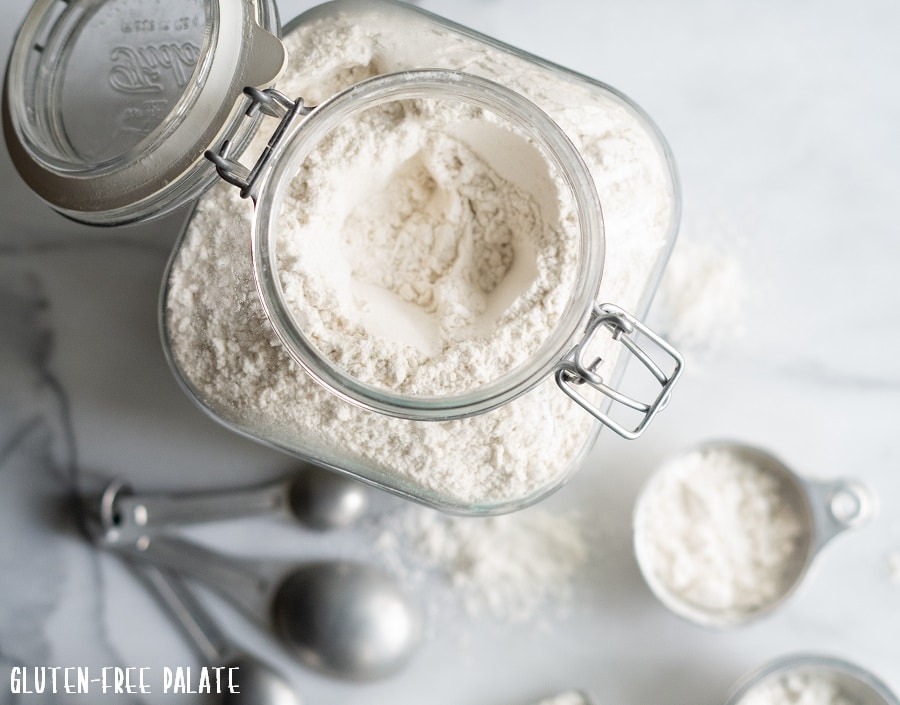
Gluten-Free Flour Blend 1: Yields 4 cups
- 2 cups (290g) white rice flour
- 1 cup (115g) tapioca flour (tapioca starch)
- 1 cup (120g) potato starch
- Optional: 2 teaspoons xanthan gum (add when baking yeast breads or delicate pastry)
Gluten-Free Flour Blend 2: Yields 5 cups
- 2 cups (290g) white rice flour
- 1 cup (120g) millet flour
- 1 cup (115g) tapioca flour (tapioca starch)
- 1 cup (120g) potato starch
- Optional: 4 teaspoons xanthan gum (add when baking yeast breads or delicate pastry)
Gluten-Free Self-Rising Flour: Yields 4 cups
Use this only for recipes that specifically call for self-rising flour. Do not substitute it in place of the standard blends.
- 2 cups (290g) white rice flour
- 1 cup (115g) tapioca flour (tapioca starch)
- 1 cup (120g) potato starch
- 2 tablespoons baking powder
- 2 teaspoons salt
Directions: Add all flours, starches, and any optional ingredients to a large zipper bag or a bowl and mix well. Transfer to an airtight glass jar or container. Shake the jar before each use in case the flours have settled. Blend 1 stores for up to 3 months at room temperature; Blend 2 stores slightly shorter due to the millet flour (see storage notes in the flour guide below). Both blends keep longer in the refrigerator or freezer.
Last tested: April 2026
Gluten-Free Flour
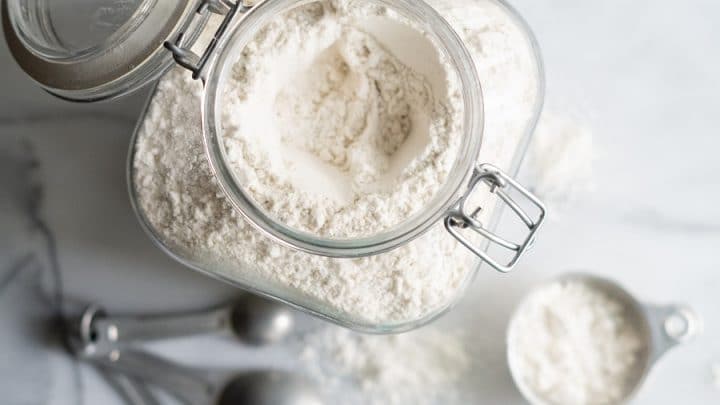
A gluten-free flour blend recipe that is versatile and works well with most gluten-free recipes.
Ingredients
Gluten Free Flour Blend 1:
- 2 cups (290g.) white rice flour
- 1 cup (115g.) tapioca flour
- 1 cup potato (120g.) starch
- optional: 2 teaspoons xanthan gum
Gluten Free Flour Blend 2:
- 2 cups (290g.) white rice flour
- 1 cup (120g.) millet flour
- 1 cup (115g.) tapioca flour
- 1 cup (120g.) potato starch
- optional: 4 teaspoons xanthan gum
Self Rising Gluten Free Flour
- 2 cups (290g.) white rice flour
- 1 cup (115g.) tapioca flour
- 1 cup (120g.) potato starch
- 2 Tablespoons of baking powder
- 2 teaspoons of salt
Instructions
- Mix all the gluten-free flours and starches in a large zipper storage bag or a bowl.
- Store flour blend in an airtight container.
- Shake the container before using in case any gluten-free flours have settled.
Notes
- To measure flours, use a scale or if you are using measuring cups, spoon the flour into the measuring cup and then level it, don't scoop the measuring cup into the flour.
- Whisk flours together in a large mixing bowl and store in an air-tight container in a dry place for up to three months.
- The first flour blend is a little lighter and it works great it all of my recipes for quick breads, cakes, donuts, and cookies. The second gluten free flour blend option has a bit more structure and it works well with rolls, bread, cinnamon rolls, and cookies.
- Tapioca Substitute: use arrowroot starch.
- Millet Flour Substitute: Use almond flour.
- For a lighter blend, substite ¼ cup of the rice flour with sweet rice flour.
Recommended Products
As an Amazon Associate and member of other affiliate programs, I earn from qualifying purchases. They never cost you extra.


Nutrition Information:
Yield:
4Serving Size:
1 cupAmount Per Serving: Calories: 290Total Fat: 1gSaturated Fat: 0gTrans Fat: 0gUnsaturated Fat: 1gCholesterol: 0mgSodium: 16mgCarbohydrates: 67gFiber: 2gSugar: 2gProtein: 4g
This nutrition info is based on the exact ingredients and brands that I used a the time. It may not be 100% accurate. Please check your ingredients nutrition labels.
Homemade vs. Store-Bought Gluten-Free Flour Blends
If you are used to reaching for a bag of Bob's Red Mill or King Arthur Measure for Measure, you are not alone. Store-bought blends are convenient and reliable. But there are good reasons to mix your own, especially once you are baking regularly.
| Homemade Blend | Store-Bought (e.g., Bob's Red Mill 1-to-1) | |
|---|---|---|
| Cost per cup | Significantly less | Higher, especially in small bags |
| Xanthan gum included | Optional. You add it when needed | Usually yes. Can affect some recipes |
| Ingredient control | Full. You choose every flour | Limited. Fixed formula |
| Consistent results | Yes, once you have a formula you trust | Yes. Formulas are standardized |
| Best for | Regular bakers, batch storage, cost savings | Occasional bakers, convenience, travel |
Note: Bob's Red Mill makes two gluten-free flour products that are easy to confuse. The 1-to-1 Baking Flour (blue bag) contains xanthan gum and works well as a direct substitute in most recipes. The All-Purpose Gluten-Free Flour (red bag) does not contain xanthan gum and behaves differently. It's not a direct 1-to-1 substitute and tends to produce dense, gummy results in recipes that do not account for it.
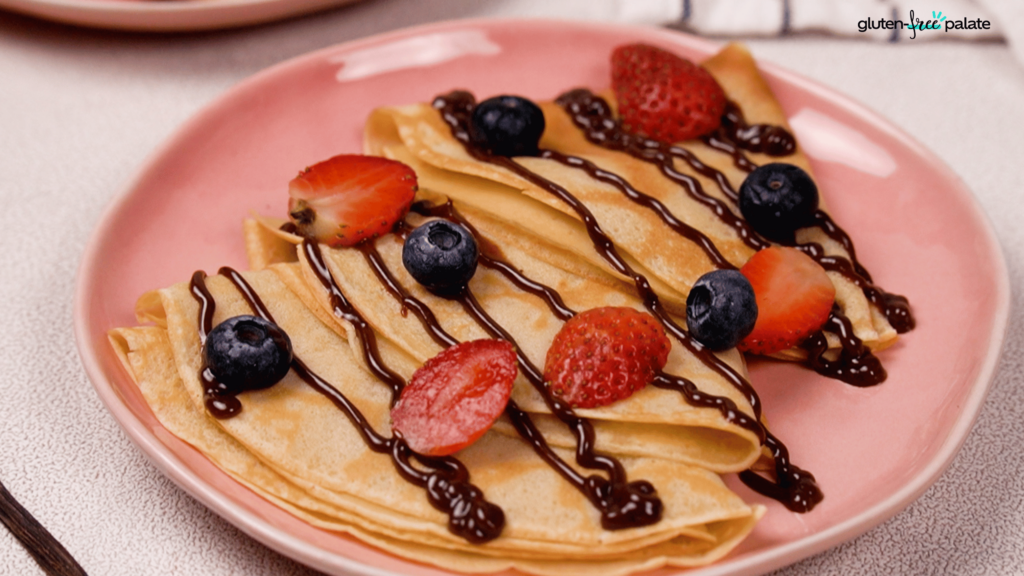
I love making crepes with my gluten free flour blends.
Popular Recipes Using This Gluten-Free Flour Blend
Both blends power dozens of recipes on this site. Here are some of the most-used:
- Gluten-Free Crepes. Simple, versatile, and work with sweet or savory fillings
- Gluten-Free Gingerbread Cookies. Use blend one or two; both produce excellent results
- Gluten-Free Chicken Tenders. Perfectly crispy with either blend
- Gluten-Free Graham Cracker Crust. A handful of ingredients and it comes together fast
- Gluten-Free Pie Crust. One of our most-loved recipes; use blend one or two
- Gluten-Free Cornbread. A mix of this flour blend and cornmeal is the base
- Gluten-Free Apple Crisp. A small amount of flour blend goes into the crisp topping
- Gluten-Free Breadcrumbs. Use with store-bought or homemade gluten-free bread
- Gluten-Free Blueberry Muffins. Blend one or two both work beautifully here
- Gluten-Free Carrot Cake. A year-round favorite; both blends work as the base
- Gluten-Free Waffles. Great for batch cooking and freezer storage
- Gluten-Free Pancakes. Light and fluffy with either blend
- Gluten-Free Pumpkin Bread. Tender and fluffy; both blends work well
- Gluten-Free Pumpkin Pie. Made with the GFP pie crust and this flour blend
- Gluten-Free Apple Pie. Uses the gluten-free pie crust made from this blend
A Guide to the Different Types of Gluten-Free Flour
Understanding what each flour brings to a blend makes you a better baker. Here is a guide to the most common gluten-free flours, including how they taste, how they perform, and how to store them properly. Note that I have a whole article on almond flour recipes, if you're using almond flour.
Amaranth Flour
Made from the seeds of the amaranth plant, amaranth flour is high in protein and brings a mild, earthy flavor to baked goods. It works well as part of a blend but can leave a slight aftertaste when used in large quantities, so most bakers use it as a supporting flour rather than a primary one.
Storage: Keep in a sealed container in the freezer for up to 6 months.
Brown Rice Flour
Brown rice flour is a whole grain flour milled from unpolished brown rice. It has a higher fiber content and more nutritional value than white rice flour, but it is heavier and can produce a slightly gritty texture in baked goods if used in too high a proportion. It works best as part of a blend where a lighter flour or starch balances it out.
Storage: Buy in small quantities and use fresh. Store in a sealed container in the refrigerator for 4 to 5 months, or in the freezer for up to a year.
Buckwheat Flour
Despite the name, buckwheat is not related to wheat and is completely gluten-free. It is botanically related to rhubarb. The seeds are ground into a dark, whole grain flour with a strong nutty flavor that can overpower baked goods when used alone. Used in small amounts as part of a blend, it adds depth and a slightly earthy quality that works especially well in pancakes, waffles, and quick breads.
Storage: Store in a sealed container in the refrigerator for 2 to 3 months or in the freezer for up to 6 months.
Cassava Flour
Cassava flour is made from the whole root of the cassava plant, dried and ground into a fine, white flour. It is one of the closest substitutes to traditional wheat flour in texture and behavior. It has a mild flavor, good elasticity when combined with eggs, and works well in tortillas, flatbreads, and pastry. Unlike tapioca starch (which comes from the same plant but is processed differently), cassava flour behaves more like a whole flour and can sometimes be swapped in at a closer ratio to wheat flour. It is worth keeping on hand if you bake grain-free recipes regularly.
Storage: Store in a sealed container in a cool, dark place for up to 1 year.
Chia Flour
Made from ground chia seeds, chia flour is highly nutritious and contains omega-3 fatty acids, fiber, calcium, and protein. It absorbs liquid readily, which makes it useful as a binding agent in addition to a flour. If chia flour is not available, grind whole chia seeds in a food processor. When adding it to a recipe, expect to increase liquid content and baking time slightly.
Storage: Store chia seeds or chia flour in a sealed container in a cool, dark place for several months.
Chickpea Flour
Also known as gram flour or garbanzo bean flour, chickpea flour is ground from dried chickpeas and has a mildly nutty flavor. It is high in protein and works especially well in savory baking, think flatbreads, fritters, and coatings for chicken or fish. It can also thicken soups, sauces, and gravies. Like most bean-based flours, it is best used as part of a blend rather than on its own.
Storage: Store in a sealed container in the refrigerator for 2 to 3 months or in the freezer for up to 6 months.
Corn Flour
Corn flour is milled from corn into a fine white powder and is primarily used as a thickener. It has a bland flavor on its own, so it relies on other ingredients for taste. One important note: some corn flour products are milled from wheat (labeled as "wheaten corn flour"). Always check the label and confirm it was not processed in a facility that also handles wheat.
Storage: Store in a sealed container in a cool, dark place for up to 1 year, or longer in the freezer.
Cornmeal
Cornmeal is coarser than corn flour and is ground from dried corn. The two are not interchangeable in recipes. Cornmeal is the base for cornbread, polenta, and corn tortillas, and adds texture and a slightly sweet corn flavor to baked goods. It is not used in the flour blends on this page but works well alongside them in specific recipes.
Storage: Store in a sealed container in a cool, dark place for up to 1 year, or longer in the freezer.
Hemp Flour
Made from ground hemp seeds, hemp flour has a mild, nutty flavor and a green-grey color that can affect the appearance of baked goods. It is nutritious and high in protein and healthy fats, but it goes rancid quickly if not stored properly.
Storage: Store in a sealed container in the refrigerator or freezer and use within a few months of opening.
Millet Flour
Millet is a whole grain from the grass family and has been used as a staple grain in Africa and Asia for thousands of years. As a flour, it has a mild, slightly sweet flavor and adds structure to baked goods without making them heavy. It is one of the main reasons Blend 2 performs better in yeast breads. The whole grain character helps replicate some of the depth that traditional wheat flour provides. Millet flour can become rancid quickly if not stored properly.
Storage: Grind millet as needed for the freshest flavor, or store millet flour in a sealed container in the refrigerator for up to 2 months and in the freezer for up to 6 months.
Oat Flour
Ground from oats, oat flour contains starches that help gluten-free recipes bind together, making it one of the more versatile gluten-free flours for baking. It absorbs liquid more than most flours, so recipes using it may need slightly more liquid. It substitutes well into many cake and cookie recipes. The critical caveat: oats are naturally gluten-free but are frequently contaminated with wheat during processing. Always use certified gluten-free oat flour from a dedicated facility. I have a full guide on how to make oat flour if you want to grind your own.
Storage: Oat flour goes rancid quickly. Buy in small amounts or store in a sealed container in the refrigerator or freezer and use within a few months.
Potato Flour
Potato flour is made from whole dried potatoes and has a noticeable potato flavor. It is heavy, and a small amount goes a long way. Do not confuse it with potato starch, which is much more neutral and widely used in gluten-free flour blends (including both blends on this page). Potato flour is best used in small quantities in bread recipes where it adds moisture and a slightly dense texture.
Storage: Buy in small quantities. Potato flour does not have a long shelf life compared to most gluten-free flours.
Quinoa Flour
Quinoa has been cultivated for over 5,000 years and provides a strong source of plant-based protein. Quinoa flour is ground from the seeds of the quinoa plant and has a mild, slightly earthy flavor. It works well in a blend but can leave a faint aftertaste if used in large amounts, so most bakers use it alongside lighter, more neutral flours.
Storage: Store in a sealed container in the refrigerator or freezer for up to 6 months.
Sorghum Flour
Sorghum flour is ground from sorghum grain and has a mild, slightly sweet flavor that is closer to traditional wheat flour than most other gluten-free options. It is a whole grain flour and an important staple in Africa and India. As a baking flour, it works well in quick breads, muffins, and pancakes. It is one of the better single-flour options for someone looking for the best gluten-free flour to anchor a blend, though it still works best combined with a starch.
Storage: Store in a sealed container in a cool, dark place for up to 2 months, or in the freezer for up to 4 months.
Tapioca Flour (Tapioca Starch)
Tapioca flour and tapioca starch are the same product. Both are made from the root of the cassava plant. Once processed and dried, the result is a light, fine, white powder that adds chewiness, elasticity, and a slightly glossy finish to baked goods. It is one of the best gluten-free flour additions for improving the texture of bread and pastry, and it is an excellent thickener for sauces and fillings. Both blends on this page include tapioca flour as a core ingredient for exactly these reasons.
Storage: Tapioca flour is shelf-stable. Store at room temperature in a sealed container.
Teff Flour
Teff is a tiny whole grain cereal from the grass family, native to northern Africa and the base for injera, a spongy sourdough flatbread. Teff flour is very nutritious and has a slightly molasses-like flavor. Adding too much teff to baked goods can produce a gritty texture and a dry crumb, so use it as a supporting flour within a blend rather than the primary one.
Storage: Store in a sealed container in the refrigerator or freezer for up to 4 months.
White Rice Flour
White rice flour is the base of both blends on this page. It is milled from polished white rice, giving it a very neutral flavor and a light texture, both of which make it the best gluten-free flour foundation for most baked goods. It does not carry the slight bitterness or aftertaste that some whole grain flours bring, and it produces a fine, consistent crumb. The one caveat: do not substitute wheat flour with white rice flour at a 1-to-1 ratio without the other blend components the texture will be wrong.
Storage: Store in a sealed container in the refrigerator or freezer for up to 2 years.
How to Store Gluten-Free Flours and Blends
Most gluten-free flours keep well in a sealed container stored in a cool, dry, dark location. Once you open the original packaging, shelf life drops. Transfer to an airtight container right away. The refrigerator is an excellent storage location for individual flours, but use a well-sealed container to prevent the flour from absorbing moisture and odors from other foods. For long-term storage, the freezer works well for most flours. Use a sealed container or a freezer bag with as much air removed as possible.
For the blends on this page, I store mine in wide-mouth glass mason jars. I write the mix date on the lid so I always know how old the blend is. Blend 1 stores well at room temperature for up to 3 months. Blend 2 should be used within a similar window but stores better in the refrigerator given the millet flour content. Both can go in the freezer for longer storage. Bring the flour to room temperature before measuring into a recipe for the most consistent results.
More Gluten-Free Baking Resources
- Gluten-Free Starches. A full breakdown of starches used in gluten-free baking, including potato starch, arrowroot, and more
- Gluten-Free Binding Agents. Everything a baker needs to know about xanthan gum, guar gum, psyllium husk, and other binders
- How to Make Oat Flour. A simple guide to grinding your own certified gluten-free oat flour at home
- Staple Gluten-Free Baking Ingredients. A pantry guide to the ingredients that make gluten-free baking easier
- The Key to Gluten-Free Baking. Why ingredient temperature matters more than most bakers realize
- Unique Gluten-Free Flours for Baking and Cooking. A deeper look at less common flour options worth experimenting with
These two flour blends are the foundation for almost every recipe on this site. Once you have a jar mixed and on the shelf, gluten-free baking gets significantly easier and less expensive. Every baker who makes the switch from store-bought blends to homemade tends to stick with it. Consistent results, lower cost, and complete control over what goes into every bake.
Frequently Asked Questions
What is the best gluten-free flour blend for baking?
For most baked goods, a blend of white rice flour, tapioca flour (tapioca starch), and potato starch produces consistent results across cookies, muffins, quick breads, pie crust, and pancakes. That is the base of Blend 1 on this page. If you bake yeast breads often or want a little more whole grain depth, Blend 2 adds millet flour to the mix and performs better in bread recipes. Both are tested across dozens of GFP recipes.
Can I substitute gluten-free flour blend 1-to-1 for wheat flour?
In many recipes, yes. These blends are designed to work as a close substitute for traditional wheat flour. The texture and flavor of baked goods will be very similar, though not identical. Results vary by recipe: cookies and quick breads swap almost seamlessly, while yeast breads may need xanthan gum and slight adjustments to liquid or rise time. Always follow a recipe developed for gluten-free flour when you are first getting started.
Do I need to add xanthan gum to my gluten-free flour blend?
Not always. These blends are intentionally made without xanthan gum because many recipes do not need it. In cookies, muffins, and quick breads, the ratio of ingredients provides enough structure on its own. For yeast breads, delicate pastry, and anything that needs significant elasticity and lift, add 1 teaspoon of xanthan gum per cup of flour blend. Check whether your recipe already includes xanthan gum in the ingredient list before adding more.
What is the difference between Blend 1 and Blend 2?
Blend 1 uses white rice flour, tapioca flour, and potato starch. It is lighter, more neutral in flavor, and works across almost every baked good. Blend 2 adds millet flour, which contributes a mild whole grain flavor and additional structure. Blend 2 performs better in yeast breads and works well in any recipe where you want a slightly more substantial texture. Both are interchangeable in most of the recipes on this site.
How do I store a homemade gluten-free flour blend?
Store in an airtight glass jar or container. Blend 1 keeps at room temperature for up to 3 months. Blend 2 is best kept in the refrigerator given the millet flour content. Both blends can be frozen for longer storage. Bring to room temperature before measuring. Write the mix date on the container so you can track freshness.
Can I use this blend for gluten-free bread?
Yes, with a note. For yeast breads, add xanthan gum to the blend (1 teaspoon per cup) to give the dough the elasticity it needs to rise properly. Blend 2 performs better in yeast breads than Blend 1 because the millet flour adds whole grain structure. Expect gluten-free yeast breads to be slightly denser than wheat-based bread. That's normal and expected, not a sign something went wrong.
Is buckwheat flour gluten-free?
Yes. Despite the name, buckwheat is not related to wheat and contains no gluten. It is botanically related to rhubarb. Buckwheat flour is safe for people with celiac disease and gluten sensitivity, though it has a strong, nutty flavor that works best in small amounts as part of a blend. Always check that the product was processed in a dedicated gluten-free facility to rule out cross-contamination.
What is the difference between tapioca flour and potato starch?
Both are starches used in gluten-free flour blends, but they behave differently. Tapioca flour (tapioca starch) comes from the cassava root and adds chewiness, elasticity, and a slightly glossy finish to baked goods. Potato starch comes from potatoes and adds lightness and moisture without flavor. Both are in the blends on this page because they do different jobs. Tapioca adds structure and chew, potato starch keeps the crumb tender and light. They are not interchangeable in equal amounts.
Diane
Hi, I love your recipes! I am new to gf baking and would very much like to use your flour blends. Where I live it is difficult to find sorghum flour, can I substitute cornstarch in the flour mix?
chrystal
Hi Diane,
My flour blends don't use sorghum flour, they use rice, tapioca, potato starch (not flour) and one of my blends also includes millet flour.
Best,
Chrystal
Diane
Thanks so much for getting back with me on this. I did make a mistake when I asked if the sorghum could be replaced by cornstarch. I want to ask if potato starch can be replaced by the cornstarch in your gf bread mix. Thank you for all the information you took the time to write.
Diane
chrystal
I honestly haven't tried it in this recipe and I'm not sure how it would work. You can use arrowroot starch in place of the potato in this recipe.
Best,
Chrystal
Sheryl R
Hi. I use Erika's gf flour blend. Will definitely try yours. Do you know what the sweet rice flour in her mix of: 24oz each of white rice flour, brown rice flour, & sweet rice flour, 20oz tapioca flour and 1.5tbsp xanthan gum.can be replaced with & do I use same amount. I was thinking of potato starch but since it's my anniversary today (mixed up flour last night realizing I was out of that 1 ingredient)..so if you answer today..I am indebted to you;)
chrystal
Hi Sheryl,
I'm not familiar with that blend. It might be best to email Erika and ask her if she has any substitutions for you. Sweet rice flour tends to absorb liquid quicker than most other gf flours and starches.
Best,
Chrystal
Lisa
Hi Chrystal, I love the information on this page, I can’t wait to try some recipes. I made the self-raising flour mix today and I wondered about the 2 Tablespoons of baking powder, it seemed a lot. I baked a cake with it, and it did taste very strongly of baking powder, we couldn’t eat it. Did you mean to write 2 Teaspoons of baking powder?
chrystal
Hi Lisa,
With self rising flour you would typically add 1 1/2 teaspoons of baking powder per 1 cup of flour/starch. This recipe makes 4 cups which is why you add 2T (about 6 teaspoons) of baking powder. You can certainly add less and still get a good self rising flour. Remember that self rising flour doesn't work as a 1:1 in every recipe and you'll need to omit the baking powder from the actual recipe if you use self rising flour. I hope that helps.
Best,
Chrystal
Kristy Newman
Your potato starch weight says 120g but my weight is showing 157g. I spooned it into the cup. It seems like a stark difference. Is there a possibility that the correct measurement is closer to 150g? Thanks!
chrystal
Hi Kristy,
Go ahead and use 150 and I will double check my measurements. The slight difference won't hurt.
Best,
Chrystal
Yanty
Hi,
Can i substitute the white rice flour with glutinous rice flour for the GF recipe
chrystal
Hi Yanty,
I haven't tried glutinous rice flour in this recipe. Sorry I can't be more help. Maybe search through the comments and see if anyone else has used it.
Best,
Chrystal
Chimno Ngonebu
Hi Crystal,
Thanks very much for all the tips and insights. However, I would love to have more protein in my gluten flour mix because my son is on a high protein diet. Any clues how I can do that?
Your response will be very much appreciated.
Chimno.
chrystal
HI Chimno,
You can always try and stick to almond flour recipes as almond flour has protein and healthy fats. I have a few paleo recipes that use almond flour. Just note that almond flour isn't' a 1-to-1 flour, so you'll need to use recipes that specify almond flour.
Best,
Chrystal
Maria stellino
Thank you for the flour recipe. I can’t wait to make my own breads.
I have been using just rice flour on its own and it has no substance or texture.
chrystal
You are welcome Maria.
Best,
Chrystal
Georgiana Salter
Is there any flour that could be uses in place of the rice flour.
Allergic to rice n oats and gluten.
Ty
chrystal
Sourgum flour might be a good substitute for rice flour.
Best,
Chrystal
Wally
Hi! It's possible yo substituye The xanthan gym with agar agar?
Thanks a Lot!
chrystal
Hi Wally,
I haven't tried using agar agar so I'm not sure. Sorry!
Chrystal
Kat
Which one of your blends is best for making pasta?
chrystal
I haven't personally made homemade pasta with either, but I would try the first one since it has a higher starch content.
Best,
Chrystal
Rebecca
I am also allergic oat, gluten, rice, eggs, & dairy. For different recipes I use different blends. Always trying to educate myself. For cookies I use equal prortions 3/4 cup of sorghum, millet, and tapioca, and xanthum gum plus at end fold in 1/2 cup of almond flour. Last choc chip cookie recipe I actually used a little flax about !/4 of my flour mixture; it turned out ok. Always let your batters rest at least 30 minute. I freeze most of my baked goods and they are delcious to eat cold or microwaved. I also use almond meal to substitute for oats in recipe just cut back a little on your fat.
I use Garbanzo flour as a coating for fried chicken (I use grapeseed oil to fry in and no more than a couple of Tab), roux's/gravy. Makes excellent chicken pot pie.
I use buckwheat flour by self to make pancakes. Bannan Bread I use 1C of Bobs Red Mill All purpose flour with !/2 c almond flour and use no xanthum gums
chrystal
Thanks for sharing!
Best,
Chrystal
Beny
Can i replace 1 cup potato starch with additional tapioca starch . I mean can i use 2 cups tapioca starch and skip the potato starch ?
Its difficult to find potato starch at stores here.
chrystal
Sorry Beny, that will be too much tapioca and your baked goods will be gummy. You can try arrowroot instead of the potato starch.
Best,
Chrystal
Lana Haas
Have you ever tried mixing in coconut or almond flour?
chrystal
I do use them but every recipe is different. I haven't found a perfect combo of just the two that works as a 1-to-1 in recipes.
Best,
Chrystal
Linda abbott
I’d like to use a little more protein flour. Can I substitute either quinoa flour or chickpea flour Or ground flax for an ingredient in your blend #1 or#2. How much should I use? Thai’s tor all the well presented info in your link.
chrystal
Hi Linda,
I haven't personally subbed any of those flours in but I do often add 1/2 cup of flaxseed meal to my blend, for extra substance.
Sorry I can't be more help.
Best,
Chrystal
Bernice
Crystal,
Can I use oat flour to replace the rice flour? I have an allergy to wheat, rice, soy, rye, nuts, casein, and mustard.
chrystal
Hi Bernice,
Oat flour should work in this blend for most recipes. Just make sure you are spooning the flour into the measuring cup, and then leveling it.
Best,
Chrystal
Bernice
Thank you!
Audrey
Hi! Can I use psyllium husk powder instead of xanthan gum or guar gum? If so, how much do you recommend? Also, do you have the recipe in metric? Thank you!
chrystal
Hi Audrey,
in general, for every teaspoon of xanthan gum in this flour blend you use 3 teaspoons of psyllium husk powder. If you are making a recipe that calls for a lot of fat, like butter cookies, you can add an additional teaspoon to the cookie recipe. I don't have them in metric measurements but I will update them.
Best,
Chrystal
chrystal
Hi Audrey,
I just updated the flours with metric conversions.
Best,
Chrystal
Ellen
Hi! Do you have a blend that does not use rice or oat flours?
chrystal
I don't currently. Sorry!
Best,
Chrystal
JC
This is great information. Thank you so much!
Martha
Thank you for posting the info about various flours. What is potato starch flour? I would like to try some of your baking recipes but have hesitated due to my allergies. Among other things I can't have wheat, corn, amaranth or white potatoes. Sweet potatoes are fine. I don't know if teff or millet are problems. I love your allergy free vegan recipes.
chrystal
Hi Martha,
Potato starch and potato flour are two different things and they work VERY differently. Always use potato starch unless a recipe specifically calls for potato flour.
I hope that helps,
Chrystal
Alisha
Hi! Do you think I’d be able to use the first flour blend for making pasta? Or would you recommend the second flour blend? Thanks ❤️
chrystal
Hi Alisha,
I would probably use the first blend since it has more starch.
Best,
Chrystal
Aparna
I can’t thank you enough for this flour blend .. my daughter is on gluten free and dairy free diet enjoyed the vanilla cupcake recipe .. just taste exactly the same as I je with gluten .. thnx a ton once again
chrystal
You are welcome. I am glad you like it.
Best,
Chrystal
irina
Thank you so much for the recipes and tips! In Georgia (country) we have a variety of dumplings with juicy meat fillings. The wheat flour dough that is used is usually very easy to work with and elastic. Do you have any experience or tips to share to get an elastic, gluten free cooking dough? Many thanks in advance
chrystal
Hello Irina,
It's really hard to get the same elasticity to the dough. I would start with a softer pizza dough (I have a recipe) and refrigerate it. Add a tough of flour, knead it, and refrigerate it again. Then break it off in smaller pieces and work it with oiled hands and shape it into your dumpling before you add filling and press the dough together.
Best,
Chrystal
Lin
Hello, Do you know if there is a gluten free flour blend I can make bread with that has no kind of rice flour? Seems like it is in everything. Thanks
chrystal
Hi Lin,
I don't know of any pre-made blends that you can purchase. I'm currently experimenting with my bread recipe using sorghum instead of rice flour. That might be an option for you.
Best,
Chrystal
Janet Forsyth
Please can you give me a good gulten free bread for the machine I now dove do but I want to try something different
chrystal
I have a bread machine bread recipe. You can search in the search bar on the right, or go to my homepage.
Best,
Chrystal
Simone
Hello. My husband is intolerant to tapioca flour. Could one substitute this with another flour in these blends?
chrystal
You can use cornstarch or arrowroot starch in place of the tapioca.
Best,
Chrystal
Nancy
Hi, I'm Nancy
Please what is the best flour blend for to get a good bread texture. I have tried the rice, tapioca, potato starch and xanthan gum flour blend but the bread is not that good and it doesn't bind. Like using wheat flour.
chrystal
Hi Nancy,
I don't know of a flour blend that is best, but you can check out my bread recipe to see what flours I use. I use rice, tapioca, potato starch and xanthan gum BUT I also add in millet flour and flaxseed meal. It makes the best texture.
Best,
Chrystal
Lel Rayner
Hi Chrystal, I would love to try your 2nd blend of flour but cannot have sourghum or nuts. Is there any other alternative please? I know you can sub coconut flour (much smaller amount) for almond flour in some recipes but I’m unsure if this would work in your yummy looking recipes. Help!
chrystal
You can use my first blend. You can also try subbing the millet flour in the second blend with buckwheat flour (no gluten despite the name).
Best,
Chrystal
Lel Rayner
Sorry forgot to say I can’t have millet either. Should I just give up?
Ignacio Roussy
Hi Crystal,
Loved this post, absolutely amazing, full of extremely high value information for me, as I'm just starting to bake gluten free goods. You are awesome!
I'm currently trying to make protein waffles and pancakes, and I think I will try this GF flour blend (the first one, with rice, tapioca and potato starch).
Do you have some special advice for making waffles and pancakes? There is some secret or something you have experienced about making GF waffles?
Thank you Chrystal,
Ignacio
chrystal
Hello Ignacio,
I have a post on waffles and a post on pancakes. Both have tips in them. You can search for them on my page at the top, under the three bars if you are on mobile and on the right side if you are on desktop.
Best,
Chrystal
Tara Marie
Hi Chrystal thank you for this beautiful webpage! Do you know if I would be able to use brown basmati or jasmine rice instead of white rice flour for the flour bread with out any complications? Or what about regular brown rice?
chrystal
Hi Tara,
You can use a fine ground brown or jasmine flour in place of the white rice flour. Just a heads up that it absorbs liquid a little differently. Make sure to spoon your flour into your measuring cups and then level it, don't scoop your measuring cup into the flour or you'll end up with too much flour in the recipes.
Best,
Chrystal
Jane Ashton
Hi there, sorry if this is obvious. What is the difference between the two blends? Have you ever tried subbing in half brown rice flour to make it a bit more nutritious?
chrystal
Hi Jane,
One blend includes millet flour, which adds a bit more nutrition. You can try subbing in 1/2 brown rice flour for white rice flour and see if you like the texture. Some people are really sensitive to the texture of brown rice flour (it's a bit gritty compared to white rice flour).
Best,
Chrystal
Jane
Thank you!
Stephanie
Hello!
I'm looking forward to trying your flour blend. I noticed that the addition of xanthum gum is optional - is there any particular benefit to leaving it out? Thanks!
chrystal
Hi Stephanie,
Not everyone can have xanthan gum and it's not necessary in all recipes. For example, quick breads don't need xanthan gum.
Best,
Chrystal
Donna
Hi Chrystal, I am always looking for gluten free breads as my husband can not have gluten. He loves bread and hasn’t had gluten in several years. I made your sandwich bread and was happily surprised that I finally baked a gluten free bread that tasted very good. I even forgot to put in the sugar for the proofing and I don't have a metal loaf pan. It still was great! A question I have is on the flour blends, you have listed the different cup amounts of flour blends but the amounts do not seem to coincide with what I used for a single loaf. Just wondering because I was going to double all flours and store away for future bread baking.
chrystal
Hi Donna,
My bread recipe uses a different amount of flours, which helps to get the texture just right. My flour blend is an all-purpose type of blend. With that said, you can use my flour blend with millet in the bread recipe (just do a cup for cup replacement for the rice flour, tapioca, potato, and millet but still add the flax). The texture will be slightly different, but still good.
Best,
Chrystal
Jill Jensen
Hi Chrystal! Thanks for the recipes. Can these recipes be used in a bread machine?
chrystal
Hi Jill,
You are welcome. Yest, there are instructions on the recipe page on how to make it in a bread machine.
Best,
Chrystal
Joyce Standley
Crystal, I tried your bread recipe and I really love it! If I wanted to make 2-3 loaves do I double and triple your recipe exactly or do I need to make some adjustments? One time I substituted 2 tbsp of honey instead of 2 tbsp of sugar and it made it a little too fluid and runny, what would you recommend to fix that if I still wanted to use honey? Also I read your part about baking by weight and using a scale, do you have your recipe in weight measurements and what kind of scale do you recommend? Thanks so much! My family is really enjoying me baking!
chrystal
Hi Joyce,
I have doubled the recipe exactly but I haven't tripled it, so I can't comment on tripling it at this time. For the honey, use 1 tablespoon of honey. You need just enough to feed the yeast. I'm not sure why it would have caused it to be runny but is it possible the flour measurements were off?
I do have weight measurements for some of my recipes, including my bread recipe, and I'm working on getting them for more of my recipes. I use a standard digital kitchen scale.
Best,
Chrystal
emy
Could you have a flour blend that I can use, with rice, buckwheat and potato flour? Also, bland with hemp flour and chickpea?
I cant tolerate corn and I don't think I can do starches either.
Thank you
chrystal
Sorry, Emy. I don't currently have any blends with hemp, chickpea or buckwheat.
Best,
Chrystal
Mandi
I am newly gluten and dairy free, and am looking for a good flour blend because I am also allergic to potato and Xanthan Gum. So I was excited to find your blend doesn’t include the Xanthan Gum that most others do. But What would be the best alternative to the potato starch in your flour blend?
chrystal
You could use arrowroot starch in place of the potato starch. Just a note that the texture may be slightly different.
Best,
Chrystal
Nagham
Hi I am new to GF
You have in the recipe (optional: 4 teaspoons xanthan gum)
Not sure if it’s better to use or not , I am making the flour mix to use in your vanilla cake .
Thank you
chrystal
HI Nagham,
Not all recipes need xanthan gum. Cakes, muffins, and quick breads don't. If you'll also be making pie crust, cookies, or anything with a high fat content, it's best to add it as it acts as a binder and it increases the shelf life of the recipe.
Best,
Chrystal
Lei Arriola
Hi! I'm fairly new to gluten free baking. Is the first gluten free flour blend can be substituted for 1 to 1 flour measurement for recipes? It's so expensive to buy gluten free flour here in our country.
chrystal
Hi Lei,
I have a couple of different flour blend you can make yourself that work as a 1-to-1 in most gluten free recipes (but not bread, you need to use this recipe). Click on the gf flours link at the top of my website.
Best,
Chrystal
Zailah
Hi Chrystal, Beside almond flour substitute of millet flour, what other flour can I use in your GF blend no. 2? Thank you in advance.
chrystal
Hi Zailah,
I don't have other options right now.
Best,
Chrystal
Julia
Hi,
I would like to try making a cake with this flour blend but do not have potato starch. Is there something I can substitute for it that will keep the consistency and taste the same? Thx!
chrystal
Some people like to use corn starch. I'm not sure if it works perfectly as a 1-to-1 in every recipe but it's a similar option.
Best,
Chrystal
Karen
I found your page very informative and will book mark it for future reference! I am new to gluten free eating, and I have a niece who is gluten sensitive and has a severe rice allergy. What would be the best gluten free flour to switch out the rice flour in your "all purpose Flour" Recipe?
chrystal
Hi Karen,
I don't currently have a rice flour alternative. I'm sorry. Rice flour is a big part of my blend. You can search for rice free flour blends. I'm sure someone has one.
I'm sorry I couldn't be more help.
Best,
Chrystal
Hayley
How about coconut flour as an alternative to rice flour? Give that a shot.
Veronica Popo Molelekwa
I like the recipes of gluten free mixing flour I will bookmark for future reference.
Thank you
Karis
No, don't! Coconut flour is so very different and absorbs a LOT of liquid. Sorghum is the best alternative to rice. It has great texture and flavor and can be substituted pretty much straight across.
Chris
No coconut flour is nothing like rice flour. You need 1/4 the amount of coconut flour as rice flour, and you need 6 eggs plus 1 cup of liquid for every cup of coconut flour. Coconut flour is extremely absorbent and without enough liquid the item your cooking will be extremely dry.
amy
Did you try this? Rice flour is so light in weight/volume/texture compared to coconut flour, I'd be really curious to see how that worked out... I think it would be completely different results but if you try it and it works, let us know!!!!
Leong Mee Len
Hi Chrystal,
Will appreciate if you can share a bread recipe using your mix of gluten free flour.
My son is sensitive to gluten or wheat flour.
Thank you in advance for your sharing
chrystal
You can use my blend #2 with the millet flour in this recipe in place of the rice, tapioca, potato and millet flours: https://www.glutenfreepalate.com/gluten-free-bread-recipe/
You'll still need to add the flaxseed meal.
Best,
Chrystal
Ann
I seem to have trouble finding the exact recipe, for example, pizza dough recipe. The only recipe I found and able to print was a gluten free flour recipe with specific ingredients, amounts and directions.
Maybe I’m doing some thing wrong.
chrystal
Hi Ann,
I'm not sure I understand what you mean about finding an exact recipe? You can use the search bar on the right, or in the top on mobile, to search.
Best,
Chrystal
Aida alhamdan
If I can't find potato starch at my area, what can I use to replace it in the flour mixture?
chrystal
You can use arrowroot starch. Just a note that it will be slightly different.
Bridget
Hi Crystal. Thanks for this. Please can I use corn starch instead of potato starch???
chrystal
Hi Bridget,
You can probably use cornstarch. Make sure to spoon the cornstarch into the measuring cup then level it. You'll need to test it in recipes and see how it works.
Best,
Chrystal
Leila
Replacing rice flour with buckwheat flour: your thoughts?
chrystal
IF it's fine ground buckwheat flour, it will work I'm just not sure of the texture. Rice flour absorbs liquid faster than buckwheat flour.
Best,
Chrystal
Naghamfhk
Hi Chrystal
Thank you for the information you gave it was very helpful ,I can't skip any word it was very rich information.if you kindly I have a question about the rice...my rice is Basmati rice and I blend it with coffee grinder at home ...is it work like the flour you use??? waiting for your reply
chrystal
I haven't personally made my own rice flour so I'm not sure what the best rice is to use. If you grind it really fine, I would imagine it would work.
Sorry I can't be more help.
Best,
Chrystal
Naghamfhk
Hi chrystal
I have few questions
What is the suitable blend to make a pastry..
What is the suitable blend to make spring rolls
White flour is not recommend to diabetic person.... What do you recommend for me
Thank you for the quick response ☺️
chrystal
Hi Naghamfhk,
I'm not sure about blends without rice flour. Most blends have rice flour in them. You might have to look up gluten free flour blends without rice flour.
Best,
Chrystal
Jenny
Hi Chrystal,
My question is when do I know when to ad the xanthin gum. I understand it helps hold moisture. Getting ready to do holiday baking and was wondering about pumpkin bread and muffins. Thank you,
Jenny
chrystal
Hi Jenny,
Xanthan is mainly used for two things, either a shelf stabilizer (keeps moisture in, helps with shelf life) and/or as a binder to replace gluten. I typically always use xanthan in high fat recipes like pie crust and sugar cookies. I don't always use it in quick breads and cakes. I hope that helps.
Best,
Chrystal
Naghamfhk
Hi Chrystal
So sorry for bothering you with my questions but IAM confused with the blend recipes...
Which one is good for spring roll dough...or pastries...if you kindly can you give me a clue.
Thank you for your help
chrystal
The first blend with white rice flour, tapioca, and potato starch will probably by be the best but I don't have recipes for spring rolls, so I'm not sure on that one.
Best,
Chrystal
Naghamfhk
Dear chrystal
Finally the first blend I worked with me....and I made adough stuffed with cheese....and I made spring rolls..... although the first time was a disaster...I couldn't sleep at night because all the ingredients I used was very expressive in my country....so today I made the second experiment...and the dough was excellent
Still I want to try the flat bread and I will feed you back
Big hugs for you
chrystal
I am so glad it worked for the recipe you made.
Best,
Chrystal
Naghamfhk
Hi Chrystal
For the second blend which contains 5...cups I have few questions..
1- it said ...xanthan gum 4teaspoon and the blend flour ...are.5..cups.. but when I was googling ,some said each ...cup needs 1tea spoon of xanthan gum for making long life shelf
2- if I put more or less of xanthan gum what is the effect on the dough... especially it contains yeast....
3- what dose it mean long life ..and short life?
Which category are flat bread or (doughs we stuff it with meat ..or chees for the children )?
Thank you wating for your reply....
chrystal
You can add 1 teaspoon of xanthan per cup if you like. Yes, if you add less the dough won't hold us as well in high fat recipes. I wouldn't add to much more or it makes the thing you bake hard. Long shelf life means how long it will last without getting too dry or going bad. I don't have a flat bread recipe up yet but I would be it in a bread category.
Best,
Chrystal
Naghamfhk
Hi chrystal
The second blend was perfat ,I added 4 1/2 to be in the safe side it was perfat for the flat bread.the recipe ......is.... flour blend 2....... Take ...less than 500 gram .. with 1 package of yeast ...the water...more than 200ml...it needs water....and as usual...salt and sugar.....let it rest more than half hour....and that's it .
Thank you for the big help ...I do appreciate it....most sites do not respond quickly for us....you are my angel
chrystal
You are very welcome.
Best,
Chrystal
Gloria Dechert
Potato starch is not on my husband's recommended ingredients. Is there a substitute?
chrystal
You can try arrowroot starch and see what you think of it.
Best,
Chrystal
Jennifer
Hello. Thanks for such great information on gluten free flours! I am wondering if you can sub brown rice flour for the white rice flour, and if you have done that yourself, what the difference in finished product is. I am most likely going to use this to make bread, pasta, baked goods. Thank you!
chrystal
Hi Jennifer, brown rice flour should work as a sub for the white rice flour in most recipes. With brown rice flour, it's best to let any batter or cookie dough rest for 20 minutes to give it more time for the wet ingredients to coat the brown flour.
Best,
Chrystal
Elle
Hi, just wondering what size tablespoon you use. Is it the 20mL or the 15 mL one? Thanks in advance.
chrystal
Great question. Mine is 15mL.
Best,
Chrystal
Maia
Hello,
I was wondering if you have used these blends to make breads with yeast and how they have come out? Many of the gluten free blends when used with yeast don't typically hold up too well.
chrystal
Hi Maia,
I use my second blend, with some flaxseed in my bread recipe. I haven't tried it with other bread recipes.
Best,
Chrystal
sue
thank you for your webpage for the glf flours. do you use this flour like 1 cup for 1 cup in recipes?
chrystal
Yes, I often use Bob's Red Mill 1-to-1 in my recipes. Several of my readers use different cup for cup type blends with success. You can check out each recipe and see what readers have used.
Best,
Chrystal
Jennifer
Hi Crystal,
I’m finding lots of glutinous white rice flour, which seems to be the same as sweet rice flour. Would it work in the recipe? Thanks!
Ps you are a saint. The same few questions were asked repeatedly. Kudos on your patience and willingness to hell
chrystal
Hi Jennifer,
To be honest, I haven't worked much with glutinous white rice flour. The times I did use it I found that it absorbed liquid quicker.
Best,
Chrystal
Rebecca
Hi - I am knew to the gluten free life. I have the same question on the ratio of GF flour to regular wheat flour - if it is 1 to 1. You mentioned Bob's Red Mill as your preferred GF flour. If that is what you use, then when do you use your GF flour blend recipe? Is it interchangeable? I have looked at some of your recipes and it doesn't specifically say to use your GF blend, so just wondering when you use your blend vs. a store bought blend. Your information here has been so helpful! Thank you for helping me understand this new world!
chrystal
Hi Rebecca,
I use both my blend and Bob's Red Mill 1-to-1. Bob's Red Mill 1-to-1 has only been around a few years. The reason I might use one over the other depends on what's on sale 🙂 Sometimes I can get a good sale on Bob's Red Mill 1-to-1 and sometimes I get a better deal on the individual flours, so I make up my blend. A lot of people don't like mixing their own flour blend, which is why I originally offered both as options.
I hope that helps,
Chrystal
Jasmeen Singh
Hi Chrystal,
Thank you for all the bread recipes. Quick question: which blend do you recommend for bread machine? Do I need to add flaxseed if making in a bread maker? If yes, how much would you recommend.?
Thanks
chrystal
Hi Jasmeen,
Check out my bread recipe, that should answer your questions. You can use my second blend here, with the addition of the flaxseed meal.
Best,
Chrystal
Caitlin Soo
Dear Chrystal,
Not a question but I've been going through the comments section and you are a saint period
P.s thank you sharing all this wonderful knowledge
chrystal
Awe, thank you for the sweet comment. It made my morning. Have a great day.
Best,
Chrystal
Kristy B.
I am with Caitlin Soo,I am reading the recipe and the comments and think you have a wonderful thing going on here, Thank YOU!
Preethi Ashwin
I tried the first mix in a cake. The texture of the cake felt very wierd. Any advices on that?
chrystal
What recipe was it? Is is possible you added too much or too little flour? Did you change anything in the recipe?
Best,
Chrystal
Kristin
Oh I am SO EXCITED I found this! A lot of UK bloggers use Doves Farms flour and I am in the States. The ingredients listed are "flour blend (rice, tapioca, potato), thickener (xanthan gum)" so it sounds JUST like your mix number 1! I can't wait to try it in some recipes! I had even tried searching for "Doves Farm copycat" recipe and nothing came up, so I can't even tell you how excited I am.
Cheryl
Hi Chrystal-
I too believe you are a saint in regards to how much attention you have given to this blog and these questions!
From the questions, if I understand you correctly, you would use your flour blend #1 for your pie crust recipe. I am so excited to make your pie crust recipe, as I haven't found "the holy grail" of GF pie crusts yet.
Thank you in advance-
chrystal
Hi Cheryl,
Yes, you my #1 blend for my pie crust recipe.
Best,
Chrystal
Zoe C Mortensen
Hi,
I am new to putting together my own flour blend. My mom got me tons of white rice & Almond flour. I also have Millet and Oat flour, Xanthan gum & potato starch. Any way you can tell me how much of each to mix for an all-purpose flour for breads & cookies to have on hand? I can't find where these are all mixed together, but need to use & prefer not to buy more. Please & Thx!
chrystal
Hi Zoe,
I haven't personally used that mix of flours. You could use my second mix with your rice flour, millet flour, and potato starch and sub the tapioca flour with the oat flour and see how it turns out.
Best,
Chrystal
Cindy
Hi Chrystal - Great article! I have a question about xanthan gum. I use a 5-flour blend for my GF flour - Cassava, Almond, Coconut, Tapioca and Arrowroot. Because of the Tapioca and Arrowroot flours, do I still need to add Xanthan gum for a chocolate cake? If so, how much? Thanks for your help
chrystal
Hi Cindy,
I haven't personally used that blend of flours, so I'm not sure. Sorry I can't be more help with that particular blend of flours.
Best,
Chrystal
Kenda
Hi! Love this, so informative - wondering if I can double the recipe of flour blend number 1? I generally mix a batch per recipe but I would love to make a bunch to just have on hand.
chrystal
Yes, you can double or triple the flour blends. Just make sure to shake your jar before using. Flours can settle.
Best,
Chrystal
Gigi
Hi Chrystal,
Is it possible to substitute potato starch with different type if starch?
chrystal
Yes, you can use arrowroot starch.
Best,
Chrystal
Carolina
Hi, Chrystal:
The gluten-free bread recipe worked really well. Such delicious bread. Now, I am going to try to make the same bread wih the same recipe, but using your self-rising blend. Therefore, I will subsitute the first three ingredients with the blend. I'll use 320 g of self-rising blend. Question: since the blend already has salt and baking powder, do I need to still add the quantities of salt and baking powder of the recipe? Thank you so much for your recipes and knowledge.
chrystal
No, if you use my self rising blend in place of the first 3 ingredients, you don't need to add the salt and baking powder.
Best,
Chrystal
JoAnn W.
Thank you Chrystal for the background info on GF flours. Since I do not bake a lot is there a commercial brand of gf all purpose or a measure for measure type that could replace your DIY mixture.
I am really interested in surprising the family with the cinnamon sugar doughnuts. They sound yummy and look aware some.
Jocelyn de Bruyn
Hi Crystal - I can't seem to find it in your blog. Can you confirm that it's a 1:1 ratio standard cake flour to your GF flour? I work in grams 🙂
Thank you
chrystal
Hi Jocelyn,
I might work as a 1:1 in recipes that aren't mine, but not always. The flours in my flour blend weigh different then a traditional wheat cake flour.
Best,
Chrystal
Joy
Hi, thank you for all your efforts here. I tried your first blend (I used a scale) and made some my usual cookies (not your recipe) out of it and the cookies turned out too limp. Even after I cooled it down, it was so mushy that it was too hard to hold it with my hands, so I had to rebake the cooled cookies. I didn’t know what to do because I didn't have this problem when I use Bob's Redmill 1-1 before. What do you think was the problem?
chrystal
Hi Joy,
I'm not sure. I haven't had that problem before. Can you tell me a little about the recipe, and what ingredients are in it?
Best,
Chrystal
Joy
Thank you, Chrystal.
I just used a simple cookie recipe, which contains
115 g of melted butter, 80 g of white sugar, 120 g of brown sugar,
1 egg, 170 g of flour, 2 g baking soda, 3 g of vanilla extract, 2 g of salt.
I added two sugars in melted butter, then eggs, then dry ingredients, then refrigerated and baked it because it spreads a lot.
I used this recipe a lot and sometimes changed it little by little but they turned out good. I've used regular recipes more than gluten-free recipes. Of course I don't think you'll know everything, but I just wanted to ask what do you think the problem was.
I really appreciate your kindness. 🙂
chrystal
Hi Joy,
I am happy to help if I can. The cookie recipe you are making uses a good amount of butter. If you decide to try it again, you'll want to add the xanthan gum (it's optional in my flour blend). Bob's 1-to-1 has xanthan gum in it. Xanthan acts as a binder in higher fat recipes.
I hope that helps.
Best,
Chrystal
Joy
Thanks, Chrystal.
Actually, I'd already added xanthan gum in it and it came out like that. I think I'll have to figure out what to do by making more things. Thank you so much for your kind reply. 🙂
Lauren C
Thanks so much for this post. I have food intolerances to potato and corn. Is it possible to make a GF flour mix without those two? Could I replace the potato starch in the above recipes with something else? If so, what? Thanks so much
chrystal
Hi Lauren,
Arrowroot is similar to potato starch in many ways and is often a good substitution. The blend with white rice flour, tapioca, potato, and the one with millet would be good with the potato starch swapped out for arrowroot. I hope that helps.
Best,
Chrystal
AnnMarie
Hi. Can I sub the potato starch for arrowroot in the first flour mix? So I would just use the white rice flour, tapioca flour and arrowroot.
chrystal
Yes, you can.
Holly
Hi there - just wondering if you have any thoughts on cassava flour and whether you’ve tried making a flour mix with it? I find it great for French crepes and in recipes that only call for a spoonful of flour as used its own it can be gummy. But I’ve often wondered whether it would soften some gluten free flour mixes and get rid of the chalky mouth feel some baked goods can have?
chrystal
I tried it once but I haven't really had time to test with it. There are lots of cassava flour recipes out there that might be good to start with. I haven't tried a blend with it yet, just cassava as the only flour.
Sorry I couldn't be more help.
Best,
Chrystal
Barbara Copeland
A recipe lm making calls for 2/3 cups of brown rice flour. I don’t Have that, what can l sub it for , lm making sloppyjoes
,
chrystal
I'm not sure, it's not one of my recipes. With that said. Can you find a recipe that doesn't use any flour?
Best,
Chrystal
April
Question about blend 2. Can I use black rice flour in place of white rice and since I cannot have nut, can I replace millet flour with the same amount of oat flour or maybe potato flour? Thanks in advance
chrystal
I haven't personally tried black rice flour, so I'm not sure. If you can't due millet flour, I'd stick with blend #1.
Best,
Chrystal
Bettina Ho
I am glad I read through the comments. I was going to ask what GF flour do you recommend to buy from the store. I have Bob's GF Baking 1-to-1 in my pantry right now:) Going to try this recipe this week!!
Mohammed
Hi
I would like to thank you for amazing information you presented in your website. It helps my GF wife. Do you have any recommendations for Mediterranean pita breads.
Best regards
Mohammed
Lindsay
We're so glad you and your wife are enjoying our recipes! I don't yet have a recipe for gluten free Pita, but you might like to try Gluten Free Tortillas.
Miki French
Hello I'm sure you've had replies since you asked but millet is a grain, not a nut. I hope it helps.
Uri
Would a chia seed gel also work as a binder instead of xanthan gum? Here in Belgium it is hard to come by, unless you order online, but then small quantities become ridiculusly expensive.
chrystal
I'm not sure how it would work in this recipe. I haven't tried it.
Valerie
Can I use One to One with Oat flour in baking? Since I can’t find white rice flour?
chrystal
I haven't tried oat flour as a 1 to 1 for rice flour in this recipe.
Best,
Chrystal
Lynette Wilson
How do you use blend 1 vs blend 2? It shows the didn't blends but doesn't go over what one does better than the other or why you would use one versus the other.
chrystal
Hi Lynette,
Both blends work well in my recipes. Some people like a little less starch or they are looking for a blend that has more whole grains in it, so they use blend #2. Blend #2 words best in recipes that need more substance, like bread and rolls.
Best,
Chrystal
mary
i have lots of almond, tapioca, and brown rice flour. how best combine?
chrystal
I haven't personally mixed those three flours specifically, but I might try mixing:
1 cup brown rice flour
1 cup tapioca
1/2 cup almond flour
Maybe start with a muffin or a quick bread recipe to see if you like the texture.
Best,
Chrystal
Karla
First of all thank you for all your wonderful recipes. I have tried a few and have been very pleased at how they turned out. My question is, in this recipe, should the rice flour be superfine or is regular ok? I’ve seen other recipes that call for superfine. Just curious.
Wendy Stoltz
Hi Karla,
It will depend on the final recipe you make. But I would say you should be fine with regular for most baking.
Gail Campbell
In number 2 blend can I replace the millet flour with brown rice flour?
Wendy Stoltz
Hi Gail,
I have not tried it yet but try it and let us know as they are usually interchangeable.
Jessica
Which would be best for chocolate cake?
Wendy Stoltz
Hi Jessica,
The first flour blend will work for cake.
Julie
Can I substitue potato starch by corn flour?
chrystal
I haven't tried it yet. If you try it, will you please stop back by and let me know how it turned out?
Best,
Chrystal
Lila
Have you tried almond flour?
chrystal
Yes, I have a few recipes that use almond flour. You can search for "paleo" on my site to find them.
Best,
Chrystal
Cynthia
I found some GF flour at Winco but don’t remember what is in it. I am not a Winco store now and wondering if you have ever come acrossed it? It needs something in it when I made chocolate chip cookies they spread out flat. Could I maybe just add xanthan gum or?
chrystal
Is it in the bulk section? In my area, it's the Bob's Red Mill 1-to-1 in the bulk section. I'm not sure if they carry the same one in all Winco stores. As for your cookies, try adding 1/4 cup more flour next time.
Best,
Chrystal
Cayla
I make my GF flour with 1 cup of all these…
White rice, sorghum flour, tapioca, cornstarch or arrowroot, and almond or coconut. I love the coconut better.
Jane zumot
Hi
Is this gluten free flour suitable for people who have MS ?
I asked this question because it contained wihte rice flour.
Thanks.
chrystal
Hi Jane,
I would avoid any gluten free flours that have flours or starches that you're directed by your physician to stay away from.
Best,
Chrystal
Gayle
Do you have a recipe for a gluten-free flour that does not include Wheat, White Rice, Brown Rice, Malt, Sorghum, Teff and Millet?
chrystal
I don't, sorry. All my flour blend recipes have rice flour in them. Maybe try recipes that use almond flour? I have recipes that use almond flour exclusively.
Best,
Chrystal
Melinda
Hello,
Could I use cornstarch instead of potato starch?
chrystal
Hi Melinda,
I haven't personally tried cornstarch in this recipe. If you try it, please let me know how it turns out.
Best,
Chrystal
Susan
I have used corn starch instead of potato starch and it worked beautifully in my opinion.
chrystal
Thank you for letting me know.
Best,
Chrystal
Yolande Macqueen
Hi. I see a few people asked about cornstarch replacement for potato starch. Has anyone tried it and can give some feedback, please?
Kay
Hi
Can you tell me what flour recipe you recommend for pie dough?
chrystal
You can use my first or second blend in pie crusts. Here's a recipe for my pie crust: https://www.glutenfreepalate.com/gluten-free-pie-crust/
Best,
Chrystal
Nal
What can I substitute Tapioca flour with?
chrystal
You could try arrowroot starch.
Best,
Chrystal
Kim
Is there a way to make gluten free flour with out Potato flour or potato starch?
chrystal
You can use arrowroot starch in place of the potato starch.
chrystal
You can use arrowroot startch in place of the potato starch.
Shanna Vuletic
Are these flours equivent to a 1:1 ratio of regular white flour?
chrystal
Not every recipe is a 1:1, but this flour blend is intended to replace regular flour in most recipes.
Sandy
Hi, would flour blend #1 be suitable for bagels?
chrystal
Hi Sandy,
It should work good for bagels.
Best,
Chrystal
Manu N Patel
Hi chrystal,
1. Any place of boiled mashed potatoes substituting for the potato starch or cornstarch for bread baking and bread rising?
2 Does yogurt have a place in the blend for bread baking and rising.
3 Xanthan Gum measure for replacing Psyllium Husk Powder and Chia Seed Powder
chrystal
Hi Manu,
For this bread recipe, I haven't tested it with potatoes or yogurt. You will want to search for a recipe that uses those ingredients specifically. You can substitute every 1 part of xanthan gum with 2 parts of psyllium husk.
Best,
Chrystal
Jay
Hi
Can I use cassava flour instead of topiaca?
Also can’t get potato starch, would cornflour work instead ?
Thnx so much
chrystal
Hi Jay,
I haven't tried using cassava flour in place of any of the flours or starches. You can use cornstarch or arrowroot starch in place of the potato starch.
Best,
Chrystal
Sherry
Hello,
This will be my first foray into gluten-free baking. I very much appreciate all of the information on your site. My goal is to make a 8 or 9” round, 4 layer cake for my nephews 4th birthday. Reading about the wide variety of flour mixes and different structures they offer, can you recommend the flour mix that would hold up the best with cake layer stacking and still provide a moist sponge?
Also, ideally I’d like to make the layers 3-4 days in advance (as I would normally with a wheat based recipe), but from what I’ve read this would likely dry the finished cakes too much. Any tips for this?
Thanks in advance!
chrystal
Hi Sherry,
Many readers have used my vanilla cake and lemon cake for layered cakes for special events, including weddings. To make them in advance, bake them, let cool to room temp, wrap them with cling wrap and then freeze. Bring them back to room temp before frosting.
Best,
Chrystal
Emma Cuddy
Hey so my brother is allergic to rice and potato do you have any replacement suggestions?
chrystal
Hi Emma,
I haven't tried this myself, but you can try oat flour in place of the rice flour. In all my recipes you can use arrowroot in place of the potato.
Best,
Chrystal
Karine
Hi!
Which blend would be better to make vanilla cupcakes so that they aren't too gritty?
chrystal
I would use my first blend (without millet).
Best,
Chrystal
Hristo
After an unexpected trip to the ER I recently found out that I'm alergic to 31-kDa protein bands, which are found in any variety of rice, the flour of which comprises half of both blends. What can you recommend as an alternative to it?
Lindsay
Hi Hristo - I can imagine that that is making baking somewhat tricky for you! Some of my readers have used fine ground buckwheat flour or oat flour in place of rice flour. I haven't personally tried these myself.
Erica
Hello! Love the flour blends but I can’t have tapioca. Any substitution recommendations for the tapioca flour? Thanks!
Lindsay
Hi Erica, I think you would be okay to swap tapioca for another starch, such as cornstarch, potato starch or arrowroot.
Jess
Can you help me walk through how you calculated your carbs? I'm new to carb counting and I'm trying to learn! For Flour blend 1; I followed you're links: Bob's Red Mill's White Rice= 264/2 cups. Tapioca= 108/cup. Judee's Unmodified Potato Starch= 160/1 cup. This equals out to 81 carbs/cup but your's is listed as 67/cup- which is obviously better but I can't figure out why there's a 14 carb/cup difference. What am I doing wrong???
Lindsay
Hi Jess! The recipe card here on the blog uses a calculator to figure these things out, and in this case, it's actually adding up and then dividing all of the ingredients listed (so for the three different blends) which is why the macros aren't correct. I don't know a great way to fix that right now (I'll look into it), but doing the calculation the way that you're doing it is going to be the most accurate way to get that information.
Erica
Hi,in the gluten free flour blend # 1, can the white rice flour be replaced with oat flour? If so, would it still be 2 cups? Also, if I leave out the 2 teaspoons of xanthan gum, what will that do taste/texture wise to cakes and cookies?
Thanks!
Lindsay
Hi Erica,
We haven't tried making the bread with oat flour. I think that you could try it, but the bread will be much denser in texture. Xanthan gum helps to replicate the stretchiness of gluten. You will want to use xantham or see my note in the post about replacing it with psyllium husk powder instead.
Faith
What would the ratio be od gum with husk subsitution?
Wendy Stoltz
Hi Faith,
I would try ½ to ⅓ as much.
Andie Dulle
Question:how do I getto make crunchy glutenfree panini buns with rice flour.Also can you divide the bread dough#2 in to bun sizes.Hope to hear from you
Wendy Stoltz
Hi Andie, I have not made gluten-free panini buns yet, so can't offer advice on this.
Ginny
Is it possible in your flour blend recipe 1 to substitute the potato starch. My daughter is Coeliac dairy intolerant and also intolerant to potato starch and corn starch.
Wendy Stoltz
Hi Ginny
You can use arrowroot starch in place of the potato starch.
Ginny
Hi Wendy thank you for your response regarding the arrowroot. Do you use the same amount of arrowroot starch 120g as potato starch. I struggle with the cup measurements and when I google or look at charts they all vary.
Also in blend 2 you use Millet flour not popular in UK have read you can swap with Almond flour would that be 120g. Thank you
Wendy Stoltz
Hi Ginny,
The recommendation is to use 2 teaspoons (5 grams) of arrowroot powder for each tablespoon (10 grams) of potato starch.
Ginny
Wendy thank you so much can’t wait to try this.
In blend 2 can I use almond flour instead of Millet flour and would it be the same amount x
Wendy Stoltz
Hi Ginny, you can and yes it's the same amount. Enjoy!
Wendy
I’m new to gluten free cooking. I’ve tried a couple of Christmas cake recipes with commercial gluten free flour, but they were still yummy, but heavy and more suitable for a pudding Could you pass on your flour mix preference please? Many thanks. No doubt I’ll be back for more advice along the way. Wendy
Wendy Stoltz
Hi Wendy,
I would try one of these https://www.glutenfreepalate.com/gluten-free-flours/
Stephanie Dotson
I am wondering which recipe you would recommend for cut out cookies. I want make some for Christmas but need them to hold their shape. Thank you!
Wendy Stoltz
Hi Stephanie, try the 1st or 2nd blend.
Barbara
Hi!
To add to my gluten-free, wheat free, dairy free flours, I also can't have any rice or corn products, other than wild rice or black rice. Can you suggest a flour that can accomodate my particular situation?
Thank you!
Wendy Stoltz
Hi Barbara, I think you would need to do a bit of experimentation with one of the blends and wild rice or black rice. I unfortunately have not tested these blends with those.
Jo
My biggest challenge is to eliminate both xanthan and psyllium. Eggs/dairy is not an option. Also, no corn or oats. Any suggestions?
Wendy Stoltz
Hi Jo,
I would suggest you scroll down and look at the blend options. Maybe try Gluten-Free Flour Blend Recipe 1
dima
Hello..which type of gluten free flour is best for gf tortilla,? if possible to send us gf flour composition
Wendy Stoltz
Hi Dima,
I would suggest the 1st blend. But I have a recipe here if you are referring to corn tortillas. https://www.glutenfreepalate.com/gluten-free-corn-tortillas
Terry Brumley
I used blend #1 in cookies, chocolate chip and peanut butter. They came out FLAT! What would make this happen?
Wendy Stoltz
Hi Terry,
Check your baking powder or baking soda are within date.
Jennifer
Never coming back to this site. Ever. Scrolling this far down to get to actual recipe. Shame on you!
Wendy Stoltz
Hi Jennifer,
I am sorry that you won't be coming back. The layout of the site we use is like this so that I can share helpful hints and tips, especially for those who are new to gluten-free. There is a lot of testing, and most recipe sites structure it like this.
Marnie
Hi there,
New to this gluten free situation.. doing a detox and the price of gluten free bread is outrageous. I like bread, but I refuse to pay $7-$9 for a loaf that amounts to 3 or 4 little sandwiches. I haven't tried any yet, I just found the site this morning. Thank you for your time, and your site. scrolling down the tips was interesting and educational. Still overwhelming... looking for a bread that makes good toast..
Wendy Stoltz
Hi Marnie,
It can be overwhelming, but we are happy to help. In a few months it will all fall into place, and you will learn the ins and outs. I would suggest starting with this bread recipe https://www.glutenfreepalate.com/gluten-free-bread-recipe/
Peggy Chen Dy
Hi Wendy, I tried the flour blend 1, making a loaf, and there's a huge hole in the center. This is my 2nd bake, although it tastes good. But just wondering what I did wrong..?
Wendy Stoltz
Hi Peggy,
I would suggest you use blend 2. The combination of flours gives the bread its structure. The other blend is more for quick breads, cakes, donuts, and cookies.
I hope this helps.
Lydia
Please send your gluten free flour recipe
Wendy Stoltz
Hi Lydia,
We had a technical problem, you should be able to view the recipe now.
Thanks for commenting.
Jeanie Cutler
I don’t see the instructions for the gluten free flour blend?
Wendy Stoltz
Hi Jeanie,
We had a technical problem with that post which has now been resolved.
You can view it, enjoy!
Emily Nelson
My son needs a gluten free diet and would love to start saving money by making my own gf bread. I totally would make my own flour blend but he’s highly sensitive to potatoes so I’m not sure potato starch will work for him. Is there a substitute for this?
Wendy Stoltz
Hi Emily,
t's wonderful that you're looking into homemade gluten-free bread to accommodate your son's diet and save money! If he's sensitive to potatoes, you can substitute the potato starch often found in gluten-free flour blends with other starches. Arrowroot starch, tapioca starch, or cornstarch are all excellent alternatives. Each will give a slightly different texture, so you might want to experiment to see which one works best in your bread recipes. Happy baking, and I hope you find the perfect blend for your son's needs!
Mary Bennett
What can I substitute potato starch with?
Wendy Stoltz
Hi Mary,
Can you let me know what you are trying to make, so I can advise you better?
Madhumitha Venkataraman
What can we substitute potato starch with for making birthday cakes.
Wendy Stoltz
Hi Madhumitha,
Potato starch is commonly used in gluten-free baking to help give structure and texture to cakes. However, if you don't have potato starch or are looking for a substitute, there are several other gluten-free starches that can be used instead:
Cornstarch - Cornstarch is a fine powder that is commonly used as a thickener in sauces and gravies. It is a good substitute for potato starch in cakes, as it has similar binding properties.
Arrowroot starch - Arrowroot starch is a fine white powder that is commonly used in gluten-free baking. It is a good substitute for potato starch as it is also a natural thickener and can help give cakes a light and fluffy texture.
Tapioca starch - Tapioca starch is a fine white powder that is extracted from the cassava root. It is commonly used in gluten-free baking as a thickener and to help give structure to cakes. It can be a good substitute for potato starch in cakes.
Rice flour - Rice flour is a fine, powdery flour that is made from ground rice. It is a good substitute for potato starch in cakes as it can help give structure and texture to cakes. However, it is important to note that rice flour can be a bit gritty, so it may not give cakes as smooth a texture as potato starch.
All of these substitutes can work well in gluten-free cakes, but the amount needed may vary depending on the recipe. It is best to start with a small amount and gradually increase until you achieve the desired texture.
Heather
Hey! I used the gluten free flour mix #2 for a bread recipe and it came out very rubbery. I've made the bread recipe before with Krusteaz flour and it worked well. Do you have any idea why this might have happened with the flour blend? I added the 4 tsp xanthan gum, do you think it was too much for a sandwich bread recipe?
Wendy Stoltz
Hi Heather,
Did you use one of our bread recipes? If so please mention which one so we can further assist you. But using too much xanthan gum can indeed result in a gummy or rubbery texture. For a sandwich bread recipe, 4 teaspoons of xanthan gum might be excessive, depending on the other ingredients in the mix.
Tia
Any other starch (tapioca, arrowroot, corn, wheat, etc.)
Wendy Stoltz
Hi Tia,
Take a look at this post https://www.glutenfreepalate.com/gluten-free-starches/.
Kathryn
Instant mash potatoes frequently works well.
Micah
Aloha,
What can I substitute for rice flour, my mom can’t eat rice due to gluten sensitivities.
Wendy Stoltz
Hi Micah,
Let me know what recipe you are making so I can advise better.
Ty
Why is the xanthan gum in the first recipe OPTIONAL? I only ask because I know it give structure for most gluten free options but it can also make things gummy. Is this optional because the flour blend itself has structure as is and it’s not really necessary to stabilize it or for some other reason? I’m trying to make this cake recipe but wasn’t sure if you used the flour blend with or without it since it’s says optional.
Wendy Stoltz
Hi Ty,
It is optional as it depends on what you are making. Some of the ingredients in the recipe may act as a binder.
September
Hello,
Do you happen to know any gluten-free flour blend that doesn't use rice flour or potato starch? I have this one specific recipe that I need an all-purpose flour for, but need to stay away from these two ingredients. Really appreciate your help. Thanks!
September
Forgot to mention that it is for a cupcake recipe that doesn't use sugar. I know there are several recipes out there, but mine is particularly special to me. Thanks!
Wendy Stoltz
Hi September.
I, unfortunately, don't have a blend without those. You would need to experiment. You can use arrowroot. For the rice flour maybe a combination of white sorghum flour
and millet flour would work.
Carol
Hi there,
I have been wondering, is there a substitute that can be used for the potato starch? Potato starch I know adds a nice pliable texture, however, I’m not supposed to be eating any of the nightshades relating to potatoes. They make me ache all over.thanks, Carol
Wendy Stoltz
Hi Carol,
I don't have anything that we have experimented with. If you look at Janine's comment you can start there.
Janine
You might try using almond flour- I’ve made cupcakes with that and they were wonderful. I don’t remember the sugar part but probably had either honey or maple syrup as a sweetener. Good luck!
Janine
Hi September, this is maybe too late but… I have the same issue- it’s very difficult to come up with a blend that’s rice and potato free. I’ve been Experimenting lately. I’ve found a combo that isn’t too bad for bread- I’ve been trying to make one up for cookies/cake/muffins etc I’ve only made cookies with it and didn’t like the texture at all but I’m not sure if it’s the blend or the recipe. So I need to make more with it and I’m waiting on more sorghum flour. The blend consists of sorghum, millet, tapioca and arrowroot flours. If you’re interested in the ratios, let me know. I may add oat flour to it, but want to try a cake with it first and see how it goes.
Nanci
Hi Janine! I’d love the ratios of the gf flours you mentioned for your blend. Thanks so much!!
Wendy Stoltz
Hi Janine,
They are on the recipe card in this post.Shout if you don't see them.
Peggy
I made a loaf using Blend 1, mix of rice flour, tapioca flour, potato starch and xanthan gum. It tasted good, but there was a huge hollow space in between. Would anyone know what caused this..?
Wendy Stoltz
Hi Peggy,
It is difficult to give advice if we do not know which recipe you used. But if it was a recipe with yeast, if the yeast in the dough did not activate correctly or was not enough, the bread may not rise evenly, causing large pockets of air to form during baking.
Let us know, so we can assist more.
Simoné Malan
Which flour mix works best for pizza and pie crust?
Wendy Stoltz
Hi Simone
For pizza - If you want to mix your own blend for this pizza (per my original recipe) combine 1 cup white rice flour, ¾ cup brown rice flour, ¼ cup tapioca starch. Here's the recipe https://www.glutenfreepalate.com/gluten-free-pizza-9-ingredients/
For pie crust - Blend 1 or 2.
Thanks
Hira
Hello! Is there something I can replace potato starch with? I'm not sure why but potato starch is really expensive where I live (maybe it's called something different here). I'm basically trying to replicate the first blend.
Wendy Stoltz
Hi Hira,
Can you let me know what you are trying to make, so I can advise you better?
Alexa M
Hi! Do you have a sandwich bread recipe to go with these? Which flour blend would go best for sandwich bread? Thanks!
Wendy Stoltz
Hi Alexa,
View this post it has all the details you need. https://www.glutenfreepalate.com/gluten-free-bread-recipe/
Lynn Williams
What gives the gluten free bread Flavor? Most gluten free breads bought in the store have no taste. Do I need to add another ingredient?
Wendy Stoltz
Hi Lynn,
It is the combination of ingredients that gives the bread its flavor. Have you tried this bread recipe https://www.glutenfreepalate.com/gluten-free-bread-recipe/?
StationarySnob
I had great baking results with the Red Robin GF Flour blend but it has potato starch. I am sensitive to nightshades so I cannot have potato flour or potato starch. Can you recommend a substitute for potato starch in your flour blends? I would usually use the blend for cupcakes, maybe bread. Thank-you so much!
Wendy Stoltz
Hi,
I would suggest you try this bread recipe - https://www.glutenfreepalate.com/gluten-free-bread-recipe
Here are a few suggestions:
Tapioca starch: Tapioca starch is a common substitute for potato starch and can be used in a variety of recipes, including cupcakes and bread. It has a similar texture and binding properties as potato starch, making it a great alternative.
Arrowroot starch: Arrowroot starch is another great substitute for potato starch. It has a very fine texture and can help to create a lighter, fluffier texture in baked goods.
Cornstarch: Cornstarch can be used in place of potato starch, but it may alter the taste and texture slightly. It can be used in small amounts, such as 1-2 tablespoons, to help thicken the flour blend and create a more cohesive texture.
I hope these suggestions help.
Aana
I used the first recipe for a gluten free chocolate chip cookie recipe and they turned out extremely flat. What can I do to remedy this? Thanks!
Wendy Stoltz
Hi Aana,
Let's troubleshoot:
Did you add Xanthan gum?
Chill the dough. Refrigerating the cookie dough before baking can help solidify the fats in the dough and prevent excessive spreading. After mixing the dough, cover it tightly with plastic wrap and refrigerate for at least 1 hour, or overnight if possible. Chilled dough tends to hold its shape better during baking.
Use room temperature ingredients. If the butter or fats in your recipe were too soft or melted, it can lead to excessive spreading. Make sure your butter or fats are at room temperature, which is typically around 68-70°F (20-21°C), to achieve the proper consistency in your dough.
Let us know once you've tried it again if this works. Happy Baking.
Sherlie
How can I make the bread vegan, your recipe has egg whites...
Wendy Stoltz
Hi Sherlie,
Maybe try aquafaba. This is the liquid from a can of chickpeas. It has a similar consistency to egg whites. Use about 3 tablespoons of aquafaba to replace one egg white. This substitute may alter the taste or texture of the recipe slightly, so it's important to experiment and adjust the amounts to find what works best for your specific recipe.
M Day
Hello. My 30 something son is special needs with alot of health problems. He has been thru alot and we just found out he was allergic to Gluten too. So Im on a mad rush to get this right. I loved the fact you have recipes for flour blends you have made. I purchase a mill and have been experimenting but it gets expensive. Bag flour is expensive but messing up the blend is expensive too. So I want to thank you for all the time and care you have put in to this and the information is great! Just what i needed.
Wendy Stoltz
Hello, M Day! Thank you for your kind words, I'm glad to hear that the recipes and information have been helpful to you in your journey to accommodate your son's gluten allergy. It's understandable that it can be challenging and costly to experiment with different flour blends, but with some patience and persistence, you will find the right blend that works best for your son's health and taste preferences.
I'm happy to hear that you've purchased a mill to make your own flour, as this can be a more cost-effective and convenient option in the long run. Don't hesitate to reach out if you have any further questions or concerns. Wishing you and your son all the best on your gluten-free journey!
Mary
Hi Wendy, Thank you for this wonderful resource. I am on a low fiber / low oxalate diet and your Gluten-Free Flour Blend Recipe 1 is perfect. In fact, it's the only one I have found. Would you be able to point me to any recipes on your site that use this blend?
Wendy Stoltz
Hi Mary,
Its our pleasure. The first flour blend is a little lighter and it works great it all of my recipes for quick breads, cakes, donuts, and cookies. So choose one of those from the website. Happy Baking!
Ane Gundersen
Hi! Thank you so much for this. Is it possible to replace some of the white rice flour with brown rice flour? I would like to make the mixture more nutritious if possible. I’m using it to bake bread. 🙂
Wendy Stoltz
Hi Ane,
It is possible you might need to experiment a bit to find the perfect ratio that works for your bread recipe. Also experiment with brands of flours.
Let us know how you go!
Janice Sharp
I didn’t see any information about Almond flour. Would it be a substitution for any of the flour mentioned?
Wendy Stoltz
Hi Janice,
Almond flour has different properties than regular gluten-free flour blends, so it's not a direct substitution. Almond flour is more moist and dense due to its high fat content, which can affect the texture and structure of baked goods.
Carol
I have an allergy to wheat that will trigger my asthma and after years of no baked goods (store-bought gluten free...yuk! and the price!), I finally have time to develop my skills in this area. I can't wait to try these blends in family recipes as well as try new recipes, including GF sourdough!
I am wondering if you can suggest possible substitutions for the millet flour. It is not a friendly flour for me.
Wendy Stoltz
Hi Carol,
I'm thrilled to hear about your enthusiasm for diving into gluten-free baking and exploring new recipes!
As for the millet flour substitution, here are a few alternatives you might consider:
Sorghum Flour: Sorghum flour is another versatile gluten-free option that can provide a nice texture to baked goods. It has a slightly sweet flavor and is often used in combination with other flours.
Oat Flour: If you're able to tolerate oats (make sure they are certified gluten-free), oat flour can be a great substitution. It has a mild flavor and can add moisture to your baked goods.
Quinoa Flour: Quinoa flour is protein-rich and has a slightly nutty flavor. It can add a unique taste and texture to your recipes.
Remember, baking is both an art and a science, so don't hesitate to experiment and adapt recipes to your preferences and dietary needs. Enjoy your gluten-free baking journey, and I hope your creations turn out delicious and satisfying!
Martha
Hi, Wendy: I would like to know if you have a flour ratio for an all purpose gluten free blend with the following (the ones you posted look great, but are difficult and expensive to get where I am), -in no particular irder-: sunflower/ pumpkin seed flour, rice (white), coconut, prickly pear (it does have a "sandy" somewhat texture) and white corn.
Wendy Stoltz
Sorry Martha, I unfortunately don't. What I can suggest you do is recipe test it.
Njoki Wachira
Hi Wendy, I did a flour mix of 100g almond flour, 100g banana flour, 200g chickpea flour and 2 teaspoonfuls of baking powder for pancakes.
I do not know why but they were so dense inside not cooking properly only the outside was brown and looking cooked.
I am dairy flour so used flax seed to thicken.
Where could I have gone wrong?
Wendy Stoltz
Hi Njoki,
It seems like the issue might be related to the combination of flours in the blend and the absence of a binding agent. Here are some potential reasons why your pancakes turned out dense and undercooked:
Lack of Binding Agent - Gluten-free flours often lack the binding properties found in gluten-containing flours. Using flaxseed as a substitute for eggs can help with binding, but it might not be sufficient on its own. You could try adding a commercial egg replacer or a binding agent like xanthan gum or guar gum to improve the texture.
Flour Ratios - The combination of almond flour, banana flour, and chickpea flour might have contributed to the dense texture. Almond flour and chickpea flour, in particular, can create a denser texture, especially when used in larger proportions. Experimenting with different ratios or using a mix of lighter gluten-free flours such as rice flour, potato starch, or tapioca flour could help achieve a lighter texture.
Cooking Temperature and Time - Ensure that your pan is preheated to the correct temperature before pouring the batter. Cooking gluten-free pancakes can often require a slightly lower temperature than regular pancakes to prevent burning on the outside before the inside cooks through. Additionally, cooking them for a longer time on a lower heat setting might help ensure that the insides are thoroughly cooked without burning the outside.
Lack of Leavening Agent - It's important to ensure that the baking powder is fresh and active, as using old or expired baking powder can result in dense pancakes. You can test the freshness of your baking powder by mixing a small amount with water – if it fizzes, it's still active.
Consider adjusting the flour ratios, using a binding agent, and checking the cooking temperature and time to achieve lighter and more evenly cooked pancakes. Experimenting with different combinations and ratios can help you find the perfect blend for your gluten-free pancakes.
All the best with experimenting.
Jane E Belluchi
This is just an fyi for anyone having trouble finding the ingredients in your flour blends. Traditional stores here in Iowa charge excessively high prices for the flours & starches but most Asian stores that I have visited carry larger bags for way less.
I hope you all find this helpful.
Jane
Mel
For your pastry recipe would you recommend your flour option one or two?
I would like to make pastry for gluten free tart shells for mincemeat. Thank you!
Wendy
Hi Mel,
For making gluten-free pastry for tart shells, I would recommend using the second gluten-free flour blend option, the one with a bit more structure. This blend is likely to give your tart shells better stability and texture, which is important when working with pastry for tarts.
All the best.
Barbara Schwartz
Hi!
I am both gluten free and grain free. I can't have any rice except for black rice or wild rice. Can you suggest some substitutions for the bread recipes to be used in a bread maker? Also, it's an older bread maker without the gluten free setting. Should I use the "quick bread" setting, instead?
Thank you!
Wendy Stoltz
Hi Barbara,
I am so sorry, you would need to experiment and make your own blend. I have not tried an alternative without rice flour.
The "quick bread" setting is typically designed for recipes that don't require yeast. Let us kow what other options you have, so we can try and help.
MsVicki
Hi! I’m not seeing the actual recipe for the DIY Gluten Free flour blend, #1 or #2? Just seeing the comments only. Are those recipe blends still something you post for the public to share? Thank you!!
Wendy Stoltz
Hi MsVicki,
We had a technical problem with that post which has now been resolved.
You can view it, enjoy!
Martina
Hi! Can I use glutinous rice flour in place of the regular rice flour?
Thanks a lot!
Jim Markus
Good question! glutinous rice flour is much stickier, so it will work fine in some recipes but not in others. Please let me know if you try it. I'd love to hear how it turns out!
Maria Ani
Can i replace xantham gum to physillium husk or any suggestion ingrrdient
Thank you
Jim
Yes, you can usually do a 1:1 replacement if you want to use psyllium husk instead of xanthan gum. Here's an article with more info on binding agents: https://www.glutenfreepalate.com/binding-agents/
Mary Wells
I am also allergic to potatoes, what do you think is the best substitute for potato starch in your GF flour recipe? I mostly use GF flour for making rues for gravy and soup.
Thank you
Wendy Stoltz
Hi Mary,
If you're sensitive to potatoes, you can substitute other starches for the potato starch often found in gluten-free flour blends. Arrowroot starch, tapioca starch, or cornstarch are all excellent alternatives. Each will give a slightly different texture, so you might want to experiment to see which one works best in your bread recipes. Happy baking, and I hope you find the perfect blend for your needs!
Tina Brook
Hi, If you just want to thicken gravy or soup you could just use corn flour mixed with a little of any cold liquid, water is fine . Then mix it in to the gravy or whatever bring it to the boil then just cook it for a minute to thicken. You don’t need a complicated gluten free flour I used this way instead of flour and a roux just to reduce the fat content.
Ginna
Do you have the measurements for how many grams per cup for all blends? Blend 1 would be 131 grams per cup?
Jim
Yes, the gram measurements are listed above for each of the blends. Blend 1 uses 145 grams per cup of white rice flour and 115 grams per cup of tapioca flour. I hope this helps!
Nol
Hello!
I am a bit confused regarding the tapioca flour.
I can only find tapioca starch where I live, and when I look tapioca up, it is described as the starch from cassava root.
Is tapioca flour and tapioca starch the same thing?
Thank you so much in advance!
Jim
Yes, they're the same. Thanks!
Shannon
My daughter can't have gluten, dairy, nightshade, rice, or rice/potato starch. Is there any way to make a gluten free cup for cup blend with these restrictions?
Jim
If you find a blend you like, it's worth testing to see if you can do an exact cup-for-cup swap. I know it's a challenge!
Bernie Brydle
Hi, Can you please tell me which option would be best for pie dough? Thanks.
Jim
Of course! I have a full recipe for gluten-free pie crusts. I use either of the two blends listed above if I'm working from scratch, or I use general all-purpose gluten-free flour (like King Arthur's) for mine. Just make sure to add the xanthan gum if yours doesn't already include it.
Tancy
Hi Jim, which one is the best for making banana bread or cake please?
Jim
I would use blend number 1 for banana bread!
Deborah Smith
You mentioned in the beginning of the post a lot of other very nutritious flours that I would like to add as well as mesquite flour, if I want to include (ex.) oat flour, coconut flour or amaranth, etc. into my gluten free flour mix how much can I safely substitute without it ruining the integrity of the recipe?
Much thanks for all of your experimentation and research, I greatly appreciate all of time and information you offer us here on your website.
Jim
Great question! We haven't tested that exactly, but please let us know if you do. Always excited to learn more!
Deena
Can I replace potato flour with sorghum, for the first GF mix?
Jim
We haven't tested sorghum with this blend, but please let us know if you do (and how it turns out!)
Tina
If you have a Chinese supermarket close by, you can purchase tapioca starch, rice flour and potato starch at a huge discount.
Michal
Hi—I just want to confirm that blend #2 is good for yeast or sourdough breads?
Jim
Yes, but make sure to include xanthan gum. It's important as a binder. And sourdough will need a starter like this one!
Michal
Thanks! I’ve created a really strong starter that’s gluten free and giving great rise to wheat flour loaves. Just needed to know if this blend would rise because many of the gluten free blends I have tried don’t. Thank you again!
Tzl Ali
can change rice flour too oat flour thanks
Jim
These blends were tested with the specific flours mentioned. You can try oat flour, but it may change the final recipe. (That's not always a bad thing! Please let us know if you do, and how yours turns out!)
anna Zhang
Thank you for the content! Just wonder when I should prefer gluten free 1 over 2 and vice versa? Thanks!
Jim
The first flour blend is a little lighter and works super well for quick breads, cakes, donuts, and cookies. The second gluten free flour blend option has a bit more structure and it works well with rolls, bread, cinnamon rolls, and cookies.
Rebecca Stewart
Which flour blend good for biscuits?
Please help
Thank you
Jim
I'd go with either blend 1 or 2. Either should be fine!
Maisle
I can't have potato at all (No Nightshades)
What starch would you recommend in it's place?
Jim
Either tapioca starch or arrowroot starch. Both should be fine with a 1-to-1 replacement for potato starch.