


Yes, peanut butter is gluten free in its pure form. Peanuts and salt are naturally gluten free, and most major peanut butter brands are safe for a gluten free diet. But if you have celiac disease or non-celiac gluten sensitivity, the jar you grab off the shelf still matters. Cross-contamination, flavor add-ins, and thickeners can turn a "safe" spread into a problem, and not every brand tests or certifies the same way.
I have been feeding peanut butter to a celiac household for years, and I am picky about which jars earn a spot in my pantry. Below is the brand-by-brand guide I actually use, including the certified gluten free picks, the brands I trust without certification, and the ones I treat with extra caution.
Is Peanut Butter Gluten Free? The Short Answer
Yes. Pure peanut butter made from peanuts and salt is gluten free, and the majority of major U.S. peanut butter brands are safe for people with celiac disease and gluten sensitivity. Peanuts do not contain gluten, and homemade peanut butter made with roasted peanuts alone has zero risk.
The risk comes from three places: flavor add-ins like pretzels or cookie chunks, thickeners or maltodextrin derived from wheat in some older or imported formulas, and cross-contamination in facilities that also process wheat products. All three are avoidable once you know what to look for.
Gluten Free Peanut Butter: At a Glance
Here is the quick reference I use when shopping. Certified brands are my first pick for celiac-safe cooking and baking. Labeled brands are the ones I trust for everyday use but always double-check at the store.
| Brand | Status | Celiac-Safe Pick | Notes |
|---|---|---|---|
| Justin's | Certified gluten free | Yes | Clean ingredients, unique flavors |
| Jif (select varieties) | Certified gluten free | Yes | Check label by variety |
| Crazy Richard's | Labeled gluten free | Yes | Single ingredient: peanuts |
| Smucker's Natural | Labeled gluten free | Yes | Peanuts and salt in natural line |
| Peter Pan | Labeled gluten free | Yes | All varieties per brand |
| Skippy Natural | Labeled gluten free | Use caution | Always check label per variety |
| Smart Balance | Labeled gluten free | Use caution | No GFCO certification |
| Adams Natural | Labeled gluten free | Use caution | Minimal ingredients, no certification |
| Teddie | Labeled gluten free | Yes | Simple ingredient list |
Celiac Disease vs. Gluten Sensitivity: Which Peanut Butter Is Right for You?
This distinction matters more than most peanut butter guides admit. Someone managing celiac disease cannot safely eat a peanut butter made with gluten free ingredients in a facility that also processes wheat. The cross-contamination risk is real and can trigger intestinal damage even without obvious symptoms. For celiac households, I recommend sticking to certified gluten free brands, which are tested to contain less than 10 parts per million of gluten per GFCO standards.
Someone with non-celiac gluten sensitivity has more flexibility. Brands labeled gluten free without formal certification are generally a safe choice, especially when the ingredient list is short and the brand has a consistent track record. If a reaction does happen, it is easier to switch brands than to undo a celiac cross-contamination event.
When in doubt, certified is always the safer call. For my family, every jar I buy for baking and for my child is certified gluten free. The few dollars difference is not worth the risk.
Peanut Butter Ingredients to Watch
Homemade peanut butter is just peanuts and salt. Store-bought peanut butter often includes added sugars, hydrogenated oils, stabilizers, preservatives, and flavorings. Most of these are gluten free by default, but a few categories deserve extra attention.
Flavored peanut butters have exploded in popularity. You can now find honey and sea salt, chocolate, maple, cinnamon, vanilla, espresso, and coconut versions on most grocery shelves. These are where I am most cautious, because a proprietary flavor blend can include barley malt, wheat-derived maltodextrin, or natural flavors sourced from gluten grains. Always read the full ingredient list on a flavored peanut butter, even from a brand you trust.
Peanut butters with crunchy add-ins like pretzels, cookie pieces, or granola are almost never safe for celiac unless explicitly labeled gluten free. Skip these entirely.
How I Read a Peanut Butter Label in Under Ten Seconds
Here is the six-point check I run on every new jar before it goes in my cart.
- Look for a certified gluten free seal. GFCO certification means the product tests below 10 ppm, which is stricter than the FDA's 20 ppm threshold.
- Read the full ingredient list for any wheat, barley, malt, or rye derivatives.
- Check for a "may contain wheat" or "made in a facility that processes wheat" statement. Celiac households should skip any jar with this warning.
- Scan for add-ins like pretzels, cookie chunks, or granola that are not verified gluten free.
- Watch for flavorings that could include barley malt, especially in chocolate, honey, or maple varieties.
- Contact the brand directly or check the brand's FAQ page if anything on the label is unclear. Most major manufacturers publish a gluten statement.
For more on label reading, Beyond Celiac has a printable guide I keep on my fridge. The Gluten Free Certification Organization also publishes its full testing standard, which is worth understanding if you have celiac disease.
Certified Gluten Free Peanut Butter Brands
These brands carry third-party gluten free certification, meaning they are tested and confirmed to contain less than the GFCO threshold. These are my first-pick brands for baking, gifting, and anything I serve to my celiac child.
Is Justin's Peanut Butter Gluten Free?
Yes. Justin's confirms their peanut butters are certified gluten free, including their classic, honey, maple, and vanilla almond varieties. Clean ingredients, recognizable flavors, and squeeze packs that travel well make this one of the brands I actually buy on repeat. If I am bringing peanut butter anywhere outside my kitchen, it is usually Justin's.
Is Jif Peanut Butter Gluten Free?
Select Jif varieties are certified gluten free, with the Natural line being the most widely available certified option. Jif publishes their gluten free product list on their FAQ page. Not every flavored or specialty Jif product carries certification, so always confirm the specific jar you are holding in the store. The classic creamy and crunchy varieties in the main line are generally safe, but I still check the label every time.
Brands With Gluten Free Ingredients but No Certification
These brands use gluten free ingredients and carry gluten free labeling, but they do not hold GFCO or equivalent third-party certification. For non-celiac gluten sensitivity, these are typically fine. For celiac households, I would reach for a certified brand first.
Is Skippy Peanut Butter Gluten Free?
Skippy labels several varieties as gluten free, and the Skippy Natural line is the option I trust most. The classic creamy and crunchy are also labeled gluten free per the brand, but I always double-check the specific jar, because formulations can change. Skippy does not carry third-party certification, so celiac households should verify with the current label.
Is Peter Pan Peanut Butter Gluten Free?
All Peter Pan peanut butter varieties are labeled gluten free by the brand. Peter Pan is a solid everyday choice for gluten sensitivity, though the lack of third-party certification is worth noting for strict celiac use.
Crazy Richard's
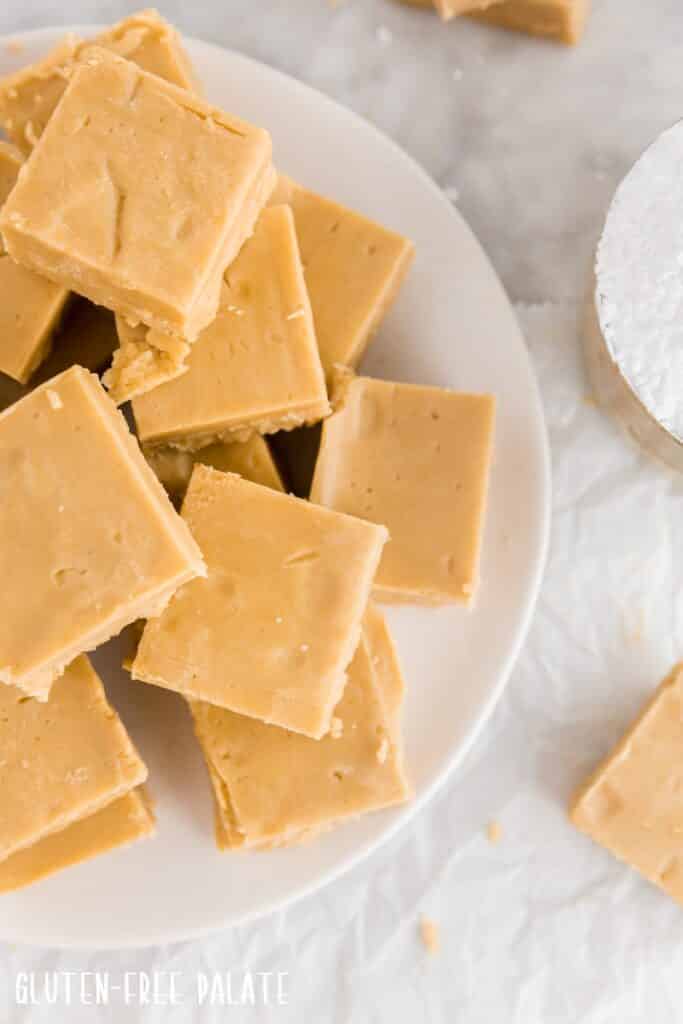
Crazy Richard's is one of the cleanest labels on the shelf. Just peanuts, nothing else. That is it. No sugar, no oil, no salt. For celiac cooking where I want pure peanut flavor and no variables, this is my go-to. The short ingredient list also makes it my pick for peanut butter fudge and baking recipes where extra sugar or stabilizers would throw off the texture.
Smucker's Natural
Smucker's Natural peanut butter keeps the ingredient list to peanuts and salt in most of their natural varieties. It is affordable, widely available, and a safe labeled gluten free option for most gluten free households.
Teddie
Teddie is a family-favorite brand with a simple ingredient list and gluten free labeling. It is a solid everyday choice for a gluten free pantry.
Smart Balance
Smart Balance peanut butter varieties are labeled gluten free and formulated around their heart-healthy oil blend. Not certified, but a reasonable choice for non-celiac use.
Adams
Adams Natural Peanut Butter sticks to minimal ingredients and offers that old-fashioned peanut butter texture. Labeled gluten free but not certified.
Is Crunchy Peanut Butter Gluten Free?
Yes. Crunchy peanut butter uses the same base ingredients as creamy peanut butter, with added peanut pieces for texture. The peanuts themselves are gluten free, so a crunchy variety from a certified or labeled gluten free brand is just as safe as the smooth version. The rule still applies: check for flavor add-ins or suspicious thickeners.
Is Powdered Peanut Butter Gluten Free?
Most powdered peanut butters, including PB2 and PBfit, are labeled gluten free. PB2 carries a gluten free label on its packaging, and the brand confirms gluten free status in its FAQ. Since formulations can include added sweeteners and flavorings, always check the specific variety you are buying. The plain and chocolate versions are the two I see most often in a gluten free pantry.
Peanut Butter Alternatives
If peanut butter is off the table because of an allergy, or you just want a change, several nut and seed butters offer a similar spreadable experience. USDA research notes that over 3 million Americans are allergic to peanuts or tree nuts, which is why sunflower seed butter has become such a popular classroom-safe option.
- Almond butter. Naturally gluten free, higher in vitamin E, and a good option for baking.
- Sunflower seed butter. School-safe and allergen-friendly. Great for families navigating both celiac and nut allergies.
- Cashew butter. Milder flavor, smooth texture, pairs well with savory applications.
- Soy nut butter. Peanut-free and nut-free, but always confirm gluten free labeling since soy products can sometimes include wheat-derived ingredients.
Every one of these should get the same label check you give a new peanut butter. If you want to understand the gluten free claim itself, the FDA explains what "gluten free" legally means on packaged foods sold in the United States.
A Quick Note on Nutrition
Peanut butter is a good source of plant-based protein, healthy fats, fiber, and vitamin E. Exact nutrition varies by brand because some include added sugars, palm oil, or hydrogenated fats. If nutrition matters for your household, stick to natural varieties with a short ingredient list. Plain peanuts and salt is the gold standard.
Frequently Asked Questions
Is peanut butter safe for celiac disease?
Yes, peanut butter is safe for celiac disease when you choose a certified gluten free brand or a labeled gluten free brand with a clean ingredient list. Certified brands like Justin's and Jif Natural are tested to below 10 parts per million of gluten, which meets GFCO's celiac-safe threshold. Avoid flavored peanut butters with questionable add-ins and any jar that carries a "may contain wheat" warning.
Is Jif peanut butter gluten free?
Yes, several Jif varieties are certified gluten free, including the Natural line. Jif publishes its gluten free product list on the brand's FAQ page. Not every specialty or flavored Jif product is certified, so always check the specific jar before buying. The classic creamy and crunchy are generally safe for gluten free diets.
Is Skippy peanut butter gluten free?
Skippy labels several varieties as gluten free, and the Skippy Natural line is the most reliable pick. The brand does not carry third-party gluten free certification, so celiac households should double-check the current label before buying. For non-celiac gluten sensitivity, Skippy is a reasonable everyday choice.
Is Peter Pan peanut butter gluten free?
Yes, Peter Pan labels all of its peanut butter varieties as gluten free. It is a solid everyday choice for gluten sensitivity, though the lack of third-party certification is worth noting for strict celiac households that prefer certified brands.
Is natural peanut butter gluten free?
Yes. Natural peanut butter is usually the safest style because it is typically made with just peanuts and salt. Fewer ingredients means fewer opportunities for hidden gluten. Natural lines from Jif, Skippy, Smucker's, and Crazy Richard's are all gluten free per their brand labeling.
Is crunchy peanut butter gluten free?
Yes. Crunchy peanut butter uses the same gluten free base as creamy, with peanut pieces added for texture. A crunchy variety from a certified or labeled gluten free brand is just as safe as the smooth version.
Is powdered peanut butter like PB2 gluten free?
Yes, PB2 and most other powdered peanut butters are labeled gluten free. Check the specific flavor, because chocolate and sweetened varieties can include additional ingredients worth reviewing. Plain powdered peanut butter is the simplest choice for a gluten free pantry.
What is the safest peanut butter brand for celiac disease?
Justin's is my top recommendation for a celiac household because it is certified gluten free, widely available, and produces consistent results. Jif Natural is a close second. For pure peanut flavor with no added ingredients, Crazy Richard's is hard to beat, and the short ingredient list makes it especially safe.
How to Make Peanut Butter at Home
The surest way to guarantee gluten free peanut butter is to make it yourself. All you need is a food processor and roasted peanuts.
- Add 2 cups of roasted, unsalted peanuts to a food processor.
- Blend until smooth, about 3 to 5 minutes, scraping down the sides as needed.
- Add a pinch of salt, and a drizzle of honey or a teaspoon of peanut oil if you want a smoother texture.
- Transfer to an airtight container and store in the refrigerator for up to 2 weeks.
Homemade peanut butter has zero cross-contamination risk as long as your peanuts, equipment, and workspace are gluten free. It is also cheaper than most premium brands if you buy peanuts in bulk.
My Peanut Butter Story
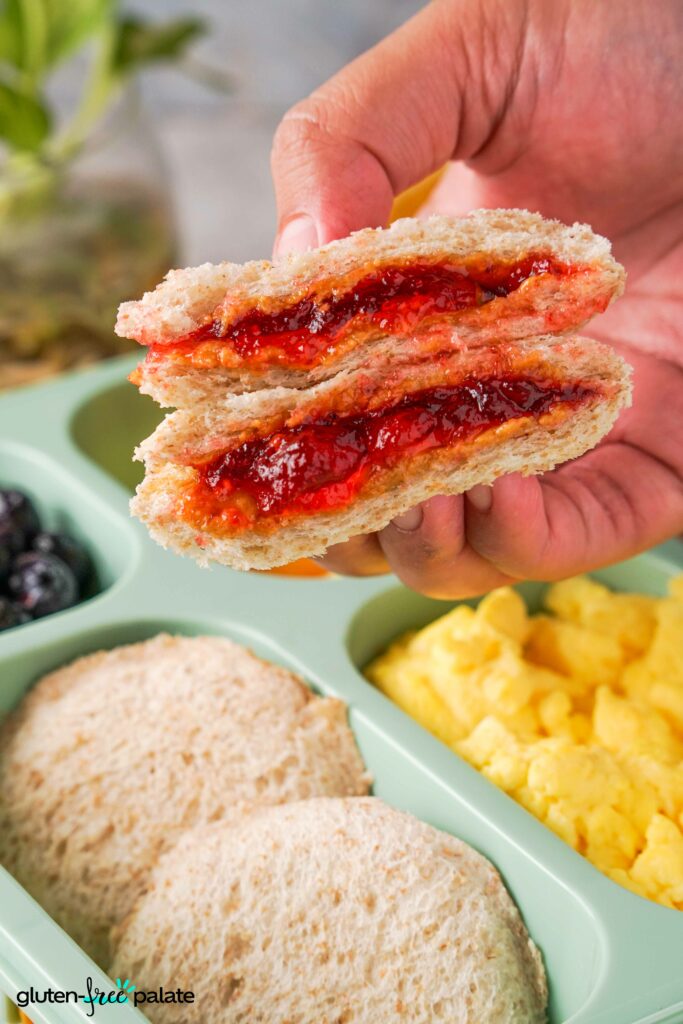
Full disclosure: I never liked peanut butter as a child. I au paired during college for the sweetest little boy whose after-school request was always a peanut butter sandwich on fresh bread. One afternoon I was hungry, a smear landed on my finger, and I have been hooked ever since. Now it is a staple in my own celiac household, my son lives for gluten free Uncrustables, and there is never just one jar in my pantry.
Go enjoy your peanut butter on a celiac-safe diet, by the spoonful if you want to. No judgment here. And if you have not yet tried apple slices dipped in peanut butter, fix that today.
More Gluten Free Peanut Butter Recipes
- Gluten Free Peanut Butter Cookies
- Gluten Free Peanut Butter Blossoms
- Gluten Free Peanut Butter Chocolate Chip Cookies
- Almond Flour Peanut Butter Cookies
- Gluten Free Peanut Butter Bars
- Easy Gluten Free Peanut Butter Fudge
- Peanut Butter Banana Overnight Oats
- Strawberry Banana Peanut Butter Smoothie
More Is It Gluten Free Guides
- Is Butter Gluten Free?
- Is Oat Milk Gluten Free?
- Is Mayo Gluten Free?
- Is Almond Flour Gluten Free?
- Are Cheerios Gluten Free?
DID YOU MAKE THIS RECIPE?
Tag @glutenfreepalate on Instagram and hashtag it #glutenfreepalatebaker so we can see all the deliciousness!

Leave a Question or Comment